
 •
Rating:
•
Rating: THE REVIEW
What is music? What is genius? If it is true that these two questions will forever remain unsolved, it is also true –unfortunately, and especially in the musical field- that people love to tear down any album that is not of the genre they expect, as if everyone's expectations constituted an essential parameter for the "promotion" of a work.
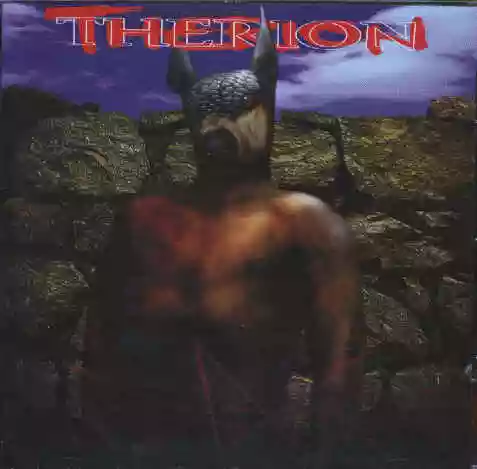
Suddenly, every Gigi D'Alessio album becomes a masterpiece, the sterility of music is celebrated, Avril Lavigne becomes a life model (as well as a musical one) at the expense of what really matters, and here's the stop in front of the horrendous cover of the album under review.
Why this necessary (and tedious) introduction? To try to open the soul of those who will read this review, without prejudice. Because "Theli", Therion's 1997 effort, relegates the death component to the background in favor of the most important thing: emotions, these unknowns (too often), provoking a half-uprising from the defender side. An album – as we said – not very metal but very suggestive, as the intro (frankly canonical, but very fascinating) anticipates. The choruses of "To mega therion" are what really introduce us to Theli, and in turn, the "orchestrations" (realized with the synthesizer, but very well), accompany the distorted guitars in an impressive vocal vortex (sopranos, baritones, and the singer's aggressive but never violent voice). A clarification: do not expect the childish choirs of Blind Guardian from A night at the opera, nor the epic and adored Bathorian choirs. These are pompous choirs, perhaps too much, but intense and majestic.
Cult of shadows, on the other hand, starts with a darker mood, while the choirs (a constant throughout the album) follow up and establish the backbone of the piece, as happens in the following "In the desert of Set", which, however, settles on slightly more aggressive coordinates, thanks also to the more present male voice compared to the previous songs. In this case too there remains an atmosphere that some have defined as oriental but which can actually be framed as Egyptian, a hypothesis confirmed by the aforementioned (ugly) cover, although, honestly, this is the least successful track of the set.
The interlude is just a way to get us used to the second part of the album, the part of the masterpieces. It's the dark Nightside of Eden that introduces this "stellar" series, paving the way to "Opus eclipse", a rather short track that serves as a prelude to "Invocation of Naamah", powerful and determined, beautiful, engaging, melodic, whose only flaw is that it immediately precedes "The siren of the woods", THE MASTERPIECE, certainly the least metal track of the album (because, is it a metal album?) seasoned with a melancholic acoustic guitar, a keyboard that "cries" in the background, and moving and passionate (synthesized) brass. Two minutes of intro for this track (which almost reaches ten minutes) and the calm female voice, remotely controlled by Christofer who engages in a vocal performance worthy of the best Dead Can Dance (even if with very different music), making us feel the internal sadness that forcefully re-emerges. And it matters little if towards the end some accelerations try to make an appearance, once again stifled by the pain of living, by the ethereal and immortal sorrow.
How strange, we are already at the end, and it is the task of "Grand finale/Postludium" to triumphantly close (in direct contrast to the introspection of "The siren...") this Theli, a grandiose blend of classical music and metal (take this word with approximation, we are light years away from the equally valid "Lingua mortis" by Rage or the symphonicity of "Death cult Armageddon" by Dimmu Borgir). This is something else. This is opera (art, why not?), in the most theatrical sense of the term.
The final evaluation can only be positive, one of Therion's and music's great masterpieces, the triumph of the soul at the expense of the labels, against those who say courageous musicians like ours (and other geniuses of the caliber of Borknagar, Arcturus, and Ved Buens Ende) deserve the thumbs down because they don't make "true" metal (they don’t understand that people should be true, not a CD made of plastic and aluminum, they don’t understand that nothing compares to OUR feeling true, fulfilled).
A starting point for Therion, a significant milestone in the life of anyone who crosses its path.
Loading comments slowly
Summary by Bot
Therion's 1997 album Theli pushes the boundaries of metal by integrating rich orchestration and powerful, majestic choirs. Moving away from traditional death metal elements, it focuses on profound emotional expression and theatrical grandeur. The album showcases standout tracks like 'The Siren of the Woods', blending melancholic acoustics with operatic vocals. Praised as a milestone in symphonic metal, Theli defies genre labels and highlights the artistic soul of Therion.
Therion
Therion are a Swedish metal band often described in these reviews as evolving from early, raw death metal into a symphonic/operatic heavy metal style with choirs and orchestral elements, frequently built around esoteric, mythological, and philosophical themes.17 Reviews
