
 •
Rating:
•
Rating:
THE REVIEW
“Mauro, since you’re from the ‘60s, tell us about the music from those times that, they say, was legendary!” ask the children of my lifelong friends, knowing about my passion for music. Hold on a second, guys, I was born in 1966—I didn’t actually live through that era, if only I had!
Of course, it’s not just because I was born in 1966 that the year will be remembered, but it truly was a pivotal moment in the evolution of pop music. Rock & Roll was morphing into just Rock, and the Long Playing record, replacing the 45 rpm single, was being established as a complex work and not merely a collection of hits. Just think of works like “Aftermath” by the Rolling Stones, the first Stones album of entirely original material, Dylan’s “Blonde On Blonde,” and the Mothers of Invention’s “Freak Out!,” the first double albums, not to mention “Revolver” by the Beatles, “Pet Sounds” by the Beach Boys, and also the debut of Tim Buckley with his self-titled record and Cream’s “Fresh Cream”: all works (and I could name more) that helped to revolutionize the musical scene and lay solid foundations for much of the music to come.
And while I’m sure most of the bands/artists I just mentioned are known to those aforementioned kids, it’s likely that none of them have ever heard of the Yardbirds. And yet, in the mid-‘60s, they were, alongside the Who and the Kinks, the real rulers of Swinging London. Strange fate for the “roosters” (“gallinacci”), even here on Deb everyone shouts “great band!” whenever someone posts a listen to one of their tracks. But then, if you check, there are only two reviews of their work here: one by yours truly (a fan of Clapton) covering the band’s early period, the one that made them famous for their incendiary Rave-ups with God himself on the six-string, and another by @IlConte, who reviews the band’s last album, initially released only in the US, featuring Jimmy Page on guitar. Should have guessed, given the Nobleman’s passion for the Zepp! What everyone knows here, of course, is that the Yardbirds were the training ground for not just Clapton and Page, but also Jeff Beck. And it was in 1966, with Beck in the lineup, that they took a decisive step into the modern world, moving from R&B to psychedelia and acid rock.
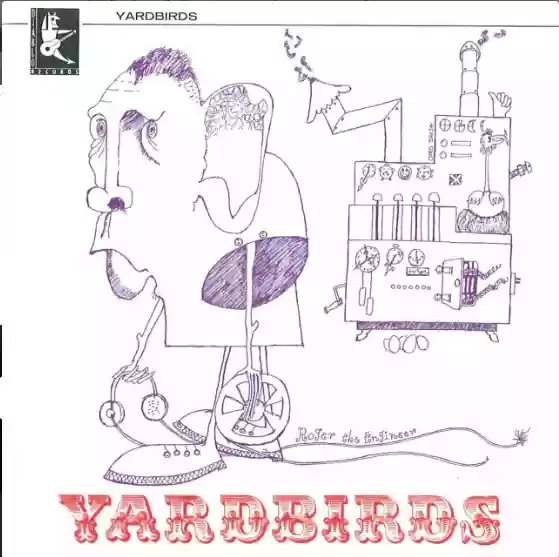
The Yardbirds’ sonic adventurousness kept them a step ahead of their contemporaries and, thanks to Beck’s unbridled spirit and the solidity of their rhythm section, the boys managed to produce an album that was one of the most exciting and cutting-edge records of its day, establishing a standard for electric guitar frenzy that would only be surpassed by Hendrix’s debut the following year. “Roger the Engineer,” the title by which the album is universally known today—named after the studio engineer caricatured by Chris Dreja on the cover (though originally simply titled Yardbirds)—doesn’t stand as a great album per se; there’s no thematic continuity to be found. What fascinates me about the album is that it’s the chronicle of a band trying to find a new way by experimenting in the studio with a plethora of styles and sounds, and with Beck stealing the show, thanks to the burgeoning psychedelic trends, showing his disdain for anything resembling the pure style of six-string playing up to that point.
“Lost Woman” opens the album with what seems to be classic Yardbirds blues-rock, but the jam in the middle heads off in varied and unexpected directions, introducing fresh chords and a fabulous bass solo that continues right through to the final verse. “Over, Under, Sideways Down” is a quirky and psychedelic pop song which, beginning with an Eastern-inspired Beck riff and supported by handclaps and “Hey!” chants in the background, paints a picture that satiates my hedonism: “Machines and girls are easy to find these days/Laughing, joking, drinking, smoking/Until I’ve spent my pay.” “The Nazz Are Blue” showcases another Yardbirds specialty: relatively straightforward and energetic blues. Jeff Beck handles the lead vocals here, singing over the band’s blues shuffle. But we all know Mr. Beck’s real strength, and here again he showcases his skill in an unexpected way, with more than half the solo based on a single sustained note. Considering that rock guitar prowess is often measured in miles per hour, it’s fantastic to hear a true master reveal the power a single note can have when used well. “I Can’t Make Your Way” is so off-kilter that I feel like I first heard it drunk in one of the many pubs I used to frequent back when I could handle several pints of Guinness. Then we’re back to harmonica-driven blues with “Rack My Mind” before the almost childlike “Farewell.” Most of the album’s other tracks broadly follow the pattern set by these opening numbers, but one stands out from the rest: “Hot House of Omagarashid,” a track as quirky as its title, full of bubbling sound effects, Latin-tinged percussion, and an almost Zappa-like sense of the absurd, with atmospheres that anticipate Santana’s debut. Oh, and of course Jeff Beck gives another scorching solo at the end of my favorite track on the album. Also noteworthy is “Jeff’s Boogie,” a song meant to show off his guitar style, though not as fiery as the name suggests, yet quite pleasing. Finally, a mention for the closer, “Ever Since the World Began”: a funereal chant with Gregorian inspiration and the following lyrics: “Fin dall’inizio del mondo/Satana ha perseguitato ogni uomo/Intrappolando il male, se possibile/vi svelo ora il suo piano più grande.” I think you’d agree with me in imagining good old Ozzy singing those words. The melody even has a Sabbath-like air, though the song then moves into a much cheerier, hippie-flavored section, just to round off this mushroom stew to be enjoyed on Eel Pie Island, surrounded by dismembered mannequin torsos, abandoned teddy bears, and plants wearing hats.
Unfortunately, it was a brief and shining moment for the band. Terrible management and an apparent inability to capitalize on success led Beck to abandon the group, and two years later, it was all over. But for the true sound of Swinging London in ’66, there’s nothing better than listening to The Engineer!
Side one
- Lost Woman
- Over Under Sideways Down
- The Nazz Are Blue
- I Can't Make Your Way
- Rack My Mind
- Farewell
Side two
- Hot House of Omagararshid
- Jeff's Boogie
- He's Always There
- Turn into Earth
- What Do You Want
- Ever Since the World Began
Loading comments slowly
Summary by Bot
This review explores The Yardbirds' 'Roger the Engineer' as a groundbreaking 1966 rock album. The band is praised for their creative blend of blues and rock, marked by innovative guitar work and energetic performances. The review recognizes the album's historical importance in shaping future rock sounds. It highlights Jeff Beck's role in pushing musical boundaries. 'Roger the Engineer' is deemed essential listening for fans of rock history.Tracklist
01 Happenings Ten Years Time Ago (Mono) (02:57)
02 Psycho Daisies (Mono) (01:50)
03 Lost Women (Mono) (03:15)
04 Over Under Sideways Down (Mono) (02:23)
05 The Nazz Are Blue (Mono) (03:07)
06 I Can't Make Your Way (Mono) (02:28)
07 Rack My Mind (Mono) (03:15)
08 Farewell (Mono) (01:32)
09 Hot House of Omagararshid (Mono) (02:48)
10 Jeff's Boogie (Mono) (02:25)
11 He's Always There (Mono) (02:32)
12 Turn Into Earth (Mono) (03:17)
13 What Do You Want (Mono) (03:26)
14 Ever Since the World Began (Mono) (02:07)
15 Lost Women (Stereo) (03:16)
16 Over Under Sideways Down (Stereo) (02:25)
17 The Nazz Are Blue (Stereo) (03:05)
18 I Can't Make Your Way (Stereo) (02:27)
19 Rack My Mind (Stereo) (03:16)
20 Farewell (Stereo) (01:30)
21 Hot House of Omagararshid (Stereo) (02:40)
22 Jeff's Boogie (Stereo) (02:26)
23 He's Always There (Stereo) (02:15)
24 Turn Into Earth (Stereo) (03:06)
25 What Do You Want (Stereo) (03:22)
26 Ever Since the World Began (Stereo) (02:10)
27 Mr. Zero (02:46)
28 Knowing (01:55)
29 Shapes in My Mind (version 1) (02:19)
30 Shapes in My Mind (version 2) (02:43)
31 Blue Sands (excerpt) (00:35)
The Yardbirds
The Yardbirds are an English rock band formed in London in 1963, key to the British Invasion and famed for launching Eric Clapton, Jeff Beck, and Jimmy Page. They bridged blues, pop, and psychedelia, pioneering fuzz, feedback, and raga-tinged sonics on hits like For Your Love, Heart Full of Soul, and Shapes of Things. After disbanding in 1968, they reformed in 1992 and have continued to tour and record, including the 2003 album Birdland.08 Reviews
