
 •
Rating:
•
Rating:
THE REVIEW
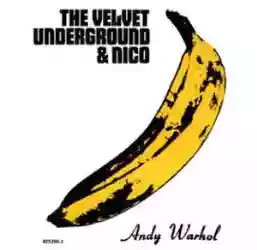
It makes me smile today to think back on certain discussions I was involved in during my high school years. Those were years (mid-70s) of great ideological fervor and not just about political issues. Even topics strictly related to music (rock primarily) ignited heated debates. In fact, many considered glam rock (David Bowie, Lou Reed, etc.) a decadent style, politically labelable as "right-oriented," unlike progressive rock. If one then questioned the health of rock, there was prevalent skepticism (perhaps there was not much confidence in the longevity of prog, and the punk and new wave wave was yet to come, some decided to switch completely to jazz, and the choice was highly worthy of respect). But what puzzled me back then was noticing how the same people, who denigrated glam rock, listened to and greatly appreciated an anthology album titled "Andy Warhol's Velvet Underground featuring Nico." I found it contradictory, and in any case, all of this perhaps led me to also listen to records that many advised against in order to develop my own point of view. And indeed, the album that is the subject of this review ("The Velvet Underground & Nico" released in 1967) was the turning point, years later, to understand much about the very nature of rock.
And to understand the innovative impact of the record, I imagined myself in the shoes of a music producer who, at that time, was entrusted with the responsibility of having such a work published. Certainly, the historical moment was effervescent in the musical field. In the 60s, rock was already the musical vehicle of youth anxieties and aspirations on a global scale. It was no longer that Yankee eccentricity called rock and roll that Elvis and others had launched in the mid-50s. From the Beatles onwards, it was like a musical flood, and, becoming mature, rock could be a flourishing business for record companies. Only, the entire affair could also prove difficult to manage. Some musical proposals could be explosive (to say the least, Bob Dylan, Rolling Stones, Who, Jefferson Airplane, etc. were quite outspoken). "The Velvet Underground & Nico" was a case history precisely for this reason (and not only, as I will specify later). It's obvious that the executives at Verve, a subsidiary of Mgm, could not expect the band named Velvet Underground to reproduce a musical style in the vein of confidential crooners like Bing Crosby or Frank Sinatra (if that had been the case, what kind of innovative music group would they have been?). Of them, so reluctant to grant interviews that they would tell off anyone persistently requesting them, it was known that they were at the center of multimedia shows held in Andy Warhol's Factory, a leading conceptual artist acclaimed in the New York of that era. A respectable sponsor, but the members of the Velvet Underground were not less so, such as Lou Reed (a garage rock musician with vast literary interests), John Cale (coming from collaborations with experimental artists like John Cage and La Monte Young), Maureen Tucker (a drummer with a primitive African style), and Nico (a singer with a deep, decidedly gothic vocal tone, already appeared in a bit part in the film "La dolce vita" by Fellini).
All these credentials might have had some weight, but it's not that strange to notice the fact that the album "The Velvet Underground & Nico" was only released in March 1967 after being recorded between April and May 1966. The recorded tapes revealed raw musical representations of the cursed life in the underbelly of New York City, a real punch in the stomach. No embellishments, no dazzling lights on the American dream but rather highlighting a gallery of characters belonging to a human fauna of outcasts.
Already the opening track "Sunday Morning," immersed in the tinkling of a Christmas carol, can be misleading because what is staged is nothing more than the effect of drugs wearing off on Sunday morning after a night of debauchery. And it certainly doesn't get better with the next composition "I'm Waiting for My Man," which is not a ballad of courtly love, but a clear illustration of the condition of a junkie desperately waiting for the dealer who is never on time and keeps him waiting:
"I'm waiting for my man, with 26 dollars in my hand, up at Lexington at the crossroads with 125, I feel sick and dirty, more dead than alive, I'm waiting for my man."
In short, life on the streets of New York (and this holds true for any other metropolis) is simply disgusting, teeming with junkies, dealers, transvestite prostitutes, pimps, people who can still reveal characteristics of unexpected human warmth, as can be found in other songs like "Femme Fatale" (and here Nico is in great form, as if she were a modern version of Marlene Dietrich in "The Blue Angel"). Even more explicit is "Venus in Furs," inspired by the title of a text by Leopold von Sacher-Masoch, which proclaims the perverse allure of sadomasochistic love with the words "Kiss the boot of shiny, shiny leather in the dark, tongue the belt, the strap that waits, hit, dear mistress."
Even the call to a party context like "All Tomorrow's Parties" can be misleading because here it recalls the happenings at Warhol's Factory, where every inhibition disappeared, and one would give in to various excesses.
But the apex is reached with the track "Heroin," which explained, without the gibberish about drugs of much of the hippie counterculture of the time, the infernal descent into drug addiction to the point of exclaiming "Heroin, be the death of me, heroin is my wife, my life." A candid portrayal of the scourge of drugs, and in this regard, Lou Reed always maintained that he merely demonstrated what evil is, not instigating its commission.
There are also hints at the realm of feelings, as in "I'll Be Your Mirror," where Nico's velvety voice invites the beloved person to reciprocate, singing "I'll be your mirror, reflect what you are, in case you don't know" (it really seems to celebrate a love between two people so twin-like as to be of the same sex..)
But then with the concluding tracks "The Black Angel's Death Song" and "European Son," the Velvet Underground do not hold back from launching into experimental jams close to free jazz flow (slightly inspired by Ornette Coleman's style).
Therefore, after a complete listen to such an album, the Hamlet-like doubt of a music producer of the era (do I publish it or not?) was not entirely unreasonable. Publishing the album after a year on hold was not a successful move from a commercial perspective (it only reached no. 171 in the USA record sales charts), but it was later critically re-evaluated (here's another reason I previously mentioned it as a case history). The album became a reference point for many young musicians who wanted to propose something truly innovative. This particularly applies not only to the punk wave but also to those new rockers who took their first steps in the mid-70s (Patti Smith primarily) and considered "The Velvet Underground & Nico" the dawn of a new era for rock, undoubtedly ahead of its time but still indispensable for anyone who wants to know what rock is. A historical document, therefore, that, even a long time after its release, cannot be underestimated and, in a far more distant future, will continue to testify to posterity about what the once opulent modern Western society was (almost a Pompeii of the twentieth century) in the underbelly: vicious, debauched, desperate.
Loading comments slowly
Summary by Bot
This review reflects on The Velvet Underground & Nico’s transformative impact on rock music. Recorded in 1966 and released in 1967, the album controversially portrayed New York’s darker underbelly with unvarnished lyrics and experimental sounds. Though initially a commercial failure, it later became a cult classic influencing punk and alternative rock. The album’s raw depiction of drug addiction and urban life shattered glam rock conventions, marking a pivotal moment in music history.Tracklist Lyrics Videos
The Velvet Underground
The Velvet Underground were an American rock band formed in New York City in 1964, known for their influential, experimental sound and association with Andy Warhol; core members included Lou Reed, John Cale, Sterling Morrison and Maureen Tucker.49 Reviews
Other reviews
By 2+2=5
Heroin, may you be my death. Heroin is my wife, it’s my life.
I am content with man and his misery; with his soul and his pain; with his anger and his Art.
By miriamlovesrock1
"An album that swallows you, an album that is an entire journey... a journey made of colors and feelings more or less pleasant."
"This is my personal image of them... simply a 'charming band of lunatics'... ladies and gentlemen: Reed, Cale, Tucker, Sterling Morrison + the unruly genius and the icy beauty: Andy Warhol and Nico..."
By Dune Buggy
"For the first time, the underworld is sung, for the first time the undergrounds are colored with violet music."
"Heroin is death, a life companion, rather it is life — and only the silence of the soul remains, the chaos of the brain in almost epileptic convulsion."
By The Velvet Undergrou
Reed’s tracks are therefore almost all fast, full of distortions, difficult, probably dominated as writing by the avant-gardist Cale.
"European Son is the final delirium made up of noise and distortions that will see its masterpiece in Sister Ray the following year."
By joe strummer
The music of Velvet Underground is like a big sadistic smile that mocks you for all this, delights in seeing you terrified and even tries to deliver the coup de grâce.
I believe it is the best album ever made, certainly dependent on tastes, but it still remains among the most expressive, raw, and lucid musical works of the last century.
