
 •
Rating:
•
Rating:
THE REVIEW
“The velvety undergrounds of our psyche”
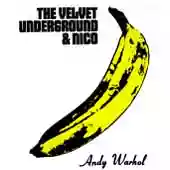
A perverse and noisy banana smoothie; a juice of sounds, lyrical and sweet. For the first time in rock history, moreover at a delicate, complex, and explosive moment in the youth world, the darkest interiors of the human mind and the modern gothic city are given a voice. For the first time, the underworld is sung, for the first time the undergrounds are colored with violet music. But above all, for the first time, it is not the music that is pushed as a drug, but the drug that is sold as music.
In '67, after two years of trying among clubs and difficult attempts to emerge from the beer mugs in the suburbs of New York pubs, Lou Reed (voice and guitars), Sterling Morrison (guitars), John Cale (viola), and Mo Tucker (drums), that is, the Velvet Underground (named after a porn magazine), the velvety soul of lower New York, release their first album of the brief career, thanks also to the master of Pop Art Andy Warhol (Exploding plastic inevitable, this is the name of the artistic musical-figurative project of the Factory), who manages to bring them almost to fame and puts the fatal muse, already a model and actress (appeared in Fellini's La Dolce Vita), Nico, in their hands.
Lou Reed's unmistakable voice opens the album with the bright Sunday Morning, an almost pop ballad with a bitter aftertaste that tastes of post-hangover on a depressing Sunday morning after a slow and alcoholic Saturday night. Or rather, it is a "restless feeling by my side", a feeling of agitation here beside, an incipient foreboding; with the following track, "I’m Waiting For The Man", this feeling transforms into reality, a dark and perverse reality, a reality of nerve-wracking waiting in a dark alley. Lou Reed drags his voice where and how the dealer drags his steps, first on the sidewalk stained by prostitution, then up three flights of stairs, to the deepest cellars of our mind, those of excesses with stale air. It will be in the '72 cover that David Bowie, during the Ziggy Stardust tour, transforms the dealer into an implicit boyfriend, who is none other than Lou Reed, since he changes the lyrics from "I’m just waiting for a dear dear friend of mine" to "I’m just waiting for a velvet friend of mine".
But here's Nico coming on stage in her most successful role, the "Femme Fatale", in the song of the same name. We hear her coming, we hear her sing, and we already know what will happen, we know her voice will enchant and break our hearts, but she is a siren, and you cannot resist velvety sirens, because these voices and these choruses torment us inside with their sensual, sweet, bitter, bright, dark tones. Even REM couldn't resist and recorded a splendid live version on one of their early albums.
The encounter with the femme fatale becomes with Venus In Furs ("Venus in furs") an intense and sick, painful and ecstatic sensual experience. Whips, leather boots, and rawest sins are sung in a climax of sadomasochism where Nico is the "mistress," the lover who owns and dominates, while Reed plays Severin, the servant. In his voice, you can hear the cold of the handcuffs on Severin's wrists, while Cale's viola gives the sound of whips cracking on the body. As it progresses, it's a climax of excitement, pain, hence ”strike dear mistress and cure his heart” just as Cale strikes his strings and cures our heart in an increasingly wild, obsessive, agitated, noisy, sick, and perverse rhythm but always lyrical, like "different colors made of tears."
The boiling spirits calm down, and water is thrown on the inflamed strings with the psychedelic blues Run Run Run, and a certain sacredness is felt in the next track, All Tomorrow’s Parties, that is, all the parties that Nico as a new Cinderella will have to attend. Notable in this song is the use of ethnic percussion and the initial choirs that smell of incense, but it's the incense with which the weeping Cinderella perfumes her Indian tent, her room (in the sense of stanza).
But at this point, the most devastating track of the whole album, Heroin, kicks in. The impact is sweet and arpeggiated but soon becomes a confused stammering of feelings of heroin flowing through veins, mental screeches, psychic trips. One seemingly distances from this world, attempting to imagine oneself a sailor of one's self, but the visions are not liberating or revelatory, absolute and divine like those experienced by Jim Morrison; they are devastating, nihilistic ("nullify my life"), the only thing revealed in the end is the loneliness of the slums, the wickedness of common life, the hypocrisy of normality … and the lie one tells oneself. Here heroin is death ("heroin be the death of me"), a life companion, rather it is life ("heroin, it's my wife and it's my life"), and only the silence of the soul remains, the chaos of the brain in almost epileptic convulsion.
Everything dissolves with two pop songs of sweet and violet taste: "There She Goes Again", fast and equipped with irresistible choruses, resumes the theme of the femme fatale, while "I’ll Be Your Mirror" talks about sapphic love as a reflection of oneself, an enveloping and warmly threatening reflection.
So we arrive at the two final tracks, the ones on the album that most launch into a sound experimentalism that will inspire generations of artists. With The Black Angel’s Death Song, we have a strange and rhythmic strophe (?) of Reed, almost stammering but sure and deadly in his rhymes, as deadly and insistent are the gusts of steam between a verse and another, while the viola continues to throw its screams and hisses to heaven and posterity; even more lacerating, twisted, overwhelming and noisy is the creation that closes the album, European Son, which has a brief spoken part and a long instrumental tail.
As this last invention, so is the career of the Velvet Underground: a brief initial stanza corresponds to their duration in the rock scene (from '65 to '70) and to their official production (only 4 albums), but the instrumental follow-up is all the importance they have had in the following decades, both as a boost of rock innovation, and as inspiration for many singers and bands (such as Bowie, REM, Smashing Pumpkins, not to mention the whole no-future generation… wasn't it Brian Eno who said, "everyone who heard the first Velvet's record in '67 then founded a rock band"?). The Velvet were not only an excellent springboard for Lou Reed and John Cale, but perhaps also the most interesting point of their art. These New York guys gave voice to an underground panorama that could not even be imagined before, they were especially revalued in the 90s, with the official release of many live and studio bootlegs, with citations from various indie bands, with the artistic revival of Lou Reed himself.
And most importantly for all fans, they will be remembered for playing the most perverse and profound strings of the velvety undergrounds of our mind.
Loading comments slowly
Summary by Bot
This in-depth review praises The Velvet Underground and Nico as a pioneering album that brought the darkest aspects of urban life into rock music. It highlights the groundbreaking songwriting by Lou Reed, the haunting vocals of Nico, and innovative experimental sounds. The review also explores the album's themes around drug use, sadomasochism, and the gritty New York underground scene. It acknowledges the record's lasting influence on future musicians and its role as a creative milestone connected to Andy Warhol’s art scene.Tracklist Lyrics Videos
The Velvet Underground
The Velvet Underground were an American rock band formed in New York City in 1964, known for their influential, experimental sound and association with Andy Warhol; core members included Lou Reed, John Cale, Sterling Morrison and Maureen Tucker.49 Reviews
Other reviews
By 2+2=5
Heroin, may you be my death. Heroin is my wife, it’s my life.
I am content with man and his misery; with his soul and his pain; with his anger and his Art.
By miriamlovesrock1
"An album that swallows you, an album that is an entire journey... a journey made of colors and feelings more or less pleasant."
"This is my personal image of them... simply a 'charming band of lunatics'... ladies and gentlemen: Reed, Cale, Tucker, Sterling Morrison + the unruly genius and the icy beauty: Andy Warhol and Nico..."
By The Velvet Undergrou
Reed’s tracks are therefore almost all fast, full of distortions, difficult, probably dominated as writing by the avant-gardist Cale.
"European Son is the final delirium made up of noise and distortions that will see its masterpiece in Sister Ray the following year."
By joe strummer
The music of Velvet Underground is like a big sadistic smile that mocks you for all this, delights in seeing you terrified and even tries to deliver the coup de grâce.
I believe it is the best album ever made, certainly dependent on tastes, but it still remains among the most expressive, raw, and lucid musical works of the last century.
By andrea biacca
"Lou Reed’s voice enters my room without knocking, the drum and guitar lend a certain suggestive aura to the piece."
"An album that amplifies the bond between music and art. Songs like pieces of a mosaic, a mosaic of life, a mosaic of an entire generation."
