
 •
Rating:
•
Rating:
THE REVIEW
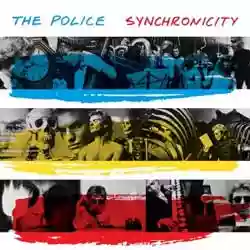
Synchronicity (1983) is a landmark album.
The Police's career begins at the end of the '70s with two works, Outlandos d'Amour and Regatta de Blanc, compact, homogeneous, with the second (excellent) seen as a refinement of the first.
At that time, the Police drew inspiration from reggae and dressed punk, creating an original prototype from which they did not immediately break free.
With Zenyatta Mondatta, the Police begin to seek something different, while prioritizing sales consolidation ("It's our most imperfect record. Surprisingly it's the one that made us great").
The trio dives headlong into experimentation and releases Ghost in the Machine, the album with which they reach the pinnacle of their musical technique. But they aren't satisfied. Why? Sting, as cultured and brilliant as he is limited with the bass, provokes Copeland's irritation with his charisma, both monstrous with percussion and prone to disorderliness and indiscipline.
In Synchronicity, which even after the first two listens appears dense and homogeneous, this becomes clear. The album opens with Sync I, where Sting must chase with his voice the energy of the percussion: like a master dragged on a leash by a big dog, he follows, seeks, asks to have his role recognized: his voice is dampened, concise, faded before the end of each triplet (the formula that best allows Copeland to unleash himself).
With the backdrop of the second track, Copeland's other side appears: the energy here remains composed, balanced, mind you, never orderly (Summers takes care of that), but delicate. Sting humiliated! Servant, he adapts and refines.
It could be just instrumental and it wouldn't lose anything, indeed... In O My God we finally recognize the mild Summers; think that from the 2:30 mark, our separated at home allow him to even let us hear a little riff! Just for pleasure. This is undoubtedly the most balanced track, like Ghost in the Machine: Sting and Copeland don't touch, they reach a compromise, they mark each other, and the result is perfectly anonymous.
From Sync II onwards it's another record, and Sting is the protagonist: as if they were curtains, Sync I and II (the second in quatrains, it must mean something) open and close the entire intimate relationship of the Police.
This album is nervous, grumpy, dry, disjointed. It's even more bare than Ghost in the Machine. Yet it is absolutely essential to have. Inside, haphazardly, driven by the instinct of self-preservation to try to continue the relationship, everyone gives their best but is only available to continue on their own terms!
This is also why this album marks the divorce between Copeland and Sting, with the former backpacking to search for the boundaries of percussion (and no one has seen him return) and the latter, despite giving us good music for another five years, finding no other counterpart than his own cult of personality, ended up promoting tantra as a solution to the early andropause that obviously hit him.
Try listening to Synchronicity 6 or 7 times, programming Sync I and II at the beginning and end, removing Mother and Every Breath You Take (too often heard, it's misleading) and let me know.
Loading comments slowly
Summary by Bot
Synchronicity is a landmark album marking the peak of The Police's musical evolution and internal tensions. The album showcases a dense, nervous sound where Sting and Copeland clash yet produce essential, innovative music. It balances energy and restraint with Summers’ delicate touch. Despite its bare, grumpy feel, Synchronicity is a must-have for understanding the band's complex final phase.Tracklist Lyrics Videos
The Police
British rock trio formed in 1977 (Sting, Andy Summers, Stewart Copeland) known for blending rock, reggae and new wave and for hits such as "Every Breath You Take".35 Reviews
Other reviews
By claudio carpentieri
‘Synchronicity’ is an album which in its intelligent and unusual heterogeneity proves itself to be a indisputable winning proof of those who have risked their artistic maturity on their skin.
‘Every Breath You Take’... a true and sublime concentration of all those positive qualities we’d want in all the pop songs we subject our ears to.
