
 •
Rating:
•
Rating:
THE REVIEW
Much has been said about the Police. Perhaps too much. Perhaps too little, or poorly.
Many remember them only for their blonde hair. Or for Sting's striking personality. Or for Du du du etc.
No one has ever thought about the fact that these 3, I repeat 3, managed to produce:
a) intelligent records
b) that covered many facets of rock music
c) that live were simply devastating.
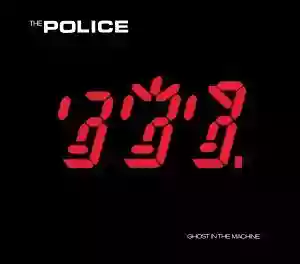
Ghost In The Machine reflects the hangovers and disappointments of the post-Zenatta: the group had tasted worldwide success, and in practice had... gone a bit off track.
Rightly, they retreat to a Caribbean island, isolated, and entrust the production, the change of direction, to a young producer, intelligent and with a good ear (Hugh Padgham). Copeland always armed with his tough Tama and his beloved Octobans, Summers with a suitcase full of harmonizers and the new toy, the Roland synth guitar. Sting... bass, voice, highly inspired and very dark.
It starts with "Spirits...": dry sounds, the snare drum hitting as stiff as ever, and... those verses with 20 vocal overdubs. This will be the characteristic of the whole album: Sting's voice leveled with the other instruments, not dominating, rather, it’s smoothed with many harmonizations and counterchants. It emphasizes the group's collegiality, or at least they try to steer it back on track.
"Every Little Thing" is a pop jewel, in which a sinuous piano and a synth line played on Sting's Oberheim appear. It starts to break away from the "pop-reggae" stereotype....
"Invisible Sun": Christ, what a guitar chorus! Summers confirms himself as a GENIUS of rhythm, a wizard at creating very little but extremely valid. Copeland hits very effectively on the toms, the famous "rythmatist" spreads his Paiste over the whole sound space.
"Too Much Information": and who says it's a shame to play funk, without mimicking disco? Let's draw inspiration from Sly and the Family Stone, add a touch of sax and... zap! Incredible groove!
"Omegaman": in the series, how to do a solo on the synth guitar of 5/6 notes, and enter the legend better than the 20,000 notes played by any show-off... speed pop gem.
"Darkness": Here Copeland develops his not inconsiderable compositional talent and pulls out a dark and strange ballad, with a fantastic piano break.
Has anyone, by chance, never listened to them? Curious? Good, start with this album. Then you will move on to the others.
But first, appreciate the vocal harmonies, the somewhat dark mood at times, and cheerfully funky at others. Let yourself be drawn in by Copeland's "African" groove. The real Police, here, found themselves again, without any lights or various glam: real, essential and baroque at the same time, but definitely a terrible war trio...
Loading comments slowly
Summary by Bot
This review highlights 'Ghost In The Machine' as a smart and multifaceted album by The Police. It praises the band's experimentation, strong individual performances, and Hugh Padgham's production. The album reflects a darker mood yet maintains funk and groove, showcasing the band's unity despite challenges after massive success.Tracklist Lyrics Videos
The Police
British rock trio formed in 1977 (Sting, Andy Summers, Stewart Copeland) known for blending rock, reggae and new wave and for hits such as "Every Breath You Take".35 Reviews
Other reviews
By claudio carpentieri
This album marks a real departure from the reggae of their beginnings, aiming straight at catchy pop.
An album that ... remains without a doubt a milestone for the sound achieved, as well as the most concrete manifestation of the courage of the three in having risked their reputation.
By Rax
Despite being a very British man, Andy Summers has spoken out harshly against this electronic conversion of Sting.
'Invisible Sun' is perhaps the ultimate masterpiece of the Police, with a calligraphic Summers and a wonderfully restrained Copeland making almost solemn a very dark piece.
