
 •
Rating:
•
Rating:
THE REVIEW
1981: by now, the Police are the most famous band in the world. In 1980 they were even allowed to play in Athens, in the shadow of the Parthenon - an honor, at the time, only given to the Rolling Stones. Sting, now a sex-symbol of worldwide fame, also becomes the dominant figure of the band, and begins to treat the other two as second fiddles - to the fury of Copeland, kept in check by the gentle Summers.
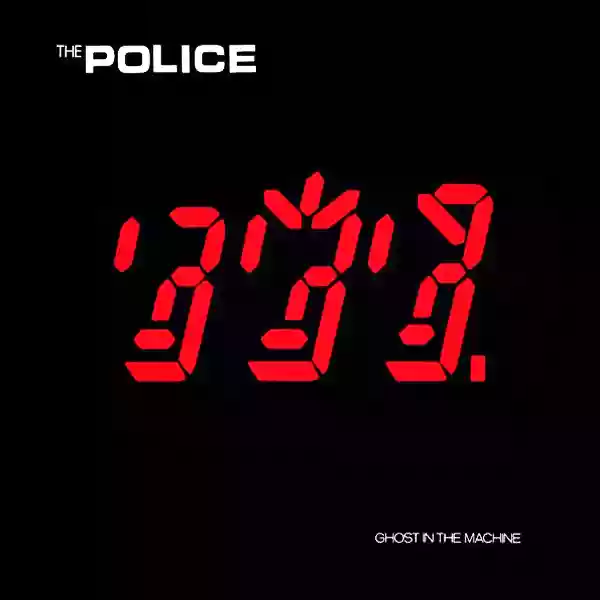
But Sting does not stop here. After the great commercial success of the mediocre "Zenyatta Mondatta," for the new album, the singer falls into the temptation of novelty and changes producer (Hugh Padham) to achieve a more electronic project. The result is an album as dark in its lyrics as it is baroque in music. If they had gone further, Sting and Padham would have generated a sonic mess. But, probably thanks to Summers and Copeland, they avoided falling into mannerisms.
Despite being a very British man, Andy Summers has spoken out harshly against this electronic conversion of Sting: "With all these synthesizers, the legendary roughness of the Police, with their devastating dynamics, has been lost. In this album, there is a lead singer and two sidekicks helping him make his pop songs." Exaggerated, but with much truth to his words.
"Ghost in the Machine" counts 11 tracks. The best can be found in the first 3 and the last 3 songs: "Spirits in the Material World" (a nice synth piece, with an excellent Sting despite the countless and absurd overdubs of his voice); "Every Little Thing..." (a pop masterpiece, with a splendid introductory piano progression and a beautiful chorus magnificently supported by Copeland); "Invisible Sun" (perhaps the ultimate masterpiece of the Police, with a calligraphic Summers and a wonderfully restrained Copeland making almost solemn a very dark piece that speaks of those living in war zones); "Omegaman" (excellent pop-rock from Summers, with an explosive chorus); "Secret Journey" (with lyrics about the mystical journey outside of oneself and one's selfishness); "Darkness" (a beautiful slow piano piece by Copeland, with magnificent feedback counterpoints from Summers, and an excellent conclusion to the album, although "Invisible Sun" would have been better).
The central songs, although rhythmically nice, are stylistic exercises with non-existent melodies and therefore, ultimately, anonymous. It is surprising that someone with Sting's undeniable melodic talent did not find a decent melody here.
If the Police hadn't squandered the jewels of the previous year ("Driven to Tears," "Shadows in the Rain," and the splendid instrumental "Behind the Camel") on the useless "Zenyatta Mondatta," "Ghost in the Machine" would undoubtedly be a superior album to "Reggatta de Blanc." As it is, it's a 3.5, which can be rounded.
4 albums in 4 years and countless concerts around the world. It's time to take a break. Thanks to this break, the first since 1978, the three, despite intense quarrels, will produce their greatest masterpiece, their legendary swan song.
Loading comments slowly
Summary by Bot
The Police's 1981 album 'Ghost in the Machine' marks a shift to a darker, more electronic sound led by Sting's vision. While the album features some standout tracks like 'Invisible Sun' and 'Every Little Thing She Does Is Magic,' the use of synthesizers divides opinion within the band. Despite some weaker middle tracks, the album holds up as a strong entry in the band's catalog, reflecting both creative tensions and musical growth.Tracklist Lyrics Videos
The Police
British rock trio formed in 1977 (Sting, Andy Summers, Stewart Copeland) known for blending rock, reggae and new wave and for hits such as "Every Breath You Take".35 Reviews
Other reviews
By Lucabbrasi
The real Police, here, found themselves again, without any lights or various glam: real, essential and baroque at the same time, but definitely a terrible war trio...
Has anyone, by chance, never listened to them? Curious? Good, start with this album.
By claudio carpentieri
This album marks a real departure from the reggae of their beginnings, aiming straight at catchy pop.
An album that ... remains without a doubt a milestone for the sound achieved, as well as the most concrete manifestation of the courage of the three in having risked their reputation.
