
 •
Rating:
•
Rating:
THE REVIEW
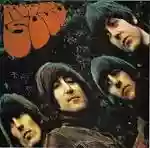
Like other Beatles albums, this record is overrated by many and underrated by just as many. Let's be clear: “Rubber Soul” is not a masterpiece. From a musical standpoint, it is generally inferior to the much-maligned “Let It Be”. It certainly lacks the imagination.
Exaggerating a bit, we can consider “Rubber Soul” as the sublimation of the group's first 5 records. I say exaggerating because, musically, the songs, in general, are not better than the best songs from the previous five records (“And I Love Her”, “I’ll Be Back”, “I’ll follow the sun”, “You’ve Got to Hide Your Love Away”, “Yesterday”).
It is certainly true, however, that on “Rubber Soul” the bad little songs from the previous records are almost completely absent - except for two flops like “What Goes On” (a reject from “Help!”) and “Run for Your Life” (which Lennon was ashamed to talk about in the 70s), which were inserted into the album to fulfill the 14-song per record contract. As Robertson says, this album, even in the love songs, is one of the group’s most mature albums. “Day Tripper” and “We Can Work It Out” would have significantly elevated the musical level of the work.
The making of this record was very troubled. The Beatles returned to London exhausted after the 1965 tour, the peak and the beginning of the end of Beatlemania (with the famous concert at Shea Stadium). They just wanted to rest. But their contract required another album to be released in December. And business is business... So they set to work composing heavily, inspired or not. It's surprising that in such suffocating conditions for creativity, they produced such fine work. “Rubber Soul” was one of the main Christmas gifts of 1965, and with a splendid piece like “Michelle” (Grammy for best song of the year), it smashed the charts worldwide.
Excellent for originality is another McCartney song, “Drive My Car”, undoubtedly a piece to be included among the group's classics. More than the music, what strikes me are some of Lennon’s lyrics, among his best works. John, on this record, is truly in a state of grace. I cannot help but talk about it.
Let's start with “Norwegian Wood”. The song is a bit like “Come Together”: a team effort. Without the other three, Lennon wouldn't have created the jewel: George contributed with the great idea of the sitar; and Paul came up with the idea for the beautiful change at 0:30 and 1:20, which elevates the melody and transforms the song into one of the Beatles' greatest melodic masterpieces. The lyrics tell about one of John’s flings. As John Robertson says, Lennon in this text manages to unite words and music perfectly – and this makes it a small work of art.
Let’s move on to “Girl”. This song was written at the last minute, and it shows that the musical recording is very rough. The lyrics, however, are fantastic. It’s Lennon describing a woman stronger than him, the strong woman he desired, probably in an unconscious desire for that mother he never had. John, in the 70s, said something else: “This song is a prophecy. It's me describing Yoko, the girl of my dreams, whom I met a year later”. In fact, at the beginning, he talks about the girl “who comes to stay”. Beautiful is the line: “When you tell her she's beautiful, she acts as if it’s understood”. There is also space to talk about pain as a means to reach pleasure, drawn from the Catholic mystical tradition, as John said in the 70s. I warmly invite you to read it.
And here’s “In My Life”. It would be enough to listen to the enchanting piano solo – an idea by George Martin – to keep it among your favorites. The melody does not, in my opinion, have the beauty of “Norwegian Wood”, but it is still very beautiful. The lyrics, at first reading, seemed to me just a banal love song. Reading it more carefully, I realized the masterpiece: it is a real “crescendo” where John starts from the love for the places of his childhood, then moves to the “love of friendship”, then to the love for the loved one, and finally to Love as a whole. Lennon, exaggerating as usual, called it “my first really important lyrics”.
Let's take a closer look - because it deserves it. First of all, John talks about the places of his past to which he is still attached (“some changed and not for the better”). Then he moves on to talk about friendship and, for the first time, remembers his friend Stuart Sutcliffe, who died from a brain tumor (“Some are dead and some are living”). Then he says – without falling into the banal – that there is a greater love than that for the places of childhood and friends, and it is the love for the loved one. (“There is no one compares with you”).
Lennon, in the end, elevates the whole song with a more universal message: “In my life I'll love you more”, candidly admitting his selfishness and his decision to really love. In “Because”, on “Abbey Road”, he will succeed in saying the same thing in one line: “Love is all, Love is you”. About love as the essence of everything, John also talks in the song “The Word” – also on “Rubber Soul”. Love has become for him “the Word”.
Finally, “Nowhere Man” (The Man Going Nowhere). This is an “electronic folk”, which was the definition Lennon gave to early period Beatles songs. Those choruses with “la la la” give the song the framework of a ditty. The lyrics, however, are among the most dramatic he wrote. It is Lennon’s split soul. On one hand, the little angel (his conscience) tells him: “You’re an insignificant man. You don’t know where you’re going. You don’t have a point of view. You only want to see what you like”. On the other hand, the little devil (his indulgent side) tells him: “Don't worry. (Enjoy life). The world is at your feet”. It is with these feelings of guilt that Lennon lived his status as a pop star with “the world at his feet”, and with the “privileges” that came with it. Simply the split personality put into verses. This song is his third introspective analysis after “I’m a Looser” and “Help!”, and it is a preview of what will become the internal tear sung in “Strawberry Fields”.
Loading comments slowly
Summary by Bot
This review offers a nuanced critique of The Beatles' 'Rubber Soul,' acknowledging it as a mature and mostly solid album but not a masterpiece. It praises standout songs like 'Norwegian Wood' and 'In My Life,' focusing on John Lennon's lyrical contributions. The troubled production context and contract pressures are also discussed. Overall, the album is seen as an evolution in their catalog rather than peak creativity.Tracklist Lyrics Videos
The Beatles
The Beatles were a British band formed in Liverpool in 1960 by John Lennon, Paul McCartney, George Harrison and, from 1962, Ringo Starr. They revolutionized popular music through songwriting, studio innovation and cultural impact, releasing landmark albums from Rubber Soul and Revolver to Sgt. Pepper’s, the White Album and Abbey Road before disbanding in 1970.173 Reviews
Other reviews
By GiacomoLeopardi
Rubber Soul amazes for the eagerness with which it drives the listener, pinning them to their stereo, leaving them breathless from the very first listen.
Lennon’s lyrics: superb in 'In My Life' (absolute poetry), somnambulist in 'Nowhere Man,' prophetic in 'The Word,' cannabiolic in 'Girl.'
By Miki Page
"Rubber Soul" is a fundamental album in the history of rock, one that marks a turning point not only in the Beatles' career, but also and especially for the music that would follow.
We were starting to hear sounds that we couldn’t hear before — McCartney later admitted.
By BRIOBLUE
The Beatles were four mediocre musicians who still sang three-minute melodic songs...
Rubber Soul is certainly one of the best Beatles albums, but true music must be sought in other bands.
By currahee72
"Rubber Soul was the first album to introduce the new Beatles, the grown-up Beatles, to the world with imagination in power."
"A unique example of pop-beat music elevated to its highest artistic expression."
By pier_paolo_farina
"The Beatles begin to fully justify their already overblown fame...providing actual numbers of high inspiration, ingenuity, and originality within popular music."
"Norwegian Wood falls among the deadliest fifty-fifty combinations of Lennon’s genius (the verse) and McCartney’s (the chorus)."
