
 •
Rating:
•
Rating:
THE REVIEW
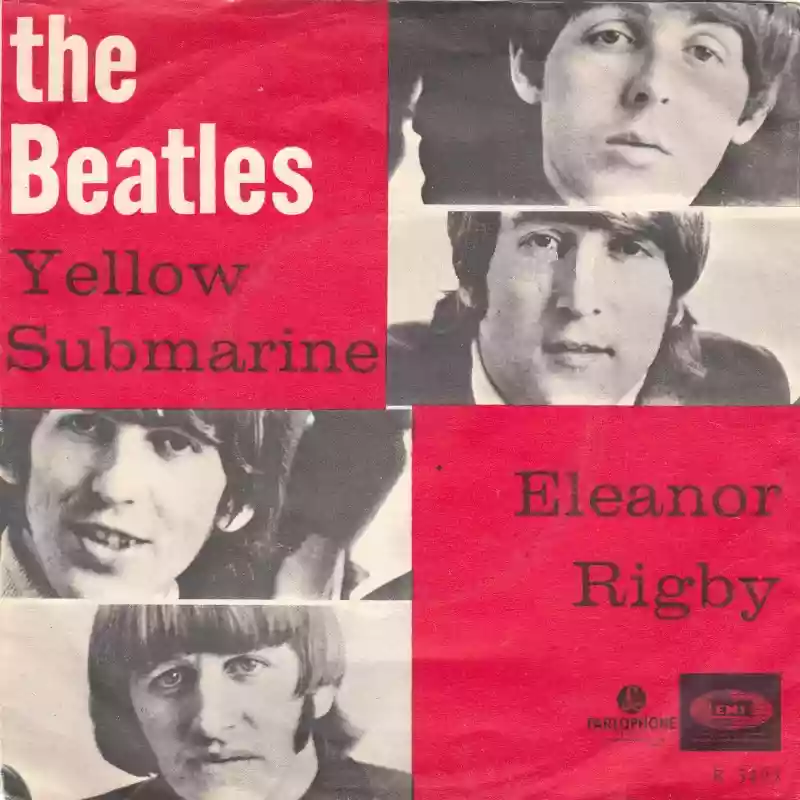
The Year of Our Lord 1966. The preparations for the revolution are in full swing, but no one seems to care, it seems. The rubber soul permeates and cages the invisible ones of millions of listeners around the world. An Italian sound experimenter, still hidden for a little while among the incandescent, crunchy brown clods of Etna, will make the surfaces of vinyl perfectly smooth by listening to it over and over. Beyond the boundaries of the coadjacent ocean, beach boys will marry it to produce what would seemingly collect sounds destined for pet puppies. Or quite the opposite.
A handful of months ago, the relatively long ode to romantic (and not just) love that had inflamed the hearts of millions of howling girls has decidedly ended. Besides, it was time to change direction, since even a more determined, more fluid, more experienced sound could hardly compete with the caustic one of the house of the rising sun. An as yet unidentified chord had, however, prepared the bed of the crossroads on which the beetles would spread indelible asphalt.
An absolutely right phrase poked the bottom of a large group of star-spangled bigoted bumpkins, and among burnings, curses, and the Ku-Klux-Klan, Jane Asher will introduce Antonio Vivaldi to Paul McCartney. The latter, "enchanté," will vigorously shake the composer's hand and let himself be carried away by that stream of strings that characterizes him.
Eleanor Rigby is a solitary soul not because she wants to detach from people or because they relegate her to oblivion for some reason. No one notices she exists. Or almost. Eleanor Rigby is a shadow that appears when you have already left. You can hear her nails scraping the rough pebbles of the churchyard as she retrieves those raw rice grains that have slipped between the cracks. Perhaps she does it to feed herself or to satisfy some strange whim that melancholy imposes on her for a bit of company. Maybe she is not so alone as she thinks.
The curate, Father McKenzie, is perhaps her only friend, even though she is not his housekeeper because he darns his socks himself. Father McKenzie is also alone. When he celebrates mass, he speaks to the lit candles for an anonymous prayer, and those words he gathers at night for the next Eucharist weigh like boulders on his conscience. Words the crucifix in front of him probably does not even believe. When the last petal of that now dry flower falls, it will be him who will bury it. And he will do it properly, getting his hands dirty with the fresh earth that will embrace it. Only to go back to preaching with no one continuing to listen to him.
McCartney writes a very deep poem that frees itself from the not always solid chains of rock for electricity and percussion. The strings slice through the atmosphere of the track like uncertain but precise wingbeats. The cellos' advance creates urgency, generates agitation, as if an impatient death were strugglingly chasing the slow, limping Eleanor before catching and wrapping her in its coils. Of notable effect is the viola phrase at the close of the second verse and Paul's own counter-vocal at the finale. John and George effectively give vigor to the repeated opening lyrics. Only a genius can set to music pain, loneliness, indifference, and death in a little symphony that slightly struggles to surpass two minutes.
Eleanor Rigby has a tombstone and is buried with other family members, who by pure chance have become the most famous deceased of a Liverpool cemetery, located in the Woolton neighborhood where John was born. She was 44 years old and died on October 10, 1939. McKenzie was a surname with a minimum of assonance suitable for the song, stolen from a telephone directory.
Same year, same album, same single, and same side: the first double "A" side in history. John and Paul write a cheerful musically styled story to sweeten the ears of children, entrusting it to Ringo's good-natured, friendly vocal tone.
No one better than he would have taken by hand, as if in a huge ring-around-the-rosie, millions of children to guide them in a fabulous and colorful land inhabited by submarines. The yellow submarine is a merry toy sailing in a whirl of sounds created for the occasion. At the recording, in a studio wrapped in a festive atmosphere of absolute carefreeness, among choristers and sound technicians were Marianne Faithfull and Brian Jones.
John produced the bubble effect simply by blowing into a straw laid in a glass of water. The clamor heard several times was produced by a chain being rustled against the bottom of a metal tub by Alf Bicknell, the group's driver. Jones would go on to spin a plastic propeller in a container full of water and rattle glass plates. The sounds of a flute, an ocarina, a bass drum (Mal Evans and Neil Aspinall), coins dropped on a metal surface (which Pink Floyd would later use for "Money"), and Faithfull shaking a rattling bottle made of plastic filled with mineral ore would be compressed.
And while a microphone will leave its valves in a basin full of water to make the sound of a dive more real... and the band begins to play... it's the fun of a brass quartet borrowed on a tape by Geoff Emerick. And if John and Paul will record their voices compressed through an empty can to shout "Cut the cable! Drop the cable!" and "Captain! Captain!", the former, completely drunk, will sign the rollicking deep voice that mimics the last verse.
The result is perfect and explains how it's possible to compose, while having fun, with unusual but effective means available, a carefree nursery rhyme capable of eliciting a smile from a child and providing an unmistakable tune to the entire world. Not to mention its emotionally disorienting inclusion in a psychedelic album such as "Revolver."
Loading comments slowly
Summary by Bot
This review highlights the profound emotional depth of 'Eleanor Rigby' and the carefree whimsy of 'Yellow Submarine,' both pivotal tracks on The Beatles' 1966 album Revolver. It explores the innovative use of string arrangements and experimental studio techniques that defined the era. The reviewer appreciates Paul McCartney's poetic storytelling and the band's playful creativity. Together, these songs showcase The Beatles' range from profound melancholy to joyful innocence. The review celebrates them as timeless classics that continue to resonate with listeners worldwide.Tracklist Lyrics Videos
The Beatles
The Beatles were a British band formed in Liverpool in 1960 by John Lennon, Paul McCartney, George Harrison and, from 1962, Ringo Starr. They revolutionized popular music through songwriting, studio innovation and cultural impact, releasing landmark albums from Rubber Soul and Revolver to Sgt. Pepper’s, the White Album and Abbey Road before disbanding in 1970.173 Reviews
Other reviews
By R2061478
With Revolver, they start to get really serious.
Tomorrow Never Knows sounds modern even today, a cross between the Chemical Brothers and the minimalist electronics of Radiohead.
By DanteCruciani
"The Beatles are the greatest band of all time, it seems obvious to me."
"I could never explicitly say how much I loved the Beatles because it wouldn’t be appropriate for a serious music critic... In the Beatles, there was something mystical, AND I love them."
By sausalito
"Revolver is emblematic ... the weakest record in the band's mature discography."
"A record where the disparity between fame and actual value is evident."
By JohnWinston
"Revolver is tinged with psychedelia, ballads, rhythm & blues, nursery rhymes... everything contributes a bit to the creation of this timeless masterpiece."
"Tomorrow Never Knows is the masterpiece within the masterpiece, a drumbeat that hypnotizes the subconscious and leads the psychedelic explosion of 1967."
By david81
Revolver is a revolutionary LP that anticipates the times to come by a year.
A must-have album for every respectable music collection: a Brunello di Montalcino of music!!
