
 •
Rating:
•
Rating:
THE REVIEW
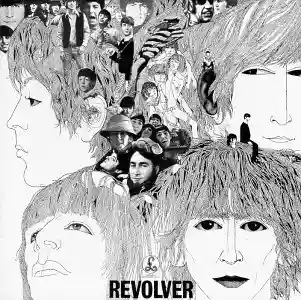
After the worldwide success of the first beat singles, after the joints smoked in the Queen's bathrooms, after the nonsense poems in John Lennon's books, and after the acid trips taken at breakfast out of boredom, here comes a revolutionary LP that anticipates the times to come by a year. Before Barrett's bucolic psychedelia, before the hallucinogenic experiments of Californian bands and the global explosion of the Hippy phenomenon, the Liverpool quartet releases an LP destined to make history. The leap in quality and especially the stylistic difference proposed within just one year from the previous "Rubber Soul" suggests that perhaps the Beatles are truly aliens. It's not for everyone to create for four years (fabulous!) beat songs and then transition without warning (or almost...) to composing mini-operas like For No One or perhaps surreal and hypnotic tracks like the spacey Tomorrow Never Knows.
The Beatles were partly aware of the impact of the record they had just produced, so much so that the tracks were sent to the radios one at a time as previews, leaving the more extravagant compositions for last...they wanted to prepare the general public, educate their ears. What strikes about "Revolver" is the sonic ambiguity that permeates every song on the album and gently overwhelms the virgin ear of the listener with sitars, reversed tapes, doubled vocals - with the new (patented by EMI) ADT technique - guitar solos made by recording tapes and then splicing them randomly into the track, string arrangements that harken back to the English parlour music of the previous century, brass and winds, hallucinated visions and little poems about the daily life of a London becoming colorful. The Beatles have started to play with kaleidoscopes and LSD, and have discovered (especially Lennon and Harrison) a fairy-tale and mystical world with an oriental flavor made of incense and poems, mantras and velvet, colorful jackets and extravagant outfits, mysticism and madness.
Lennon produces the lysergic I'm Only Sleeping, Doctor Robert, She Said She Said and Tomorrow Never Knows while the more orthodox McCartney tackles more metric and conventional tracks that will set the standard in the decades to come especially in England: Eleanor Rigby, For No One and Here There and Everywhere.
If before this LP the artistic abilities of the Beatles could have been questioned, with this milestone of pop-rock the Fab Four assert their dominance over the global artistic scene.
A must-have album for every respectable music collection: a Brunello di Montalcino of music!!
Loading comments slowly
Summary by Bot
Revolver by The Beatles is a groundbreaking album that redefined music with its psychedelic style and studio innovations. The band transitioned seamlessly from earlier pop hits to complex, experimental compositions, crafting timeless tracks such as 'For No One' and 'Tomorrow Never Knows.' Celebrated for its sonic creativity and depth, Revolver remains a must-have in any music collection.Tracklist Lyrics Videos
The Beatles
The Beatles were a British band formed in Liverpool in 1960 by John Lennon, Paul McCartney, George Harrison and, from 1962, Ringo Starr. They revolutionized popular music through songwriting, studio innovation and cultural impact, releasing landmark albums from Rubber Soul and Revolver to Sgt. Pepper’s, the White Album and Abbey Road before disbanding in 1970.173 Reviews
Other reviews
By R2061478
With Revolver, they start to get really serious.
Tomorrow Never Knows sounds modern even today, a cross between the Chemical Brothers and the minimalist electronics of Radiohead.
By DanteCruciani
"The Beatles are the greatest band of all time, it seems obvious to me."
"I could never explicitly say how much I loved the Beatles because it wouldn’t be appropriate for a serious music critic... In the Beatles, there was something mystical, AND I love them."
By sausalito
"Revolver is emblematic ... the weakest record in the band's mature discography."
"A record where the disparity between fame and actual value is evident."
By JohnWinston
"Revolver is tinged with psychedelia, ballads, rhythm & blues, nursery rhymes... everything contributes a bit to the creation of this timeless masterpiece."
"Tomorrow Never Knows is the masterpiece within the masterpiece, a drumbeat that hypnotizes the subconscious and leads the psychedelic explosion of 1967."
By miraggio2
With Revolver, they really started to get serious.
Tomorrow Never Knows still sounds modern today, a cross between the Chemical Brothers and the minimalist electronics of Radiohead.
