 •
Rating:
•
Rating:
THE REVIEW
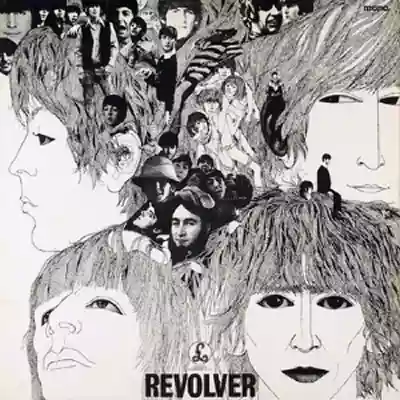
After expanding their artistic boundaries with "Rubber Soul" (1965), the Beatles reach the pinnacle of Rock.
"Revolver" is tinged with psychedelia, ballads, rhythm & blues, nursery rhymes... everything contributes a bit to the creation of this timeless masterpiece.
The lyrics become more incisive; the adolescent themes of the early period are now surpassed. Death, drugs, and more outline the album's perspectives. The music, thanks to an exhausting sonic quest, transforms into art.
The Beatles leap light years ahead of their competitors. In the same year, the Rolling Stones are still grappling with their first album of original compositions, "Aftermath." The Who are far from the future success of "Tommy," and the Beach Boys, after releasing the magnificent "Pet Sounds," will plunge into a creative crisis with no return.
The album begins with a composition by George Harrison, "Taxman". A piece of tight rock where the bass riff is the main attraction of the track until Paul McCartney's guitar explosion.
Next comes "Eleanor Rigby", mainly by McCartney, a funerary piece orchestrated solely by classical instruments. One of the album's highest peaks.
"I'm Only Sleeping" is the first psychedelic warning of the album, with backward guitars and John Lennon's distorted voice. "Love You To" is the eastern essence of George Harrison. Cascades of sounds come from the sitar, played by a musician outside the group.
Here inevitably comes McCartney's sweet ballad, "Here, There and Everywhere", considered by the author as his best song ever.
Also from Paul's pen comes out "Yellow Submarine", a memorable nursery rhyme sung by Ringo Starr with plenty of sound effects.
"She Said She Said", by John, is the ideal meeting between rock and psychedelia where George Harrison's guitar reigns supreme.
"Good Day Sunshine" opens the second side of the album with the sunny joy of Sir. McCartney supported on the piano by the group's producer, George Martin. Once again, George's guitar takes the lead in "And Your Bird Can Sing" by John Lennon... a throwaway piece as the author himself would later define it.
McCartney returns to his full splendor with "For No One", a ballad with ancient flavors about lost love. One of the most beautiful songs in the entire Beatles catalog. "Doctor Robert" brings us back to a no-frills rock that Lennon loves so much.
"I Want To Tell You" is the lesser track among the three by Harrison. A return to the rhythm & blues roots amid the brass instruments of "Got To Get You Into My Life" by Paul.
Lowering the curtain is John Lennon's psychedelic jewel. "Tomorrow Never Knows" is the masterpiece within the masterpiece. Sounds that seem to come from who knows what other dimensions only to suddenly vanish into nothingness. A drumbeat that hypnotizes the subconscious. "Tomorrow Never Knows" will precede the entire psychedelic explosion of 1967 led by Velvet Underground, Doors, and Pink Floyd.
Thus ends one of the most memorable pages in the history of music.
Loading comments slowly
Summary by Bot
Revolver marks The Beatles' peak artistic achievement, blending psychedelia, ballads, and rock with incisive, mature lyrics. Each track offers unique musical innovation, from George Harrison's sitar to Lennon's psychedelic explorations. This album pushed rock forward well beyond its contemporaries, making it a timeless masterpiece. The review highlights iconic songs like Eleanor Rigby, Taxman, and Tomorrow Never Knows as defining moments.Tracklist Lyrics Videos
The Beatles
The Beatles were a British band formed in Liverpool in 1960 by John Lennon, Paul McCartney, George Harrison and, from 1962, Ringo Starr. They revolutionized popular music through songwriting, studio innovation and cultural impact, releasing landmark albums from Rubber Soul and Revolver to Sgt. Pepper’s, the White Album and Abbey Road before disbanding in 1970.173 Reviews
Other reviews
By R2061478
With Revolver, they start to get really serious.
Tomorrow Never Knows sounds modern even today, a cross between the Chemical Brothers and the minimalist electronics of Radiohead.
By DanteCruciani
"The Beatles are the greatest band of all time, it seems obvious to me."
"I could never explicitly say how much I loved the Beatles because it wouldn’t be appropriate for a serious music critic... In the Beatles, there was something mystical, AND I love them."
By sausalito
"Revolver is emblematic ... the weakest record in the band's mature discography."
"A record where the disparity between fame and actual value is evident."
By david81
Revolver is a revolutionary LP that anticipates the times to come by a year.
A must-have album for every respectable music collection: a Brunello di Montalcino of music!!
By miraggio2
With Revolver, they really started to get serious.
Tomorrow Never Knows still sounds modern today, a cross between the Chemical Brothers and the minimalist electronics of Radiohead.
