
 •
Rating:
•
Rating:
THE REVIEW
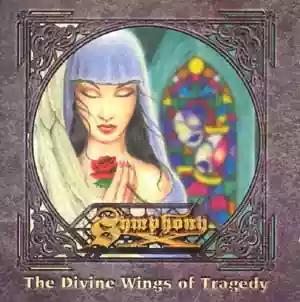
It's already been ten years since the release of this album, but I wanted to review it anyway as it's one of the albums that brought me closer to the metal scene...
"The Divine Wings of Tragedy" marks a historic milestone for the New Jersey band led by the Yngwie Malmsteen-influenced Michael Romeo and his four virtuoso colleagues. Forgetting the poor gains with the self-titled Symphony X of the emblematic vocalist Tyler, and going through a good "Damnation Game," they reach a compositional peak that would set them on the path (up until complete consecration with "V") to being among the most prominent prog-power metal bands on Earth.
Let's start with the tracklist:
1 - Of Sins and Shadows - The track opens with a powerful riff from Romeo which is immediately supported by a great Jason Rullo on drums, alternating syncopated rhythms with faster 4/4s with the double pedal to make the track diverse right from the start. Further enriched by Pinnella's tasteful keyboard, the main theme gives way to a vocal harmony reminiscent of Freddie Mercury's Queen and leads into the verse sung by a great Russell Allen, who immediately gives a taste of his powerful and gritty voice, adding even more body to an already impressive rhythm section. The track is structured simply but gives a taste of the orchestrations that will be used later in the album. In any case, an excellent opening.
2 - Sea of Lies - Thomas Miller's bass sets the stage for a track less impactful than the previous one but absolutely not inferior in terms of arrangement. The syncopated verse transitions painlessly thanks to an excellent choice of accents on the vocals and Pinnella's electric piano (albeit with a vintage flair) beautifully accompanies a fairly catchy chorus. And here we arrive at the unison of guitar and keyboard, a technical piece and one of the most challenging on the album.
3 - Out of the Ashes - A return to the past. The introduction makes it clear that the Symphony X of 'Damnation Game' are still alive and well and are heard in a beautiful baroque-style unison between guitar and synth that marries perfectly with the change of theme in the verse. A thrash-like verse, a progressive bridge, and an almost power chorus justify listening to this beautiful track, which still manages to surprise even in the solo sections of Pinnella and Romeo where harmonic scales are used, giving a Middle-Eastern feel to the piece.
4 - The Accolade - This is one of the most famous tracks by Symphony X, a song crafted to achieve a perfect blend between ballad and heavy riff immediately found right from the beginning where the acoustic guitar sound gives way to distortion while maintaining a sweet and ethereal musicality, enriched by Thomas Miller's accompaniment and the melodies played by a masterful Pinnella on the keyboards. Allen gives yet another demonstration of versatility and allows himself a small vocal phrase before the absolute pearl of the track where the initial bells are now supported by the piano, now by the violin, and so on, until achieving an overdubbing of instruments that taken individually play few notes, but together reach the completeness and impact of an orchestral performance.
5 - Pharaoh - And here we return to good old metal, abundant distorted guitar licks, hammering drums, sixteenth note bass, and "hard" vocals enriched with a hint of keyboard that still supports the technical complexity of a very valid song. Again, the use of harmonic and Arabic scales does justice to the song's title, giving it an exotic evocative power not to be underestimated, but it also provides a melody that at certain points makes one think too much of the soundtracks from films based on "The Thousand and One Nights."
6 - The Eyes of Medusa - Here comes the thrash again that comes out of Romeo's guitar strings... it might seem like the usual stuff but instead Symphony uses their old and very valid trick: to keep a constant melodic line while changing the accompaniment of the other instruments to give the track a thousand different shades... a striking example right from the first seconds where the main guitar riff becomes the accompaniment for Pinnella's evocative keyboard. And so on until the end in a succession of variations, solos, and more, essentially another great track.
7 - The Witching Hour - Probably the weakest track on the CD, also due to its length, but the duets between pseudo-harpsichord and recurring guitars throughout the song are worth listening to. The track is noticeably simpler and with less elaborate melodies compared to its predecessors. Despite this, Allen manages to give an identity to the composition with a good performance.
8 - The Divine Wings of Tragedy - Here we are at the 20-minute suite of this wonderful album that now delivers this ensemble of melodies so different from each other but perfectly connected. The five Americans succeed in the goal of letting 20 minutes of song pass by while keeping the listener's attention alive with quick theme changes and suggestive "imperial" marches that give a touch of majesty to the masterpiece of this title track. The initial choir is interesting and despite the terrible vocal registers of the musicians (Allen excluded), it succeeds in evoking an "cathedral-like" atmosphere that leaves room for Pinnella's trumpet of hell which recalls musical themes from medieval film soundtracks. In the song, there's room for everyone: bass solos, aggressive and calm guitar riffs, key changes, quotes from the Divine Comedy, ambient moments, and endless virtuosity, all starting from a build-up in intensity and variations that slowly conclude with a verse sung by An Allen who continuously changes singing modes... synthesis of this magnificent work.
9 - Candlelight Fantasia - Last piece of DwoT. It's essentially a ballad. It succeeds in being poignant like the moments described in the lyrics (it's about the life of a musician). Allen gives his best and Romeo expresses himself in one of his best solos. The track is decidedly "romantic" but maintains the variety and sudden changes that characterize the other tracks of the album. At the start, however, the vocal melody nods a bit to "The Only Way" by ELP (listen to Tarkus and you'll know it). Still, only two words can be said: beautiful track.
Symphony X achieves a great feat with the creation of this magnificent work, a summary of their two previous discs and a taste of those to come. Definitely among the best power-prog albums of all time. I strongly recommend listening to it to fans of the genre and non-fans alike for its ability to evoke emotions and fantastic scenarios, a capability granted to only a few other bands. Rating 4 and ½ / 5
Chewbacca
Loading comments slowly
Summary by Bot
This review celebrates Symphony X's 'The Divine Wings of Tragedy' as a landmark album that helped define progressive power metal. It highlights the technical skill of Michael Romeo and the band, the dynamic vocal delivery by Russell Allen, and the rich orchestration throughout the album. Each track is analyzed for its musical complexity and emotional impact. The reviewer highly recommends the album for both fans and newcomers to the genre.Tracklist Lyrics Videos
Symphony X
Symphony X are an American progressive metal band from New Jersey, known for blending prog-metal complexity with power metal drive and neoclassical/symphonic influences, featuring guitarist Michael Romeo and vocalist Russell Allen.21 Reviews
Other reviews
By wwwhatemoornet
Buy this CD and you’ll realize that Dream Theater are not the best.
Do you headbang listening to Dream Theater? I don’t. With these guys, you will.
By DaveJonGilmour
Symphony X have transcended the canons of prog-metal, with magnificent baroque and neoclassical arrangements.
The title suite, despite its 20:41 minutes, never bores, on the contrary, magniloquent and unpredictable, it almost seems the manifesto of this art.
By Dreamtheater
"Of Sins and Shadows is my favorite song on the whole cd, excellent opening!"
"The Divine Wings of Tragedy suite... many good things but they are not enough to make it a good song."
By STIPE
"Listening to it is like embarking on a fantastic journey, from which you don’t know if you will ever return."
"The Divine Wings of Tragedy is the masterpiece of a band with a distinctive and unique sound that stands out significantly from other prog-metal bands."
By splinter
Symphony X makes technique an instrument of power!
"The Divine Wings Of Tragedy" is quite possibly the album where all these characteristics emerge in the right measure.
