
 •
Rating:
•
Rating:
THE REVIEW
After regurgitating the carcass of "Heartwork," the mad guitarist Michael Amott decided to take a sharp turn in his career: he wanted new stimuli, he wanted to distance himself from Carcass to create a different, personal entity. Thus, the Spiritual Beggars were born, one of the most unique bands in all of Sweden: perhaps the first to bring Californian-style stoner rock to the Scandinavian country, the kind that Kyuss had helped popularize overseas.
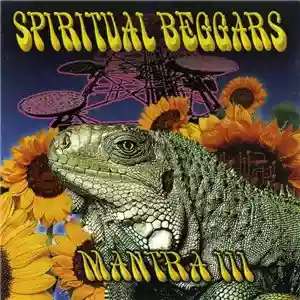
Amott's adventure began in 1994 with the self-titled debut album, followed two years later by "Another Way to Shine": both splendid examples of stoner blended with hard rock influenced by the glorious English bands of the '70s (especially Led Zeppelin, Uriah Heep, and Black Sabbath), all naturally revisited in a more modern key, and from the perspective of sound impact, heavier. These are the guiding lines that also led to the conception of the third cd, titled "Mantra III" and easily linked to an ugly and "flashy" cover.
We are in 1998, when "Mantra III" is released: the band from Halmstad is still a trio, where besides Amott there are bassist and singer "Spice" and drummer Ludwig Witt. Starting with the subsequent "Ad Astra," the keyboardist Per Wiberg will also join the group, who will bring a richer sound, gradually distancing from the early stoner rock. Thus, "Mantra III" presents itself as the last truly heavy CD of the SB, who over the years, have proceeded to a slow but inexorable dismantling of their "official" trademark: the one that smelled of stoner, vintage riffs, and sharp, beer-soaked choruses. All characteristics that come out in tracks like "Homage to the Betrayed," "Euphoria," "Bad Karma," or in the staggering rhythm of "Sad Queen Boogie," almost like ZZ Top in a more pissed-off version.
"Mantra III" is not a masterpiece, it's not a record that will remain in the annals, and it is also surely little known: yet it is an excellent example of "second era" stoner, the kind that reworks and evolves. A no-frills CD, that knows how to captivate with its long string of well-chosen riffs and with tracks that manage to grab hold thanks to their lost rock energy. Absolutely recommended.
1. "Homage To The Betrayed" (3:02)
2. "Monster Astronauts" (3:41)
3. "Euphoria" (5:56)
4. "Broken Morning" (2:26)
5. "Lack Of Prozac" (5:33)
6. "Superbossanova" (1:40)
7. "Bad Karma" (4:03)
8. "Send Me A Smile" (6:22)
9. "Cosmic Romance" (2:55)
10. "Inside Charmer" (4:38)
11. "Sad Queen Boogie" (4:53)
12. "Mushroom Tea Girl" (8:24)
Loading comments slowly
Summary by Bot
Mantra III marks a pivotal moment for Spiritual Beggars as they cement their place in the stoner rock genre. Originating from Sweden, with clear influences from Californian stoner and 70s hard rock legends, this album stands out for its heavy sound and vintage riffs. Though not a groundbreaking masterpiece, it showcases the band’s raw energy and strong songwriting. This album represents the last phase of their heavier, classic stoner rock style before evolving in later releases.Tracklist Lyrics Videos
Spiritual Beggars
Spiritual Beggars are a Swedish stoner/hard rock band formed in 1992 by guitarist Michael Amott. The early trio with Spice (vocals/bass) and Ludwig Witt (drums) set a Kyuss-meets-70s template, later enriched by Per Wiberg’s keyboards. Over time the group shifted toward classic hard rock, with vocals passing to Janne Christoffersson and later Apollo Papathanasio.07 Reviews
