
 •
Rating:
•
Rating: THE REVIEW
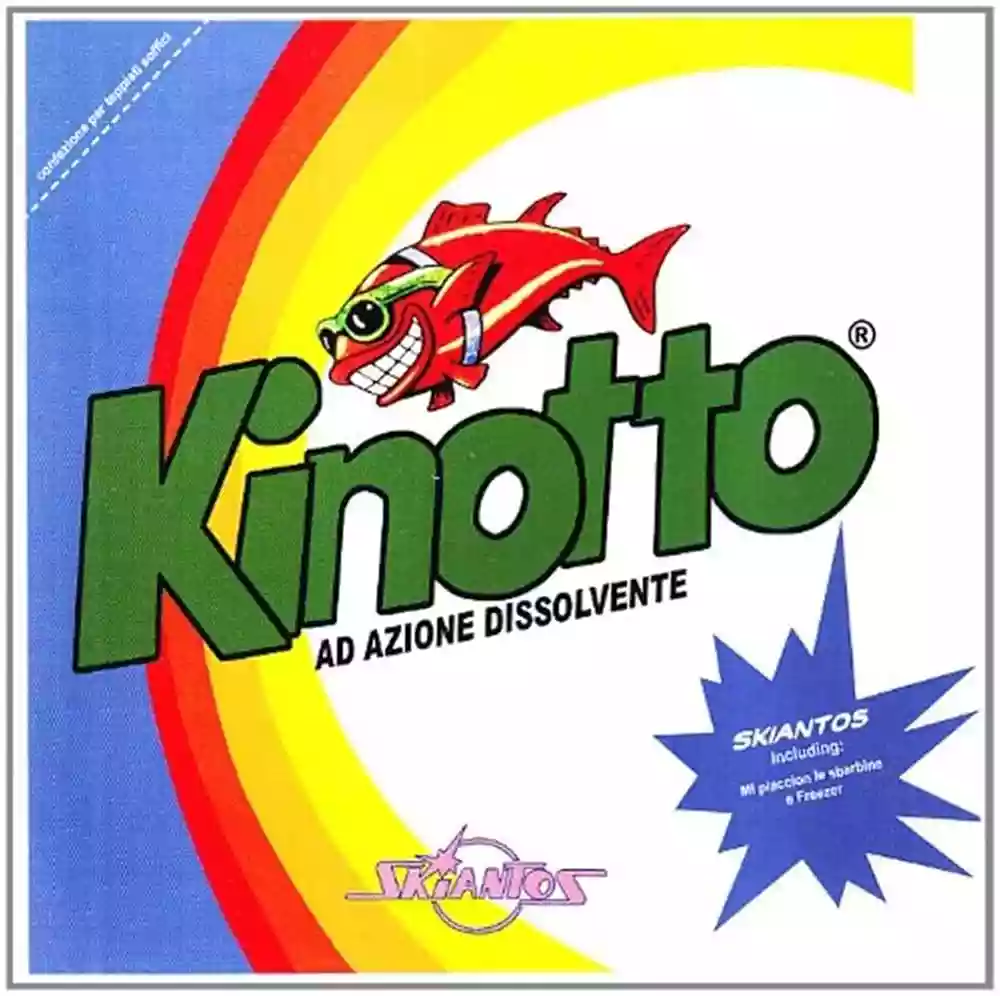
There are works that transcend the mere contingencies of history to become permanent monuments of human thought. Then there are works that, at first glance, might seem confined to the ephemeral, the grotesque, the deliberately unkempt — and yet, upon closer inspection, reveal such a layering of meaning as to make even the most discerning critics’ knees tremble. Kinotto, the third album by Bologna’s Skiantos, released in September 1979 by the much-missed Cramps Records and today finally restored to its deserving public by the farsighted Latlantide in a digipack edition, belongs without a shadow of a doubt to the second category — indeed, as decades have gone by, I wonder if it doesn’t belong to both.
Allow me to say it with the frankness that marks those who have frequented the best salons of the Latin Quarter and the most select semiotics conferences: this is the greatest Italian rock album ever recorded. Technically, stylistically, structurally. Period.
Roberto "Freak" Antoni, the spiritual leader of the ensemble, is a figure I do not hesitate to place in the same symbolic constellation as Villon, Jarry, and that Céline who so unsettles the upstanding. In him lies the same aristocratic awareness of his own genius, the same ostentatious aversion to any form of compliance with the bourgeois public — that public which, naturally, always ends up capitulating. Rock demenziale, the label with which short-sighted critics attempted to contain the relentless skiantian creative flow, is in reality a category of the sublime. Here, "demenziale" is Reason disguised as Madness, so it may speak the Truth without being arrested.
On a strictly musical level — and here I will linger with the care the subject deserves — Kinotto is a treatise. The guitar of Fabio "Dandy Bestia" Testoni, recorded at Stone Castle Studios in August 1979, possesses a rhythmic tension that evokes both the raw urgency of British punk and an almost artisanal precision, Bolognese in the noblest sense of the term: like a portico, it holds everything together with structural grace. The rhythm section is relentless, methodically mechanical, in the wake of that new wave which, at just that historical moment, was redrawing the boundaries of European sound possibilities. The sound of the album is — and I use the word advisedly — perfect. Raw to exactly the right degree; polished where polish is needed. Not a single decibel out of place.
The opening with Freezer, with its robotic voice in the chorus that preempts by years certain electronic solutions of Devo and early Simple Minds, is already an aesthetic manifesto. Next comes Gelati — where an oddly soft guitar lets the lyrics breathe with an almost chamber-like delicacy — and the explosive Il rock ti dà lo shock, American-style rock and roll reworked with the fierce irony that is the group’s unmistakable hallmark. Each track is a small, self-contained world, the song-form brought to its purest essence and then, with surgical awareness, delicately — ever so slightly — derailed.
The lyrics, then. The lyrics.
Here, the most delicate pen and the most measured touch are required. We brush upon topics that, in the mouths of less gifted writers, would have remained mere crudity. In the hands of Antoni — and his partners, above all the late Jimmy Bellafronte, whose voice is a geological event — they become something else: gems set in the walking stick of a vieux poète maudit from Bologna. They sing about chinotto as a near-sacred beverage, and in those rhymes there is a devotion that Baudelaire would have recognized as brotherly. They sing about certain popsicles with a nostalgia that is, after all, nostalgia for childhood, for the body, for the passing of time — themes on which Proust wrote seven volumes and Skiantos three minutes and forty seconds, with equal effectiveness. They sing about love — and Tu sei bellissima, with its background piano, is one of the most accomplished love songs in Italian rock, alongside much more celebrated colleagues who, let’s just say it, lacked this irresistible redeeming self-irony.
There are moments — Non ti sopporto più, Ti rullo di cartoni, the magnificent catalogue of Kakkole — in which the Italian language is treated as living clay, shaped, battered, pushed to its furthest expressive consequences. There is a linguistic violence here that is, in reality, a deep, deep love for the language itself: only those who love an instrument viscerally know how to break it so that it sounds even better. It is the same lesson as Gadda. It is the same lesson as Belli. I believe the Skiantos never read either Gadda or Belli — and this, paradoxically, makes them more authentic than anyone who has.
Mi piaccion le sbarbine, with its muted guitar and its so ostentatiously plebeian declaration of amorous poetics, is the manifesto of Italian prank-rock — a genre that Italy invented, perfected to its highest level with this record, and then strangely forgot, except for the necessary revival undertaken by Elio e Le Storie Tese in the Nineties, professed and devoted heirs.
The Latlantide reissue adds high-quality live tracks — Se mi ami amami, recorded at Caseificio F.lli Bonazzi (and just the name of the venue is a declaration of poetics that no Cannes Festival could ever match) — as well as unreleased demos attesting to the rigor of the compositional process, the artisanal care underlying what appeared to be improvised works. Nothing was improvised. Everything was constructed with the precision of a Swiss watchmaker who, finished with his work, would throw the watch against the wall to see what sound it made.
Kinotto entered at number sixty-six in the ranking of the hundred best Italian albums of all time according to Rolling Stone Italia. Sixty-six. With all due respect for the sixty-five positions that come before it — many of which are occupied by excellent works — there is something profoundly wrong with this fact. Something that reveals the limits of any ranking, of any attempt to hierarchically order that which by its very nature is unordered.
This album does not stand in sixty-sixth place. This album stands in first. It stands there alone, with its can of chinotto in hand, its greased quiff, laughter in the face of everything else.
I say this as someone who listened to this album for the first time in a Milanese publishing house, served by a waiter with a silver tray, while it snowed outside. I don’t know if there really was snow. But in my memory, there is always snow.
Loading comments slowly
Summary by Bot
The review praises Skiantos' 'Kinotto' as a milestone in Italian punk, highlighting its wit, irreverence, and lasting influence. The reviewer describes it as both entertaining and groundbreaking, reaffirming its classic status. 'Kinotto' stands out for its rebellious humor and musical originality. This album is shown as essential listening for fans of innovation in music. The reviewer gives it the highest rating.Tracklist Videos
Skiantos
Italian punk/demenziale band formed in Bologna in 1977 around Roberto “Freak” Antoni and guitarist Fabio “Dandy Bestia” Testoni. Known for irreverent satire, raw energy and the infamous 1979 Bologna Rock ‘pasta’ performance.04 Reviews
Other reviews
By T-Rex
"Kinotto undoubtedly secured them the title of Most Demented Group of the Peninsula."
"An album very original that presents, at least in Italy, a group that knew how to adapt to the times without ever abandoning profound absurdity and self-irony."
