
 •
Rating:
•
Rating:
THE REVIEW
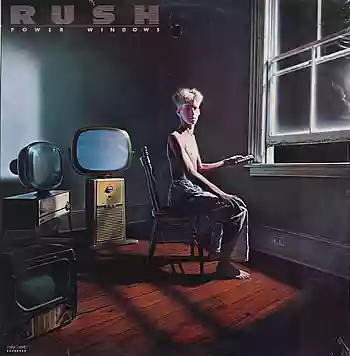
Released in 1985, during the peak of synth pop, 'Power Windows' is one of the most discussed albums in Rush's discography: despised by many for the excessive concessions to the polished sound of the era, appreciated by others, who recognized the continuity of the album compared to the works started with 'Signals', without the essence of the band being distorted, remaining receptive to every genre of contemporary music.
It should be noted that the album is quite distant from the works that made Rush famous and beloved in the rock prog scene in the second half of the '70s, although this does not mean that PW represents the qualitative nadir of the Toronto trio. Perhaps the best way to approach the album is to... ignore that it is a Rush work, trying to grasp its intrinsic qualities regardless of the labels and expectations that each of the band's works generates in those who have heard their 70s masterpieces. Let's try to do that now.
The Big Money, placed at the opening of the album, benefits from a gritty guitar riff, whose echoes form the foundation of the song: over these, Geddy Lee's voice stands out, less explosive than in past years and albums, evolving in a manner very similar to Jon Anderson of Yes; the keyboards play a significant role in the pace of the piece, adorning it with sounds that Peter Gabriel from those years would have appreciated. The next Grand Design, introduced by synthesizers, is characterized by a calmer pace and the excellent rhythmic texture of Lifeson and Peart: the chorus is very refined, striving to avoid easy harmonic solutions. Manhattan Project, with references to the atomic and post-atomic nightmare, emphasizes the album's pop inclination more, but does so with a particular class and composure, not trivial, especially in the central part of the piece, where keyboards and guitar echo the iterations of the classic Rush sound.
The emotional peak of the album is represented by Marathon, with particularly profound and introspective lyrics: in purely musical terms, it is a symphonic rock, with orchestral interventions, with a strong melodic impact. The following Territories raises the technical level of the work: the piece is not immediate and revisits, modernizing it, the early Rush prog rock, albeit in a different context and with different instrumentation, with a splendid conclusion left to Geddy Lee's bass and keyboards. Middletown Dreams stands out again for Peart's lyrics, although weighed down by an excessive intervention of the synthesizers that take up too much space from the other instruments, without adding particular creativity to the track. Emotion Detector is, probably, the closest piece to pop made by Rush during their thirty-year career: just compare the verse/chorus alternation, the ease of the melody, and the decorative intervention of the synthesizer.
The album concludes with a true masterpiece, both in lyrics and music, such as Mystic Rythms: a moving song that seeks to explain (and succeeds in doing so) the mystery of music, from its primordial beats to the electronic elaborations of the '80s, a gem of Rush's repertoire from that period. A summary judgment on the work appears, in light of what has been observed, rather difficult: if it is true that all songs are of excellent technical/compositional level, there is a certain regret in noting the regression of the band's sound, especially in the guitar and drum parts, and an excessive adherence to the song form, which had already manifested itself, indeed, in previous albums.
It should also be said that this album grows with successive listenings: when it was gifted to me it deserved a 2, after eleven years I would give it a 4, pretending to ignore the wonders of the '70s (which would merit a vote well above the 5 kindly granted by Debaser).
I hope I'm not being too generous, but for Rush, this and more.
Loading comments slowly
Summary by Bot
Released in 1985, Rush's 'Power Windows' divides opinion due to its polished synth-pop sound mixed with progressive rock roots. Though different from their 70's classic rock style, the album maintains technical excellence and strong compositions. Highlights include tracks like 'Marathon' and 'Mystic Rhythms,' which showcase emotional depth and musical mastery. The album grows on listeners over time, receiving higher appreciation with repeated plays.Tracklist Lyrics Videos
Rush
Canadian trio formed in 1968, best known for blending progressive rock and hard rock across a multi-decade career; core lineup credited in reviews: Geddy Lee, Alex Lifeson, Neil Peart.46 Reviews
Other reviews
By splinter
It is amazing how the '80s period, a terrain not very fertile for originality, is not an obstacle to the group’s personality.
Rush handle it excellently; it is amazing how the '80s period... is not an obstacle to the group’s personality.
By rasna
"Madly over-produced," that's how Neil Peart described the album Power Windows.
"Power Windows is certainly a great album, not a masterpiece but very good and different even when compared directly to its predecessor, Signals."
