
 •
Rating:
•
Rating:
THE REVIEW
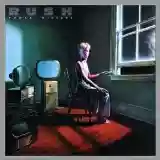
"Madly over-produced," that's how Neil Peart, drummer, percussionist, and lyricist of the Canadian power trio Rush, described the eleventh album titled Power Windows. This studio album is placed in the third phase (1982-1988) of their musical evolution which began in 1974, when these three "geniuses" debuted with the self-titled album Rush. Power Windows is characterized, more than any of their other works, by a massive use of synths and electric keyboards at the expense of the excellent riffs and solos of the eclectic Alex Lifeson's guitar. In fact, here the guitar performs mainly an accompaniment function to Geddy Lee's keyboards (singer, bassist, and keyboardist), without neglecting moments of pathos, especially in the splendid solo in the middle of "Marathon," my favorite of the album. In "Mystic Rhythms," the instruments are perfectly blended, as is the case throughout the album; guitar, bass, and percussion are individually very clearly heard, yet they marry perfectly together, creating a full and compact sound with a strong progressive matrix (an unmistakable trademark of the Toronto trio). From my point of view, the least convincing track is "Grand Designs," very keyboard-heavy and closer to the new wave that was all the rage in the 80s. "Territories" is a very peculiar track characterized by a very syncopated rhythm, unmistakably the work of Peart, one of the greatest drummers in rock but not only....The historic high vocals of Geddy here are softened, making his voice more "accessible" even to the most demanding ear. The main theme of Power Windows' lyrics is power, exercised by scientists in songs like "Manhattan Project," a very beautiful song with lyrics referencing the scientists of the Manhattan Project who were developing the atomic bomb with the catastrophic results that would be seen at the end of World War II, and the power wielded by large multinationals "The Big Money." Another gem is "Emotion Detector," with particular lyrics that describe a bicycle journey in China by Peart, where he describes the various human and social situations of those distant places, seen from the saddle of a bicycle, with some fantasy. To conclude, Power Windows is certainly a great album, not a masterpiece but very good and different even when compared directly to its predecessor, Signals. The musical evolution of this fantastic trio continues especially in the 80s, which I consider their golden period, far from the progressive hard rock of the 70s yet always characterized by excellent music.
Loading comments slowly
Summary by Bot
Power Windows marks Rush's 1980s phase, focusing heavily on synths and keyboards over guitar. Despite some overproduction, the album blends instruments well and features strong progressive rock traits. Lyrically, it explores themes of power with standout tracks like "Marathon," "Mystic Rhythms," and "Manhattan Project." While not a masterpiece, it remains a significant and quality release during Rush's golden period.Tracklist Lyrics Videos
Rush
Canadian trio formed in 1968, best known for blending progressive rock and hard rock across a multi-decade career; core lineup credited in reviews: Geddy Lee, Alex Lifeson, Neil Peart.46 Reviews
Other reviews
By vellutogrigio
'Perhaps the best way to approach the album is to... ignore that it is a Rush work, trying to grasp its intrinsic qualities regardless of the labels and expectations.'
'Mystic Rhythms: a moving song that seeks to explain (and succeeds in doing so) the mystery of music, from its primordial beats to the electronic elaborations of the '80s.'
By splinter
It is amazing how the '80s period, a terrain not very fertile for originality, is not an obstacle to the group’s personality.
Rush handle it excellently; it is amazing how the '80s period... is not an obstacle to the group’s personality.
