 •
Rating:
•
Rating:
THE REVIEW
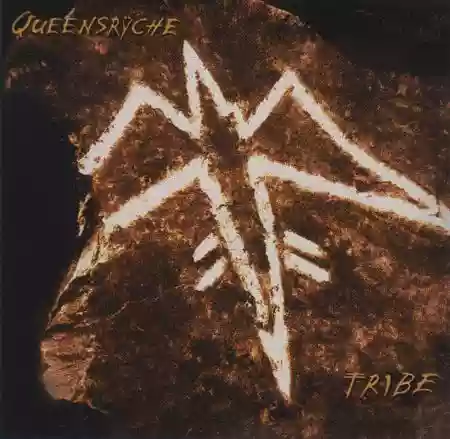
Here I am to talk about one of the perhaps most underrated albums by Queensryche: this is "Tribe," released in the now distant 2003 by Sanctuary Records. The work concludes the "cursed triptych" of the Seattle combo: "Hear in the Now Frontier," "Q2K," and "Tribe," indeed, three albums poorly digested by critics and fans, perhaps because they followed the band's previous three masterpieces, "Operation: Mindcrime," "Empire," and "Promised Land."
It's difficult to do better after the epochal "Operation: Mindcrime," the commercial (but not only) perfection of "Empire," and the enigmatic "Promised Land," a fantastic album for its lyrics and atmospheres. Yet, almost ten years later, "Tribe" appears different to me from those first and now distant listens: back then, it slipped away without leaving anything but the bad feeling of having lost my favorite band, ended up in some remote musical territory and obviously short on ideas. Had the golden vein of Queensryche been exhausted? I sincerely thought so, still having in my head the royal compositions of "Operation: Mindcrime," the wonderful baroque elements of "Empire," and the rough introspection of "Promised Land." Ten years later, precisely when the future of Queensryche is uncertain, I grasp the essence of an album not comparable to Tate and company's best productions but nonetheless endowed with its own musical dignity and fully worthy of being redeemed from the reputation of black sheep in their production. It is worth analyzing each of the ten pieces that make it up, but not before recalling that alongside Geoff Tate, Michael Wilton, Eddie Jackson, and Scott Rockenfield, played on the occasion, Mike Stone (later part of Queensryche of "Operation: Mindcrime II") and the immense Chris DeGarmo, the soul and mind of the band, in his last modest appearance.
It starts with the cadenced "Open," marked by the obsessive riff of the guitars and the imperial voice of a Tate that knows no time's advance. The powerful chorus and Jackson's bass line break the regular pace of the song up to the second track of the album, that "Losing Myself," in which the rhythmic carpet laid by Rockenfield's drums and again by Jackson's bass prepare the ground for the melodic and slightly cheeky chorus of a song made specifically to warm the audience. "Desert Dance" arrives, undoubtedly the best track on the album: an oriental-tinged intro soon shattered by the knowledgeable "slashes" of Wilton, Stone, and DeGarmo's guitars. Unapologetically Arabic melodies accompany us to Tate's acid chorus, evoking campfires in the desert under the moonlight. A powerful piece, worthy of the best Ryche. Another oriental melody accompanies us in the ballad "Falling Behind," from which emerges triumphantly the sweet and reassuring side of Tate's bitterly reflective voice. The bridge placed right in the middle of a genuinely pleasant song in its simplicity gives chills. It is now time for "Great Divide," song number five, deliberately placed right in the middle of the album. The guitars that open it are beautiful; listen carefully to the expertly interpreted lyrics by an increasingly disillusioned Tate ("is hope for America?"). The subsequent "Rhythm of Hope" is perhaps the lowest point of "Tribe," but it's still a piece that leaves a mark like the hope that should always reside in each of us. After the caustic title track "Tribe," the most metal song of the ten, in which Tate continues to remind us that we all belong to the same tribe ("I see myself in every man"), passing through "Blood," a piece without infamy or praise, we arrive at the wonderful "The Art of Life," not surprisingly composed by Tate and DeGarmo. Rarefied atmospheres reminiscent of those of "sp00L," push us to the primary question: what is the art of living? Guitars that open and close musical doors accompany Tate to the final answer: "The art of life is...". "Tribe" dies with "Doin' Fine," the last pearl composed by DeGarmo, a mid-tempo that offers itself to hope ("And I know that we'll all be fine"), closing the ancestral journey of Tate and company in the fears and limits of humanity.
Anyone who loves Queensryche cannot forgo an attentive and repeated listening of their production. The Seattle combo could have basked in the laurels of the great successes of "OM," "Empire," and "Promised Land," limiting themselves to replicate a formula that had turned out to be successful. No, this was never the concern of the Ryche: experimenting with new sounds and melodies in a personal challenge with themselves, that's what has always driven them. From the peaks of "Eyes of a Stranger," to the grunge flops of "Hear in the Now Frontier" (another album to reevaluate), Queensryche have always taken the most tortuous path, ignoring criticism and measuring only and always with their ability to create "new" and different music. The five from Seattle, then four and now, after the quarrel with Tate, three, have never had regrets, always proving themselves to be genuine musicians and free spirits.
I close this review with the thought that appears on the "Tribe" CD brochure: "The chain around the neck of humanity is our tendency to pass judgment on others." Never was truth more authentic.
Andrea Antonio Colazingari
Loading comments slowly
Summary by Bot
The review re-evaluates Queensryche's 2003 album 'Tribe,' part of a misunderstood trilogy following major classics. It praises the album's unique musical identity and experimental spirit despite initial mixed reception. Notably, it highlights standout tracks and contributions by band members including Chris DeGarmo. The review encourages fans to approach 'Tribe' with fresh ears and appreciate its artistic value.
Queensrÿche
Queensrÿche are an American heavy metal band from the Seattle/Bellevue area, widely associated with progressive-leaning metal and known for ambitious, concept-driven releases—especially the 1988 concept album Operation: Mindcrime.25 Reviews
Other reviews
By silian87
Tribe is perhaps the best album produced by Queensryche after Promised Land (1994).
The atmosphere of Tribe is often very dark and tribal, with powerful riffs and Tate's beautiful, evolved vocals.
