
 •
Rating:
•
Rating:
THE REVIEW
It may be arguable yet unsurprising to state that this is undoubtedly Pino Daniele's most unpolished work, after all, it is his first album, written and performed at only 22 years old. However, let's understand one thing clearly: such a statement makes sense only if we slightly lay our ears on the score. If instead, we wisely try to step clumsily into the substance -more than the essence- of the aforementioned LP, our perception changes, is overturned.
The work is permeated with melancholic poetry, with lyrics recalling detached dreams.
The first Italian punk record, because innovation is the preservation and development of tradition, building it from already solid foundations. Pino was never a conservative, he never inherited anything; tradition is not inherited. He never anchored himself to memory (which in itself is static, instead malleable in its discovering-becoming), to mere memory, to that inability to detach from the cliffs of natal origins; he jumps in, he is in that moment... suspended in the air before landing in the infinite liberating water. It is precisely in this way that "Terra Mia" closes.
"Stà durmenno senza tiempo
'Nu ricordo ca nun penzo cchiù
Ma che succede io sto' chiagnenno
Penzanno a 'o tiempo ca se ne va
E cammine 'mmiezo 'a via
Parlanno 'e libertà."
Loading comments slowly
Summary by Bot
Pino Daniele’s Terra Mia, his first album at 22, stands out for its raw and unpolished sound. The record is filled with melancholic poetry and innovative Italian punk elements. While not a conventional debut, it reinterprets tradition through a fresh and emotional lens. The album challenges listeners to focus on its substance and lyrical depth rather than just polish.Tracklist Lyrics Videos
Pino Daniele
Italian singer-songwriter and guitarist from Naples, notable for blending Neapolitan tradition with blues, jazz and world-music influences. Debuted with Terra Mia (1977) and remained a prominent figure in Italian music until 2015.48 Reviews
Other reviews
By DAVIDE DANIELE
A brilliant album that would require an analysis different from a simple telegraphic list of the tracks present in it.
Made by a genius who, at only 22 years old, published a work still unique in its kind.
By Raimondo A. Vailatti
"If Pino Daniele still lived in his lower floor, on his Via Medina, in his Naples, he would (re)write a great album again."
"We have no choice but to listen to the original Terra Mia, the one released on the record market at the end of the seventies."
By enbar77
With 'Terra mia', the first Pino Daniele, the profound one, the masterful one, lights up with healthy vigor... one of the most beautiful albums in Italian music.
'Suonno d’ajere' is, in my opinion, the most beautiful Neapolitan song of the second school of thought mentioned.
By alessioIRIDE
"Terra Mia is the way a Neapolitan takes to talk about himself and his life: terrible content that breaks backs, but delivered with a smile in that bittersweet way that Naples forces you to learn."
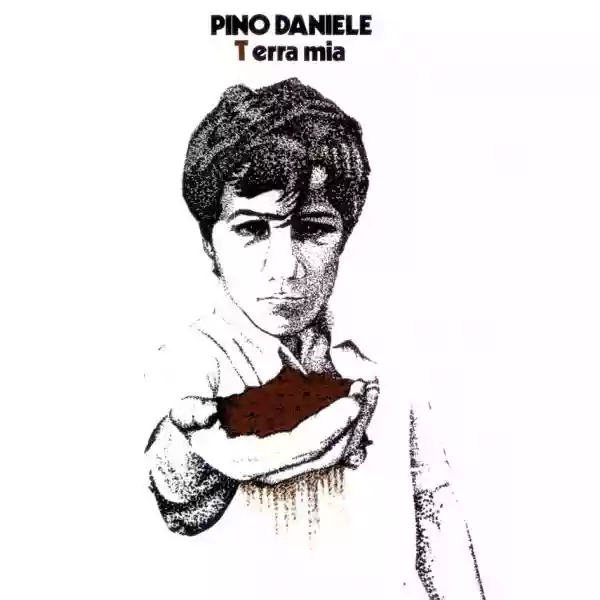
"Terra Mia, in its merits and its bestialities, is Naples, and the Gennariello on the cover offering a clod of this land is saying that it’s not necessary to be there to know the things of this world, of Naples."
