
 •
Rating:
•
Rating:
THE REVIEW
I have always stated, whenever asked, that to make a correct distinction of Neapolitan song, one must follow three schools of thought. The first belongs to an invulnerable planet, populated by immortal classics born from the most intense, profound, and vigorous stages of the poetic soul that characterizes Neapolitans rooted in Naples. For better understanding, I would list "Era de maggio," "O' guarracino," "Luna rossa," "Tamurriata nera," etcetera, to the cube.
The second school includes Pino Daniele, Massimo Ranieri, Enzo Gragnaniello, James Senese, Nuova Compagnia di Canto Popolare, etcetera, to the cube. The third belongs to the recent neomelodic garbage, predominantly characterized by a single lament built on different scales just to differentiate, mostly filled with horrific invocations on shameful electronic bases from pseudo-discos. With "Terra mia," the first Pino Daniele, the profound one, the masterful one, lights up with healthy vigor, at the dawn of the eighties, the then relegated experience of the first school of thought.
Gifted with exceptional artistic qualities and an accomplished multi-instrumentalist, Pino Daniele gathers excellent elements around him to create one of the most beautiful albums in Italian music. It is therefore appropriate to remember the delicate strings written by Antonio Sinagra that emanate a wonderful sentimental light in the accompaniment and intermezzo of "Napule è," where, perhaps prophetically, the Neapolitan musician recalls that the garbage problem is not new, since "nisciuno se ne 'mporta." The effective piano phrases are played by jazz musician Amedeo Tommasi, appearing under the pseudonym Amedeo Forte.
The ancient tradition of the "suspended" could be outlined in the second track "Na tazzulella e cafè," where there is, however, astutely ironic highlighting of an attack on the local political class of the time, inclined to favor illegal constructions, collusions with criminal organizations, speculations, hoping that that cup of coffee becomes curare should it end between the thumb and index finger of such a character. The same sensations reflect on the subsequent work, where a carousel of voices and popular instruments, pazzarielli, capere, mullecari, putipù e bassi tuba, explode in the hope of the aid of the supreme element or perhaps, more in detail, in the opportunistic tradition of postponement to an indefinite date. Enzo Avitabile handles the winds, and Pino Daniele the string instruments.
"Suonno d'ajere" is, in my opinion, the most beautiful Neapolitan song of the second school of thought mentioned. A melancholic mandolin, skilfully plucked, guides an unforgettable sanguine contralto, a wonderful Donatella Brighel, concerned with Pulcinella's moral situation. Daniele responds to the accusations with anger and a strong desire to conquer the prevailing disenchantment, and when a chorus of female voices (led by Dorina Giangrande) bursts onto the scene, an exceptional bass loop seems to sob from the pain. The moving final choir, preceded by a sweet flute and accompanied by an emotional percussion commentary by Roberto Spizzichino and Rosario Jermano.
Not to detract from the other tracks, but I prefer to focus on what is the second most beautiful Neapolitan song of the mentioned school. "Saglie saglie" is of disarming lightness. The opening contralto is still Brighel's, deeper than the previous one, more maternal, more sentimental. The invocation of hope that inflames the track with background popular cries, at times lamenting, at times encouraging, is absolutely poignant. Finally, the essential electric guitar solo closing the album in the track "Libertà" should be highlighted.
Exceptional work, Pino Daniele at a superior level that will drag on for a few more years to follow. Now it seems he has stepped down from the podium he rightfully had in the second school to give remedial lessons in the peripheral third school. A pity. But a real pity.
Loading comments slowly
Summary by Bot
The review praises Pino Daniele's 'Terra Mia' as a masterful and emotional album that revitalizes traditional Neapolitan music with rich jazz influences and poetic social commentary. The album stands out among different schools of Neapolitan song for its depth, musicianship, and heartfelt performances. Highlights include tracks like 'Napule è', 'Suonno d’ajere', and 'Saglie saglie', which blend traditional sounds with powerful messages. The review laments Daniele's later involvement in less inspired music but celebrates this early work as exceptional.Tracklist Lyrics Videos
Pino Daniele
Italian singer-songwriter and guitarist from Naples, notable for blending Neapolitan tradition with blues, jazz and world-music influences. Debuted with Terra Mia (1977) and remained a prominent figure in Italian music until 2015.48 Reviews
Other reviews
By DAVIDE DANIELE
A brilliant album that would require an analysis different from a simple telegraphic list of the tracks present in it.
Made by a genius who, at only 22 years old, published a work still unique in its kind.
By Raimondo A. Vailatti
"If Pino Daniele still lived in his lower floor, on his Via Medina, in his Naples, he would (re)write a great album again."
"We have no choice but to listen to the original Terra Mia, the one released on the record market at the end of the seventies."
By alessioIRIDE
"Terra Mia is the way a Neapolitan takes to talk about himself and his life: terrible content that breaks backs, but delivered with a smile in that bittersweet way that Naples forces you to learn."
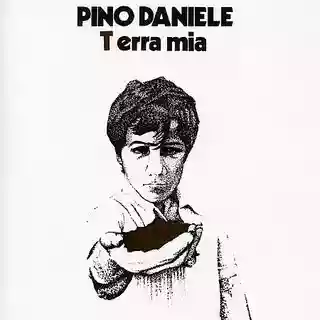
"Terra Mia, in its merits and its bestialities, is Naples, and the Gennariello on the cover offering a clod of this land is saying that it’s not necessary to be there to know the things of this world, of Naples."
By MarkRChandar
The work is permeated with melancholic poetry, with lyrics recalling detached dreams.
The first Italian punk record, because innovation is the preservation and development of tradition.
