
 •
Rating:
•
Rating:
THE REVIEW
[Translated (and poorly, with Babelfish or Google) version of a review that appears on Amazon.com.]
If you enjoy Pink Floyd's work, you will love the album regardless of what you think the cinematic value of the music is. To me, Roger Waters' ability to express himself is outrageously clever. He is a genius. His English is masterful and the way he expresses what he feels is just mind-blowing. I'm sure every one of us has felt exactly the same as Waters/Pink at some point in our lives but could never successfully explain it. It is my opinion, therefore, that the lyrics are what make this music great.
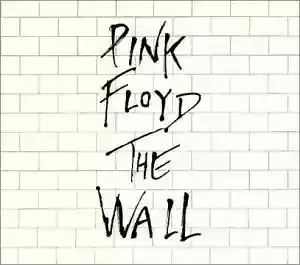
The 1979 concept album "The Wall" by the band Pink Floyd about a rock star's mental breakdown is a towering monster. It is an album with so many audio, lyrical, and musical nooks and crannies that just one listen will not suffice. "The Wall" is not just an album to listen to; it is an album to be *explored*. It was inspired by Roger Waters' own mental breakdown at the end of Pink Floyd's tour for the "Animals" album. Due to the massive stadium tour for "Animals" and being sickened by seeing his own band, in his opinion, become part of the rock "circus," Waters was mentally and emotionally exhausted beyond comprehension. At the final gig in Montreal, the ravaged Waters finally snapped, spitting at a young fan sitting in the front row. Returning home to England to recover, Waters finally decided to exorcise his demons by crafting a conceptual piece about his repulsion with his life as a rock star and began to build "The Wall". . . . With the majority of the double album composed by Waters (with some co-writing contributions from guitarist David Gilmour & producer Bob Ezrin), "The Wall" tells the story of a rock star named Pink and his downward spiral into madness. His father was killed in the war when Pink was just a child ("Another Brick in the Wall Part 1"), he was smothered by his overbearing mother ("Mother") and subjected to abuse at school ("The Happiest Days of Our Lives"/"Another Brick in the Wall Part 2"), Pink turns into a case of mental breakdown almost from the get-go and begins to build an "emotional wall" around himself to shield him from further hurt. Yet, he somehow manages to grow up to become a famous rock star and even gets married. But too many shows, drugs, and groupies ("Young Lust") make Pink a burned-out case, separating him from his wife in more ways than one. While away on tour, Pink's wife falls in love with another man. Finally pushed over the edge by this, Pink destroys his hotel room and frightens away his groupie companion ("One of My Turns"). His descent into madness—and the construction of his wall—is now complete ("Don't Leave Me Now"/"Another Brick in the Wall Part 3"/"Goodbye Cruel World"). And that's only the first half of the album. . . . The second half of "The Wall" speaks to Pink's loneliness & isolation ("Hey You"/"Is There Anybody Out There"/"Nobody Home") and his wild hallucinations as he sits drugged up in his trashed hotel room, imagining the war that took his father's life ("Vera"/"Bring the Boys Back Home"). He is revived by a doctor just enough to make it to the next concert ("Comfortably Numb"), where he hallucinates himself as a dictator with overwhelming contempt for his audience ("In the Flesh"/"Run Like Hell"/"Waiting for the Worms"). But eventually, his conscience can't take it anymore ("Stop") and he has a gut-wrenching fight with himself, desperately trying to free himself from his despair and tear down the wall for good ("The Trial"). . . . Quite simply, "The Wall" is a rock masterwork and arguably Roger Waters' greatest success as a composer. However, to think of the album as "a Roger Waters production" would be quite mistaken. Though Waters is, indeed, the main architect of "The Wall," bravely wearing his heart on his sleeve with his powerful songwriting and tortured singing (not to mention playing a mean bass throughout), the album would still not be what it is without the excellent contributions of guitarist/vocalist David Gilmour, who also shines on tracks like the smash hit "Another Brick in the Wall Part 2" (which features his most famous guitar solo ever recorded with the band), "Goodbye Blue Sky," "Young Lust," "Hey You," and "Comfortably Numb" (featuring yet another classic Gilmour guitar solo). Keyboardist Richard Wright and drummer Nick Mason, notably, are somewhat dwarfed on "The Wall" by the inclusion of various session players (that's Jeff Porcaro playing drums on "Mother," for example). Yet, Mason and Wright appear often enough and make their contributions count. The production on "The Wall" is also astounding—from the magnificent stereophonic mix of the tracks themselves, to the treasure trove of sound effects & voices (including fighter planes, helicopters, objects being smashed, singing school children, a switchboard operator, a TV set playing "Gomer Pyle," and more), "The Wall" is a listening *experience*. Thankfully, Roger Waters, having left Pink Floyd in 1983, is now living quite comfortably, no longer bothered by his rock star demons and continues to make great music on his own (he is also much more appreciative of his audiences now, thank goodness). For Waters, making "The Wall" was much-needed therapy. For Pink Floyd, "The Wall" turned into one of the band's greatest best-sellers, second only to "The Dark Side of the Moon." For the listener, "The Wall" is a spellbinding musical journey. Its music is at times beautiful, engaging, and undoubtedly powerful, and its story is absolutely captivating. "The Wall" is a timeless, undisputed classic by Pink Floyd.
Loading comments slowly
Summary by Bot
This review praises Pink Floyd's 1979 album The Wall as a towering concept rock masterpiece. It highlights Roger Waters' genius in expressing deep emotions and life experiences through powerful lyrics. The album's detailed story of a rock star's descent into madness makes for a compelling musical journey. Contributions from bandmates and remarkable production further enrich the experience. Overall, The Wall is heralded as a timeless classic in rock music.Tracklist Lyrics Videos
Pink Floyd
Pink Floyd formed in London in 1965 and became a defining force in psychedelic and progressive rock. The classic lineage spans Syd Barrett’s founding vision, Roger Waters’ conceptual leadership, Richard Wright’s harmonic textures, Nick Mason’s pulse, and David Gilmour’s arrival in 1968, shaping their signature sound.237 Reviews
Other reviews
By charles
"This is not an album, but a true 'masterpiece'; that no one will ever remove this album from the foundations, the 'Bibles' of music history."
"'The Wall' is irremediably in each of us, and it always will be. After listening to it once, it will never leave us."
By bogusman
one of the most unbearable monstrosities in rock history
the final result is a dull and colorless hodgepodge of worn-out stadium hard rock, techno-instrumental appendages, second-hand disco music, classical-like wallpapers, and fake 30s cabaret
By AngeloLecce87
The Wall is Roger Waters' outpouring, developed between the loss of his father during World War II and the deterioration of his friend Syd Barrett.
The songs must be heard in the context of the album and not individually; small details like a baby's cry and warplanes make this album so touching.
By Francesco123
"Watching the film, it’s not just the eyes that are working, nor the ears: what is most affected is our imagination, our fantasy."
"What is The Wall really?... on one side, the surrender to what life offers us... on the other, the opportunity to give something to life... two things separated by a huge wall..."
By jimi
The Wall, for me, is the ultimate work I’ve ever heard capable of conveying emotions.
When you think that in this album, everything about solos has already been said, here comes Dave, who turns everything upside down, with superlative bends and accelerations that are terrifying.
