
 •
Rating:
•
Rating:
THE REVIEW
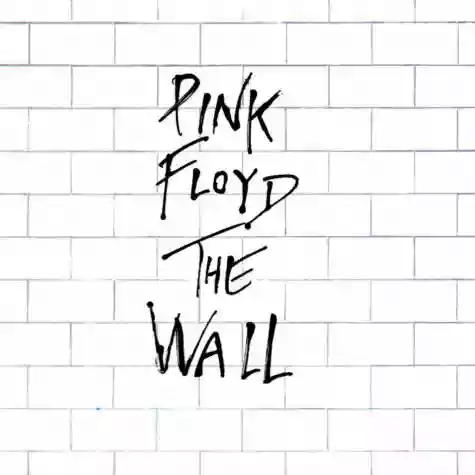
If with "Meddle" and "The Dark Side Of The Moon" the new Pink Floyd, following the departure of the brilliant Syd Barrett and the arrival of the great guitarist David Gilmour, had already shown the world their exceptional music, in 1979 they created what I consider to be their best masterpiece: a furious concept album, fierce, rich in sounds that vary especially in hard rock (note that during those years bands like Van Halen were born) and spectacular lyrics by author and vocalist Roger Waters.
Let's be honest, Pink Floyd is the only great rock band capable of capturing their audience with their spectacular music, even when playing behind a wall to thousands of people. Their music is not just that; it is life, it is emotion. The protagonist of this double album is Pink, a man who, after his father's death in the war and due to his continuous sufferings, builds a wall around himself (highlighting this magnificent metaphor) to separate himself from society. In the songs, you can find abundant information about the past life of this character: how, as a child, he was always with his overprotective mother ("Mother"), how at school his teachers treated him like dirt but at home were henpecked fools ("The Happiest Days Of Our Lives"), and Pink's suffering concerning his paranoia and his girlfriend ("One Of My Turns"). Additionally, it is important to emphasize: this album is not typically the "progressive rock" that Pink Floyd has always made us hear but is more like an independent work, as was the "White Album" by the Beatles: a new, surprising, original work that would lead the band to explore new currents and new sounds: the hard rock rhythms of "Young Lust" and "Another Brick In The Wall Part 3," the melancholic ballads of "Goodbye Blue Sky" and "Nobody Home," but also unforgettable masterpieces like "Comfortably Numb," with one of the best final solos I've ever heard, "The Trial," almost a theatrical song where Waters' brilliant madness takes part, and the historic hit "Another Brick In The Wall Part 2," a rock piece that closely resembles the style of Mark Knopfler of Dire Straits. An album with painful lyrics, exceptional arrangements, where everyone gives their best: Roger Waters' voice, which for the first time ever throws himself into hallucinatory pieces screaming his lungs out (just think about the dark "Don't Leave Me Now" and the rock-powered "Run Like Hell"), David Gilmour's guitar, more spectacular than ever, the keyboard of that other genius Richard Wright, author of must-haves like "Us And Them" and "The Great Gig In The Sky" from Dark Side, and finally, the powerful drums of Nick Mason, the only permanent member of the band from the sixties until '94 with the release of "The Division Bell."
What PF has delivered is therefore a MASTERPIECE in the history of rock music, akin to the Beatles' "Sgt. Pepper's" or The Who's "Tommy," another grandiose and hugely important concept album that has inspired countless musicians on the scene. Even though many consider it a commercial work, others instead view it as an immense endeavor where the listener is drawn into an almost macabre story, but the music is excellent, and the same goes for the band's energy, in short... Spectacular, a masterpiece, which especially live has always thrilled with its drive and strength. I recommend everyone to also watch the film with Bob Geldof, especially for those who can't fully understand the events surrounding the protagonist. This is rock art, and with these works, Pink Floyd has shown that it's not necessary to make mindless solos with a thousand notes per second or create absurd riffs to produce something furious: only by uniting minds like Waters, Gilmour, and Wright (the complex's genius composers) do you get something that goes beyond the imaginable.
Magnificent band, magnificent album, a gem of music!
Loading comments slowly
Summary by Bot
Pink Floyd's The Wall is hailed as their best masterpiece, blending fierce hard rock with emotional storytelling. The concept album follows Pink's life and isolation, featuring standout tracks like 'Comfortably Numb' and 'Another Brick In The Wall Part 2.' The review praises the band's musicianship and the album's groundbreaking nature. Recommended alongside its film adaptation, it remains a rock classic that has inspired many musicians.Tracklist Lyrics Videos
Pink Floyd
Pink Floyd formed in London in 1965 and became a defining force in psychedelic and progressive rock. The classic lineage spans Syd Barrett’s founding vision, Roger Waters’ conceptual leadership, Richard Wright’s harmonic textures, Nick Mason’s pulse, and David Gilmour’s arrival in 1968, shaping their signature sound.237 Reviews
Other reviews
By charles
"This is not an album, but a true 'masterpiece'; that no one will ever remove this album from the foundations, the 'Bibles' of music history."
"'The Wall' is irremediably in each of us, and it always will be. After listening to it once, it will never leave us."
By bogusman
one of the most unbearable monstrosities in rock history
the final result is a dull and colorless hodgepodge of worn-out stadium hard rock, techno-instrumental appendages, second-hand disco music, classical-like wallpapers, and fake 30s cabaret
By AngeloLecce87
The Wall is Roger Waters' outpouring, developed between the loss of his father during World War II and the deterioration of his friend Syd Barrett.
The songs must be heard in the context of the album and not individually; small details like a baby's cry and warplanes make this album so touching.
By Francesco123
"Watching the film, it’s not just the eyes that are working, nor the ears: what is most affected is our imagination, our fantasy."
"What is The Wall really?... on one side, the surrender to what life offers us... on the other, the opportunity to give something to life... two things separated by a huge wall..."
By jimi
The Wall, for me, is the ultimate work I’ve ever heard capable of conveying emotions.
When you think that in this album, everything about solos has already been said, here comes Dave, who turns everything upside down, with superlative bends and accelerations that are terrifying.
