
 •
Rating:
•
Rating: THE REVIEW
It is quite complicated to find a single noun to describe the music coming from the instruments of Opeth. Similarly, it is difficult to analyze the individual sections of the work, and to speak of simple songs might seem reductive, as well as limiting, barriers that do not belong to the Swedes. The most appropriate term in this context, which best describes the continuous flow of notes, divided into seven acts, is just one: small soundtracks. A sort of physical and spiritual journey at the same time, with a plot in continuous evolution, with great special effects and plot twists, that takes you to travel in parallel dimensions, at times ethereal, at times desolate and melancholic, at times dramatic.
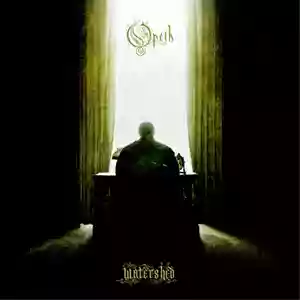
In "Watershed" (2008), the last album of new material by the four (which also sees the entry of the new guitarist and drummer into the lineup), there is a lot of meat on the fire, maybe even too much. Passages of pure death metal, boiling and dark growls are accompanied by progressive rock influences and omnipresent elegant and refined clean vocals, which merge with dark atmospheres and echoes of jazz, folk, and blues. A rich, liquid, multiform, and multicolored sonic web, on which piano and keyboards, acoustic guitars, violins, cellos, violas, horns, and oboes stand out.
A work surely very demanding and proving for the ears of the listener and the average metalhead. Though they often make their compositions excessively long almost for taste, resulting prolix, one cannot deny, however, that we are facing a group exporting quality.
The brief and acoustic "Coil" with its reverberations and vaguely folk ornaments opens the dances and sees the alternation at the microphone between the leader Mikael Akerfeldt and the female voice of Nathalie Lorichs, the first real novelty of the album. A surprisingly simple piece for Opeth's standards, with a well-explicit song form, almost a rarity. This composition vaguely recalls the beautiful "The Islander" by Nightwish.
The calm and enveloping notes of the opener are, however, immediately broken by "Heir Apparent" condensed doom death metal on fire, in which Akerfeldt's terrible growl emerges, resounding in unison throughout the song, interrupted only by wonderful instrumental expanses (the furious accelerations halfway through and the epic progression solo at the end are marvelous) and by some acoustic guitar phrasing and additional instrumentation, which breaks the tension for a moment, making it the heaviest piece among the seven, as well as the best.
"The Lotus Eater" is characterized by the choice to accompany the clean singing with an intense blast beat in the background, while thematically it continues the discourse of the previous piece, although this time the focus is again on the clean vocals accompanying the growl.
The piece is broken into two sections by a long progressive part, in which violins break through and subsequently a bizarre electronic interlude developed by keyboards, which seems to have come out of a Nintendo game.
Subsequently arrive the more melodic pieces, the melancholic and reflective "Burden" opened by a moving piano riff, with strong seventies references, closed by a bizarre detuning of the acoustic, and the now clear now dark atmospheres of the single "Porcelain Heart," which alternates with precise familiarity dreamy acoustic sections with more metal and disdainful parts, reaching the climax in the last acoustic break before the aptly chosen concluding electric storm. Both pieces are marked by the complete presence of clean vocal lines.
While the final pieces are probably the least interesting and raise some doubts, especially the sixth "Hessian Peel", excessively long in its almost eleven and a half minutes, despite a beautiful calm atmosphere in the first part, that captures you, but is ruined by excessive instrumental digressions and by growls halfway which are frankly out of place.
The concluding "Hex Omega" tends to take up the acoustic/electric relay of "Porcelain Heart" but with lower results regarding emotional involvement.
There are no major defects in the songwriting phase, although sometimes greater simplicity of the underlying structures, and more careful dosage of the sound ingredients, would have been beneficial. To give voice to what I have expressed, it is worth taking the already mentioned track number six.
It is a work that must be listened to carefully, to be understood in all its nuances and to fully grasp every detail. Some will love Watershed, others will find it boring, however, it is a type of music that should be listened to only at certain times of the day, and in complete tranquility, preferably with headphones, alone with oneself.
A tasty dish that should be consumed with judgment and moderation, in small doses, without overindulging excessively.
Album rating 3.5/5
Loading comments slowly
Summary by Bot
Opeth's Watershed offers a richly layered and complex fusion of death metal, progressive rock, and folk influences across seven engaging acts. The album features intricate instrumentation, varied vocal styles, and a demanding listening experience. Despite occasional overly long passages, it stands out as a high-quality and emotionally evocative work. Listeners will find it rewarding when approached with patience and focus. Some tracks shine more than others, with highlights in heaviness and melodic depth.Tracklist Lyrics Videos
Other reviews
By TheDanceOfEternity
It definitely requires listening and re-listening many times, especially for a band like this.
Opeth returns to their roots as was the case with 'Ghost Reveries'.
By Hell
Opeth are gradually but inexorably revealing the other side of their coin; so almost forget the long and brooding death outbursts and expect songs that feature the less violent side interrupted by fleeting melodic death strikes.
By the fourth listen the acute 'opethitis' set in and I couldn’t detach myself from the CD player.
By apocalisse
Listening to this 'Watershed' for the first time, it’s understandable if I felt deeply offended and taken for a fool.
'Porcelain Heart' is, in my opinion, the worst piece of Opeth, and certainly not even the video can redeem it.
