
 •
Rating:
•
Rating: THE REVIEW
Opeth. There's a lot to be written about this Swedish band, capable of blending the violence of death metal with the precision and virtuosity of prog and the bubbling creativity of jazz, and perhaps even more. They are often criticized for their relative inability to evolve, or for the monotony of their long and complicated songs, as well as their audacious fusion of the aforementioned genres, which has caused quite a few to wrinkle their noses (ears?). Yet, their music has always attracted and fascinated many, myself included, of course.
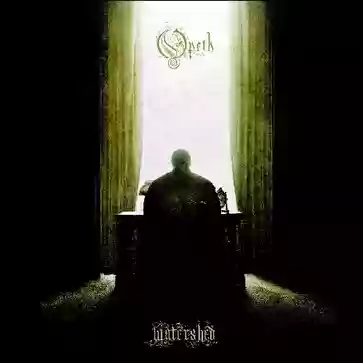
After the commendable experiment of "Damnation", with "Ghost Reveries" they rolled up their sleeves and attempted to soften their music. It is no coincidence that we find many instances devoid or at least lightened of that hardness which dominated albums like "Morningrise", "Still Life", but especially "Deliverance", where Akerfeldt's powerful growl practically occupied three quarters of the time. Now, with this new "Watershed", the group delivers, in the style of its predecessor, a work increasingly skewed towards their softer side, catchy and seemingly harmless. Don't misunderstand, we are far from facing a blatant commercial choice (although, it must be admitted, the band is attracting a larger and larger audience), it's much more simply a sound reversal compared to their early works: Opeth are gradually but inexorably revealing the other side of their coin; so almost forget the long and brooding death outbursts interspersed with momentary bursts of light accompanied by Mikael's clean singing and expect quite the opposite: for the most part, songs that feature the less violent side, interrupted abruptly by granite-like, fleetingly melodic death strikes.
So don't be fooled either by the opener "Coil", which, to tell the truth, left me a bit perplexed by its brief but enchanting melodic line (and especially for the temporary presence of singer Nathalie Lorichs), nor by the following track "Heir Apparent", introduced by an almost doom-like and spectral obsessive riff with Akerfeldt showing us how his throat can withstand the thunderous power of a dark but simmering growl; the jazz element is always felt here and there throughout the song which results in being long (almost nine minutes, but Opeth have gotten us used to it by now) and there are many details to pick through which might easily escape an inattentive ear. All in all, a song that sticks to Opethian standards, although somehow we can already smell the change in atmosphere, the general mood that will remain throughout the CD.
But it is with the wonderful "Burden" that all the light Opeth have in store for us is unleashed; a moving piano intro immediately followed by Mikael delighting our ears with a sad but truly engaging melody that remains alive and caressing until the conclusion of the track, all entrusted to the perfectly harmonized instruments: the always never too intrusive drums (good performance by newcomer Martin Mendez), playful and enchanting guitars, and the keyboard that helps blend everything together.
Other tracks prove to be very good: "The Lotus Eater" for the original choice of accompanying clean vocals with a rapid and convincing blast beat, but especially for the brilliant jazz/funk interlude that made me smile with satisfaction, and "Hessian Peel" for the aforementioned contrast between calm and violence, always keeping the first element constant and predominant throughout the eleven minutes that flow smoothly and never heavy.
However, there's a couple of points where originality really falls short, and they are "Porcelain Heart", which may have a spine-chilling initial riff but as you proceed with the listening, the song becomes too fragmentary and dispersive, and the closing track "Hex Omega" which starts off great and ends great, but in the middle it seems almost composed at random, as if the band found themselves in the recording studio with instruments in hand but without the slightest idea of how to show off the song at least until the seven-minute mark, making the track just too forced but overall sufficient.
In short, this is a good work that doesn't make experimentation its winning weapon but plays more on the B-side of the band, although I must admit that on first listen, "Watershed" didn't please me at all, but by the second listen it intrigued me, at the third listen I started to study it in minute detail, and by the fourth the acute "opethitis" set in and I couldn't detach myself from the CD player. Opeth have always been like this, difficult to understand and often demanding, but once assimilated, they become almost like a drug.
Loading comments slowly
Summary by Bot
Opeth’s 'Watershed' continues the band’s shift toward a softer, more melodic sound, blending death metal aggression with prog rock and jazz influences. The album offers engaging arrangements and strong performances, though a couple of tracks feel less cohesive. Initially challenging, repeated listens reveal its intricate depth, solidifying Opeth’s reputation for musical complexity and creativity.Tracklist Lyrics Videos
Other reviews
By TheDanceOfEternity
It definitely requires listening and re-listening many times, especially for a band like this.
Opeth returns to their roots as was the case with 'Ghost Reveries'.
By apocalisse
Listening to this 'Watershed' for the first time, it’s understandable if I felt deeply offended and taken for a fool.
'Porcelain Heart' is, in my opinion, the worst piece of Opeth, and certainly not even the video can redeem it.
By Taurus
The most appropriate term in this context ... is just one: small soundtracks.
A tasty dish that should be consumed with judgment and moderation, in small doses, without overindulging excessively.
