
 •
Rating:
•
Rating:
THE REVIEW
In the garden of each of our pasts there are memories. Some keep it well-tended, visit it and often trim the plants, clean the statues of horror, prune the trees of joy, mow the lawns of lost loves. Each of us has our own relationship with the formative events of our existence. Some leave those lawns untended forever, allowing the vegetation to grow indiscriminately, taking on the characteristics of an impenetrable thicket.
For me, music often opens the gate to that garden, and before me appear the monsters and joys of my journeys. There is a nice patch of nettles in which I like to walk often, it is the one of morbid relationships.
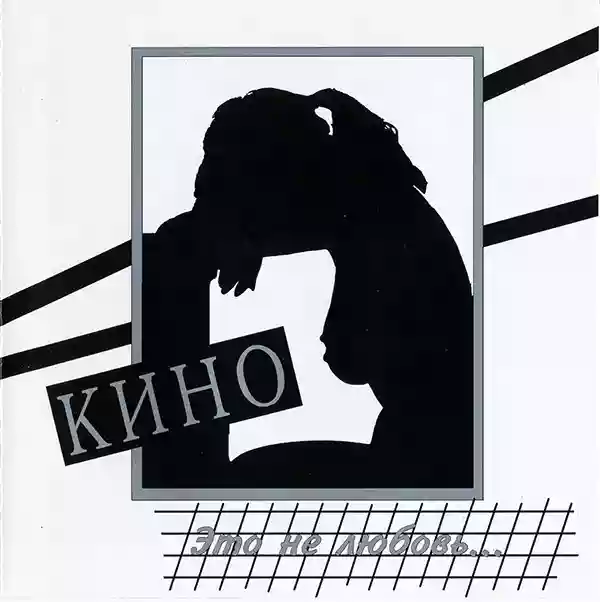
I deliberately chose this album by Viktor Tsoi because it is the most lyrical: it is entitled “This is not love”. Kino came from two demos and a first raw album with a recording that did not do justice to some formidable compositions. “This is not love”, we are in '85, sounds like a clean and well-crafted product. Here finally arises the bitter and sweet, dark and warm tone of Viktor. His is not a battle against the regime, lost in rampant corruption; he seems rather aware that life out there is swallowed up by the same mechanisms and the same miseries. He dons a certain nihilism that embraces individualism, anarchism, and the urge for self-emancipation.
Viktor's Kino wants to live the immorality they sing about and they don't care about politics, they talk about daily struggles, far from the heroic and hyperformal fanfares of the regime. Kino's realism is that of a lost youth that drinks portvein (cheap wine), waits for spring to no longer have to warm the beer and above all does not know where to be or how to be, feeling out of place in the gears that prevent them from raising their voice except against themselves, in a circle of self-harm. Thus, Kino narrates races on hot and overcrowded trains where the cold comes from within.
Insomniac nights, alcohol for a few rubles, and women. The latter, protagonists of this record, are two-faced creatures, depicted at times as unreachable enchanting visions, at other times as macabre figures that follow one another, whose insistences are rejected. “Leave, but give me your number, in reality, I don't even know what these numbers are for.”
Viktor's sentimental album actually shows us his most fragile skeleton, that of a romantic in decline. “You appear so out of date next to me” is one of the most beautiful lines of text he gives us (it's difficult to translate the musicality of the Russian language). A relationship that cracks, a finished story dragging on by inertia.
“Trust me/Верь мне”, is a desperate request for love, a relationship is a war based on mutual trust, you have to believe in the other person and give yourself completely to them. Viktor seems to want to take up arms only in the field of love, to descend into a deep war together with his companion.
There is room for a romantic dedication to his city: Leningrad. Death lingers outside the windows in the cold and dark winters: “I love this city but it's so scary to be alone here”.
The final song Музыка волн has an unusually sweet melody, speaks of the music of the waves and the wind, it is a true poem about the natural elements that influence our mood: “I see how the waves leave their mark on the sand, I hear how the wind sings its strange song, I hear how the branches of the trees play with it”.
In Russian, the noun for love is feminine, this is not love, this is not her. Viktor will always be troubled in the search for a 'her' he cannot find. Of the many things he doesn't care about, his lyrics make us understand that this one holds a special role.
“He was a singer, guitarist, actor, poet, artist, and Soviet firefighter, leader of the rock band Kino.” [source Wikipedia], I add that he was a fervent lover of life despite the surrounding environment doing everything to drag him further down; before he passed away in a car accident at 28 years old.
For those who want to get a vague romanticized idea of what his story might have been, I recommend the biopic Summer (2018), available also in English or with subtitles.
Loading comments slowly
Summary by Bot
This review delves into Kino's 1985 album 'This Is Not Love,' spotlighting Viktor Tsoi's poignant lyricism and themes of alienation, love, and youth. The album stands out from raw early demos with a clearer, refined sound expressing bittersweet realism. It captures intimate, often melancholic portraits of relationships and city life, revealing a romantic in decline. The reviewer recommends the album to those intrigued by Soviet rock and poetic music narratives.Tracklist Lyrics
Кино
Кино (Kino) were a Soviet rock band formed in Leningrad and led by singer-songwriter Viktor Tsoi. They became one of the USSR’s most influential groups in the 1980s. After Tsoi’s death in a car accident in 1990, the band’s final release «Чёрный альбом» appeared posthumously.01 Reviews
