
 •
Rating:
•
Rating:
THE REVIEW
As always, always Nomadi.
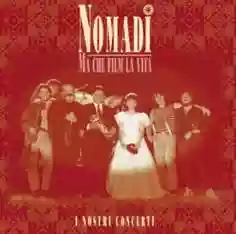
With this phrase, Augusto Daolio used to end Nomadi's concerts. Only in this album, that phrase means many things, one above all: Augusto will unfortunately not say it anymore after this album. Because the charismatic leader of Nomadi was, in fact, ill. For this reason, the record represents the last appearance of the vocalist with his band. The album summarizes the best of Nomadi's last tour with the great Augusto.
The band members were Beppe Carletti on keyboards, Dante Pergreffi on bass, who lost his life in a car accident, Daniele Campani on drums, and Ciccio Falzone on guitar. The touching thing is that the same band members knew about Augusto's illness, but they continued to play and accompany his warm and splendid voice. Yes, because Augusto's voice conveyed a unique warmth, it was as if he sang close to the listener, beside those who listened. His lyrics were deep, they talked about human fears, feelings, wars, friendship, and love. His simplicity and humility should be a model for each of us.
The album begins with "'Il Paese Delle Favole" where Augusto ironically sings about many of the stories he tells. A song that makes each of us think back to when we were little. "'C'è Un Re" describes how sometimes the rulers' thirst for power does not stop even in front of mothers who have lost their children in senseless battles. "'Ma Che Film La Vita" is wonderful, every man should listen to it and appreciate the lyrics. Augusto talks about life, which is full of joys and sorrows, about his parents, his friends, and nature. A profound song that should make one reflect on the meaning of life. Stunning. "'Suoni", a wordless song, serves to dream, to feel free, surprising for its beauty. Here stands out the splendid voice of Augusto, warm and enveloping. In "'Salvador" the story of Salvador Allende's death in Chile during a coup is told. "'Ricordati di Chico" talks about Chico Mendez and his battle for the protection of the Amazon rainforest. "'Primavera di Praga" tells what happened in Prague in 1968. Of the matter of the rich and the poor, note "'Mercanti E Servi'" in which, after a description of the lifestyle of the two different classes, it concludes with the phrase that whether you are rich or poor, you have sand in your hands, meaning that all men should be considered equal without social discrimination and prejudice.
"' L'Uomo Di Monaco " speaks of the journey of a man who ages over time. A text with a profound meaning. In "' Un Giorno Insieme ", a famous piece by Nomadi, the audience sings together with Augusto. "' La Canzone Del Bambino Nel Vento (Auschwitz) " is a stunning piece that tells the horror of the concentration camps where Jews were deported. In this case, the protagonist is a child who dies along with other peers. Augusto's sad voice best expresses the child's drama. "' Gli Aironi Neri " is another historical piece by Nomadi sung perfectly by Augusto. A curiosity about this song: after Augusto's death, his wife said she was walking on the riverbank where Augusto often went, and at some point, a feather from a heron landed on her shoulder. She interpreted it as a sign of love from Augusto. A gift for her. "' Gordon " in which Augusto implores the protagonist of the song to return to Earth. "' Canzone Per Un'Amica " has an apparently cheerful rhythm, but then ends with Augusto remembering his 'friend' who is no longer there. For me, this song has a particular meaning. "' Dio è Morto'" is a critique of the current society that finds no space for faith due to the frenzy of our days. At the end here's "' Io Vagabondo " the most beautiful song by Nomadi, a gem in the Italian landscape. Words that have made entire generations dream. Thanks to it many still feel young. Here Augusto is in the role of a vagabond who has nothing but has God, and this is the fundamental thing. It will be the last time Augusto will sing this song, and for this reason, one hopes that the song lasts forever, but then unfortunately it inevitably ends. Dante Pergreffi will also no longer be there after this live.
Thinking now after years back to Augusto brings tears. He was a great composer, painter, and singer, but above all a great man. Simple and humble, qualities that are lacking in today's world. A great example of a man who with his voice sang the thoughts, fears, and dreams of every man. Thank you, Augusto.
In conclusion, I find it right to write the thoughts for the now departed Augusto, written by some band members and some fans:
"' You know, it's difficult, thinking of you so far from that purely earthly will to believe that everything is space, time, matter. These are the things that make life a big prison and the 'sweetest' escape will always be yours... Goodbye great Augusto, Master of life, companion of a thousand journeys, having known you as a friend will make our penalties less bitter... "' Signed Beppe, Cico, Daniele, Elisa, but also all of us, all the fans of NOMADI!
Loading comments slowly
Summary by Bot
This album marks the final performance of Augusto Daolio as Nomadi's lead vocalist, capturing his warm voice and deep, reflective lyrics. Featuring songs on themes like life, social justice, and history, it is a moving tribute to Augusto's talent and humanity. The band persevered despite his illness, delivering a profound live recording. The review honors Augusto's humble nature and lasting impact on fans and music.Tracklist Lyrics Videos
Nomadi
Nomadi are an Italian music group founded in the early 1960s, strongly associated with vocalist Augusto Daolio and keyboardist Beppe Carletti. The reviews emphasize their long live activity, socially engaged songwriting (often connected to Francesco Guccini’s lyrics), and a continued career through major lineup changes after Daolio’s death.24 Reviews
Other reviews
By Masahiro
Goodbye, great Augusto, Master of life, companion of a thousand journeys.
The grand finale is occupied by a very rocking Te Deum, a sparkling ending, perhaps a bit bitter, as it will be the last testament to the great personality of Augusto and Dante Pergreffi.
By lukather88
This album represents one of the best live performances in the history of Italian music, and it is essentially the epitaph of Augusto Daolio.
Augusto pours his soul, and the audience sings in unison with him one of the best pieces of Italian music.
