
 •
Rating:
•
Rating:
THE REVIEW
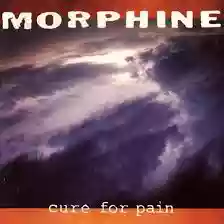
A happy anachronism, I don't know how else to define this Boston group compared to the American scene of the time, dominated by the explosion of grunge. The only precedent that comes to mind, with all due distinctions, is what the early Dire Straits represented in the London scene of '78 then overwhelmed by punk fury. Already the basic trio formation: bass, drums, and sax speaks volumes about how these guys, more than Nirvana, looked to the bands of the '50s/'60s and to a period when the electric guitar hadn't become the mistress of every rock band (not that it's absent here, but it's used sparingly and well).
In a period like the early nineties, where everyone was trying to exploit the new CD format by diluting the good stuff with tons of filler (and I could give examples of good records damaged by excessive length), here is an album that barely reaches the minimum for an LP, just 37:11 min, like in the good old days of the Beatles and the Stones. Smart Choice!
The choice to open and close with two brief and meditative instrumentals was also refined: the second, a requiem for the recently deceased Miles Davis, recalls a bit of "He loved him madly," a piece that the same St. Louis trumpeter dedicated to Ellington's death.
Buena: A piece that starts with such an inviting bass line is always a perfect opener for a funky tune sung with just the right dose of coolness by Sandman up to the explosive chorus where Dana Colley's wild baritone sax (male despite the name) kicks in. Muy Buena!
I'm Free Now: A more relaxed track (despite Sandman's two-string bass always being lively) with a repetitive sad melody on sax on which Sandman places his very loose, conversational and self-ironic singing ("flexing like a heartbeat, we don't like to speak, don't talk to me for about a week").
All Wrong: Interest rises again with an ingenious sax riff, but the highlight is the solo filtered through a wah-wah pedal. A simple and brilliant piece. An honorable mention for the verse: "and when she laughs I travel back in time, something flips the switch off and I collapse inside!"
Candy: Here is the indispensable ballad. The title hints at some loureeddian influences. It certainly has the catchiest chorus ("Candy said she wants me with her down in Candyland") and could have been the most commercially viable hit. Here too, I perceive a certain irony in Sandman's somewhat (overly) sweet singing.
A Head With Wings: One of the more retro tracks, old school boogie. I like that brief moment of percussive anarchy after the chorus "I got a head with wings!". The usual well-constructed solo by Colley, this time on tenor.
In spite of me: Here they surprise a bit with a folk beginning (a bit like Led Zeppelin's "Going to California") with fingerpicking and mandolin and a soft baritone voice, reminiscent of Leonard Cohen and Nick Cave. A brief, fleeting interlude that, however, is too short to propose itself as a cure for pain.
Thursday: It's the track that could come closest to the Grunge of the period with the baritone's growls and final guitar distortions thoroughly weighing down the sound of a piece on an affair broken off by the fear of a jealous husband's violent reaction.
Cure for Pain: "Someday there'll be a cure for pain That's the day I throw my drugs away When they find a cure for pain" seems a bit like the manifesto of the late Sandman's life philosophy. Another somewhat disorienting track because it seems to take it with resigned irony, though one might then think that nonetheless he died that fateful day in Palestrina of a mysterious heart attack…
Mary Won't You Call My Name?: A powerful start with overdubbed sax for a fast-paced track almost like Madness-style ska. The chorus is left to Sandman's voice alone over the timpani's tinkling. Suspended ending.
Let's Take A Trip Together: almost a dark Tom Waits b-side with a sinuously hypnotic pace that dissolves, like the previous one, in a breath. One must admit these Morphine know how to create an enticing atmosphere with few means: an overdubbed voice, a faint organ on a Latin rhythm.
Sheila: I'm not very awake but I suspect that Sheila's cat isn't a feline but a nice cat o' nine tails, on the other hand, the refrain: "I'm yours to command, Sheila, Sheila" is quite unequivocal. Perverse.
In short, a good album, one of those apparently low-profile ones that seem tailor-made to become little cults, a close-knit and original band going against the tide with a minimalist formula, perhaps at first listen a bit monotonous but it reveals many little delights on subsequent listens.
Ten years after Sandman's death, Dana Colley returned to Palestrina to celebrate his friend's songs: "No one is trying to be Mark, no one is trying to be the Morphine. But these songs need to be played." As the Drifters, one of those R&B groups Sandman might have liked, sang, a good song never dies....
Loading comments slowly
Summary by Bot
Morphine's 'Cure for Pain' stands apart from the 90s grunge wave with a minimalist trio of bass, drums, and saxophone. The album's concise length and thoughtful instrumentals evoke classic rock vibes, while Sandman's ironic and conversational vocal style adds depth. Songs like 'Buena' and 'Candy' showcase the band's inventive sound, blending funk, folk, and dark atmospheres. Overall, the album is a cult classic with enduring appeal and subtle charm.
Morphine
Morphine were an American rock trio associated with a distinctive guitar-less sound built around Mark Sandman’s vocals and two-string slide bass, Dana Colley’s saxophone, and drums (Jerome Deupree and later Billy Conway). Active through the 1990s, they released albums including Good, Cure for Pain, Yes, and Like Swimming; The Night was released posthumously. Sandman died in 1999 after collapsing on stage in Palestrina, Italy.17 Reviews
Other reviews
By Bleach
Morphine managed to coin a genre all their own in an absolutely original way.
The voice, with its soft and fluid tone, goes straight to the heart.
By Stefano90
Morphine have done nothing but this, depriving Rock music of its main instrument, the guitar; it’s a bit like mocking thirty (and more) years of music.
The music of Morphine is a music that lives on a wonderful contrast. The cold reason and the enveloping warmth of Sandman’s voice.
