
 •
Rating:
•
Rating:
THE REVIEW
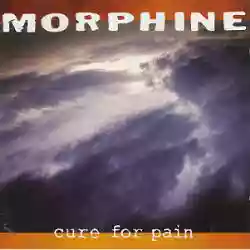
The Morphine were one of the most original bands of the '90s, and Cure For Pain is their worldwide fame album, as well as their highest creative peak. Mark Sandman, the voice and true charismatic soul, decided to try playing rock with an innovative fretless bass, characterized by the lack of frets and only two strings to pluck with the slide. The inspiration for this choice came from studying particular one-string African instruments, which, according to Sandman, contained all the notes within themselves.
Converging towards a more traditional song form compared to the already excellent Good ('92), this work (with Billy Conway replacing Deupree on drums) is characterized by very rich arrangements, dominated by true duets between Mark's deep bass and Dana Colley's saxophone. The result is a sinister and nocturnal sound, strongly sparse and irregular while the voice, with its soft and fluid tone, goes straight to the heart.
Most of the compositions on Cure For Pain are heart-wrenching and melancholic, romantic and at the same time sorrowful, reaching towards a sense of helplessness that predicts a cruel and adverse destiny (I'm Free Now - All Wrong). The Morphine draw heavily from blues and jazz, but the music resulting from this unique trio's formula is more energetic, intricate, and vigorous, as demonstrated by the boogie of Thursday and the syncopated rhythm of Buena. The specter of Nick Cave clearly influences the writing of Mary won't you call my Name, while In spite of Me recalls the most pastoral folk, with the mandolin as the main instrument.
The title track instead emphasizes Sandman's romantic vein and is probably the most immediate and effective piece of the whole album. The work concludes with Miles Davis' Funeral, a sort of reminder for the afterlife and what awaits us after death. What becomes clear after listening to Cure For Pain is that Morphine managed to coin a genre all their own in an absolutely original way; their skill lies in having succeeded in directing an experimental concept of music devoid of the guitar into the traditional rock song format.
Regarding the lyrics, it must be said that they are indeed intense and poetic, but rather than telling stories in the singer-songwriter form, they actually worry about evoking dark, spectral images that surround the music. Sandman is, in every respect, a sad and metaphysical poet in the tradition of Cave and Waits.
Little curiosity: five songs from the album were included in the soundtrack of the movie "Spanking The Monkey," which won the Audience Awards at the Sundance Film Festival in 1993. Furthermore, Rolling Stone magazine celebrated Cure For Pain as the major underground success of 1994 with as many as 300,000 copies sold. If you want to listen to something unique and different from standard rock, this album is for you. A milestone of the '90s that absolutely needs to be rediscovered.
Loading comments slowly
Summary by Bot
Morphine's Cure For Pain stands as their creative peak and worldwide breakthrough, blending fretless bass, saxophone, and deep vocals into a unique rock genre. The album offers rich arrangements and melancholic, poetic lyrics with blues and jazz influences, creating a sinister and intimate atmosphere. Its originality and emotional depth have made it a celebrated 90s underground classic. Songs featured in award-winning films and strong critical acclaim cement its lasting significance.
Morphine
Morphine were an American rock trio associated with a distinctive guitar-less sound built around Mark Sandman’s vocals and two-string slide bass, Dana Colley’s saxophone, and drums (Jerome Deupree and later Billy Conway). Active through the 1990s, they released albums including Good, Cure for Pain, Yes, and Like Swimming; The Night was released posthumously. Sandman died in 1999 after collapsing on stage in Palestrina, Italy.17 Reviews
Other reviews
By Stefano90
Morphine have done nothing but this, depriving Rock music of its main instrument, the guitar; it’s a bit like mocking thirty (and more) years of music.
The music of Morphine is a music that lives on a wonderful contrast. The cold reason and the enveloping warmth of Sandman’s voice.
By Marco Salzano
A happy anachronism, I don’t know how else to define this Boston group compared to the American scene of the time.
A good album, one of those apparently low-profile ones that seem tailor-made to become little cults.
