 •
Rating:
•
Rating:
THE REVIEW
Art is the ultimate expression of subjectivity and, consequently, everything an artist produces may or may not be liked depending on perspectives, existential circumstances, and historical moments. Yet, when a work reaches and surpasses the very concept of excellence, then the bow of the audience becomes a due and obligatory gesture. Yes, a bow, there can be no other gesture before this Marillion album, because without a doubt, this is their masterpiece, the second to last with that creator of verbal diamonds known as Fish.
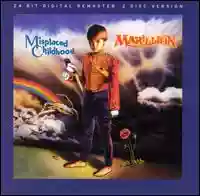
The work in question, however, is only minimally his creation, or rather of his conscious state because, as he would confess multiple times, the textual parthenogenesis of "Misplaced Childhood" happened following an “acid” trip by the former mind of Marillion. But that such eloquence was born from an altered state is, after all, hardly surprising. Not only musical works but also countless literary works owe their dawn to “artificial paradises”; thus, we think of Baudelaire's “Fleur du mal,” or Coleridge's romanticism in “The Rime Of the Ancient Mariner.” Here, Derek William Dick also excels while abusing, and he does so by resorting to paradoxes, visionary anecdotes, and verbal grandiloquences sometimes for their own sake, almost D'Annunzian if you will. All this to tell us, through the metaphor of the magpie, the story of a private drama (evidently autobiographical), of someone who at the end of his “journey,” discovers that his torment was precisely losing childhood (the child depicted on the cover becomes the central character of the album and wants to represent the rebirth after the pains and disappointments endured by the jester, who jumps out of the window toward the rainbow); and then it is worth returning, even in the running registry, back to the realm of “whys” (“there is no end to childhood” Fish obsessively repeats at the end of the album... could it be that the Scottish giant was influenced by Pascoli's “fanciullino”?).
Read the lyrics of "Lavender", as a suggestive paradigm of this album; it's hard not to be moved by the romanticism of such “surreal” verbalism: the protagonist who, lazily lounging in the park, from the sprinkler's call sees the glitters of “childish entities” singing from the rainbow, to dedicate the song to “her”: truly an image, perhaps a bit too fanciful, yet capable of moving anyone, undeniable (“I was walking in the park dreaming of a spark, when I heard the sprinklers whisper shimmer in the haze of summer lawns. Then I heard the children singing, they were running through the rainbows, they were singing a song for you. Well it seemed to be a song for you. The one I wanted to write for you, for you...”).
It's no different for that “gem” that in less than a year will reach no. 2 on the prestigious UK chart, named “Kayleigh”: here too, the lyrics, though perhaps a bit less “touching” than "Lavender", leave no one indifferent, just as that splendid “Script for a Jester’s Tears” of only two years prior to this album did.
The artwork is typical of Fish-era Marillion; after all, the author and designer of the covers was the main architect: let’s say he graphically and visually projected the words caged by the poetic nature of his lyrics. For those (like me) who own the vinyl of this album, it is nice to appreciate the hallucinogenically surreal cover; Dalí would have smiled in satisfaction seeing it, I am sure.
But “Misplaced Childhood" is also and above all music; music very “serving” to the lyrics and the concept they support: this is already clear from the intro “Pseudo Silk Kimono” where the 5 musicians suddenly catapult us into a dreamlike, melancholic and fairy-like world, light-years away from the daily microhistory of those who listen to it.
The vocal and stylistic influence of Gabriel's Genesis (and especially Hackett's!!) and the early works with Phil Collins (especially with “Trick of the Tail”), as well as the lines of Peter Hammill, are still evident, however, here Marillion manage to a certain extent to definitively personalize their style and, in turn, become a “source of inspiration.” Of all the subsequent works “inspired” by this work, I dare mention the immense “Operation Mindcrime” by Queensryche from 1988.
The style, in fact, I would define as a progressive rock contaminated by psychedelia, or to use the fashionable phrasing of the time, a “neo-prog” (let’s not forget that the period when the album sees the light, 1985, is entirely pervaded by the electronic wave); sudden style changes and unexpected sudden melodies (most of the tracks are, however, set in the incisive simplicity of 4/4) create a perfect symbiosis with the subtlety of the words.
It’s a pity to know that three years after this album the singer and lyricist of this great band, perhaps blinded by his narcissism, would attempt (and fail spectacularly) an improbable solo career. However, like all things, even (and especially) the beautiful ones, there is a beginning and there is an end. Despite the great works they will still give us in the subsequent two decades (among all, I quote the album “Brave” with the vocally superior, but light-years unequal to Fish in terms of imagination and artistic abilities) replacement mister H. In my opinion, with this album the Marillion mark the world of prog with an unparalleled seal that, along with a few other works, will endure “for centuries of centuries” in the rock Olympus.
P. S. The surreal beauty of the album inspires equally contemplative beauties; the author dedicates this review to the imaginary smile of Ioanna.
Loading comments slowly
Summary by Bot
This review praises Marillion's 1985 album Misplaced Childhood as their masterpiece and a defining work of neo-progressive rock. It highlights Fish's poetic, often surreal lyricism born from an altered state, and the album's powerful concept revolving around lost and rediscovered childhood. The music, inspired by Genesis and Psychedelia, perfectly supports the lyrical themes. The review also touches on the iconic cover art and the album's lasting influence on progressive rock.Tracklist Lyrics Videos
Marillion
Marillion is an English rock band associated with neo-progressive rock, first achieving major success in the 1980s with vocalist Fish and later continuing with Steve Hogarth from 1989, shifting toward more atmospheric and song-oriented approaches while maintaining a strong fan following.24 Reviews
Other reviews
By splinter
The album is a real stroke of genius for the particular way it is structured, although it doesn’t actually seem that particular!
This album is fundamental for the rebirth of the progressive genre and an example of how we can create well-crafted melodies without becoming tediously verbose.
