
 •
Rating:
•
Rating:
THE REVIEW
In the first half of the 1980s, Marillion, thanks to the albums "Script For A Jester's Tear" and "Fugazi," had the merit of re-proposing a style, progressive, that seemed to be forgotten, that seemed to have had its time and that interested only a few enthusiasts, suffocated by the commercial sounds of the period, a period that based everything on simplicity and sales success. A nice punch, surely, but now the definitive deathblow was needed.
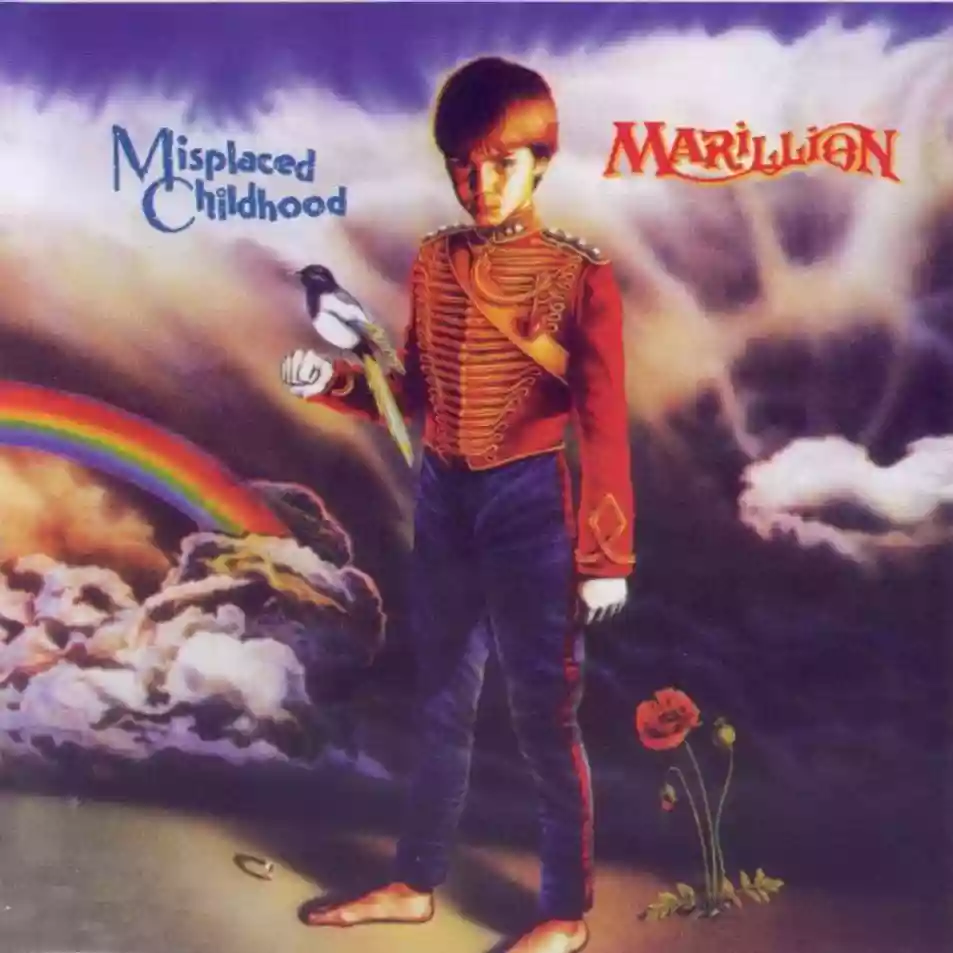
Marillion delivers it in 1985 with "Misplaced Childhood," a concept album based on broken love stories and lost childhoods. For Fish's band, it is a commercial consecration. Probably, the credit goes to its less intricate and more catchy sound compared to the previous two albums but also to its strong melodic impact.
The album represents in my opinion (and probably not only mine) a real stroke of genius for the particular way it is structured, although it doesn't actually seem that particular! The album indeed seems to result as a perfect meeting point between the well-disposed melodies of neo-progressive and more "easy" structures with a pop-rock imprint. In fact, if we delve into specifics, we realize how many of the tracks seem meticulously crafted in melodies but at the same time immediate in listening. They have a predominantly verse-chorus structure or anyway not very elaborate compared to the two previous albums but include typically prog elements such as well-emphasized keyboard parts, moderately intricate passages, and well-studied rhythmic solutions... and moreover, they are connected by a single musical flow typical of the concept album.
And the album indeed seems capable of attracting lovers of prog atmospheres and the devotees of an easy-listening sound. A reconciliation between two types of fans that might seem somewhat uncomfortable and unlikely but that is indeed reality here.
The album is, as mentioned, Marillion's greatest commercial success and probably all this wouldn't have been possible without its relatively immediate sound. Tracks like "Kayleigh" and "Lavender" (with its piano and guitar intro very much in Genesis style), melodic and effective, could turn out to be keys to success; the former even reached 2nd place on the chart in England and that's certainly not a small feat for a band of the prog scene. But in the album, there are other moments that manage to prove effective but full of interesting cues: an example can be "Heart Of Lothian" with its beautiful piano-guitar intro, its rhythmic onset that flows into a repetitive yet harmonious guitar solo accompanied by powerful keyboards before the atmospheric finale; another gem is "Childhood's End?" with its radio-friendly structure alternating delicate guitar passages accompanied by keyboards in the verses to more energetic guitar riffs in the chorus; and what about the splendid pair opening the second part of the album, formed by the brief "Waterhole (Expresso Bongo)" and "Lords Of The Backstage": the beautiful percussion play of the former, well complemented by keyboard sounds and lively almost funky guitars, also splendid the latter, rhythmically excellent and characterized by the beautiful duet between guitar and keyboard touches. Equally excellent are the album's intro and outro; that "Pseudo Silk Kimono" with its cold and vibrant keyboard that proves perfect for introducing us into the heart of the album and that "White Feather" very guitar-oriented which represents the final jolt of it all. And for lovers of more relaxed and less immediate atmospheres, there are also two longer tracks: "Bitter Suite" and "Blind Curve," which give more space to the melodic and always vibrant keyboard background and the more pronounced progressive-inspired guitar arpeggios.
But probably it wasn't what Fish and company really wanted; most likely, there was no intention to sound so immediate. The album was supposed to be originally composed of two 20-minute suites each... but in a time when record labels were becoming increasingly powerful and "tyrannical" towards their dependent artists, the label says no! Because modern people don't want to listen to two long suites but want singles with high commercial potential. And so the choice to break the album into 10 tracks. A choice not wanted but that proved fundamental in making the album's structure extremely ingenious and effective.
In any case, this album is fundamental for the rebirth of the progressive genre. It is a point of reference for future generations of proggers and an example of how we can create well-crafted melodies without becoming tediously verbose, without ever overindulging in virtuosity (often opposed), without artificially extending tracks when maybe it's unnecessary. An album that makes its simplicity a point of strength, that through it distinguishes itself from any prog album conforming to well-known stereotypes; an album rich in personality!
Personally, I prefer the previous two albums, because they are better structured and more complex, but the compositional level of this album remains very high, and one is practically forced to acknowledge its importance. I, in truth, am more of an admirer of the Marillion of the following phase, therefore the Marillion led by Steve Hogarth, because they are more experimental and escaping from the neo-prog canons, but credit to Fish's Marillion for knowing how to reinvent prog giving rise to a new generation of proggers.
Loading comments slowly
Summary by Bot
Misplaced Childhood by Marillion marked a crucial moment in the 1980s progressive rock scene, skillfully balancing catchy melodies and prog intricacy. While simpler and more accessible than their earlier work, the album achieved commercial success and remains influential. The review highlights standout tracks and the album’s concept nature. It acknowledges the constraints imposed by record labels but praises Marillion for revitalizing prog and inspiring future generations.Tracklist Lyrics Videos
Marillion
Marillion is an English rock band associated with neo-progressive rock, first achieving major success in the 1980s with vocalist Fish and later continuing with Steve Hogarth from 1989, shifting toward more atmospheric and song-oriented approaches while maintaining a strong fan following.24 Reviews
Other reviews
By Vinsex
Yes, a bow, there can be no other gesture before this Marillion album, because without a doubt, this is their masterpiece.
Here Marillion manage to a certain extent to definitively personalize their style and, in turn, become a 'source of inspiration.'
