 •
Rating:
•
Rating: THE REVIEW
Bad girl she has always been. Maybe not extremely bad, but a little unconventional, yes. And then there's always that story: more a cunning manager of herself than an artist. Which is not necessarily a bad thing, but for many it is. In one word: Madonna.
For better or worse, amidst a thousand controversies (on which she cleverly thrives) and some good records scattered here and there (by the way, the last one wasn’t bad at all). Occasionally even an actress, although the results have always been terrible. In the 1980s she caused quite a stir because she told young girls the fairy tale that it's good to be virgins. Everyone agreed, but then, secretly, everyone did what they wanted. And looking back, between her and Michael Jackson, the 1980s weren't as boring as many stubbornly claim. Perhaps they weren't exciting from a musical point of view, but who cares, the important thing is to exaggerate.
But then, inevitably, the string tends to snap. And pull after pull, in the end, it breaks. The 1980s ended, and it was the turn of the 1990s. And the scandal, the one carefully crafted, began to wear out even the most devoted fans. "Like a Prayer" (1989) was practically the same thing as "You Can Dance" (1987), which was practically the same thing as "True Blue" (1986). The image begins to lose favor, and a soundtrack that is, all things considered, quite tidy ("I'm Breathless") is not enough to return to the glory days of a few years before.
However, Madonna always has a backup card, the joker to draw when you can't even attempt a flush. First thing: the label change. She goes from Sire to Maverick (created by her for this purpose), reconstructs a sort of lost identity (she’s no longer a young girl, alright, but still, she's very attractive) and pushes the boundaries: this time she declares it openly, it's "Erotica". Well played Ms. Ciccone! You certainly know what you're doing!.
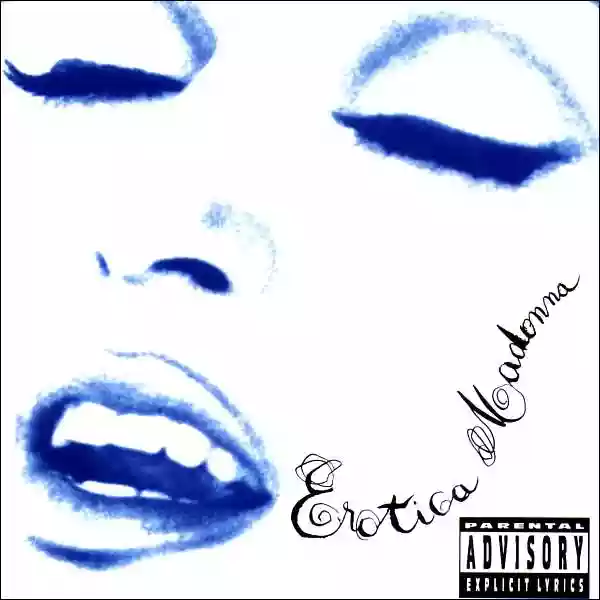
"Erotica" comes out in 1992 and is accompanied by a book, "Sex," that Madonna releases for the occasion. In short, after the frivolous and carefree era, the time for the adult and spicy era has arrived, the one where the line between mass pornography and elite provocation is something more than a 'thin red line'. It's better not to disturb Terence Malick (or Conrad for that matter) since, despite the great publicity, "Erotica" is a negligible album, light as a feather. And too little 'musical', even disappointing some fans.
Yes, because what should have been the grand-style comeback will soon turn out to be a half-step back, one of those falls that don't make much noise but cause some slight tremor. "Erotica" is an album that bets everything on the image but has little substance, little meat on the bones: the music is banal, or rather, already heard, and the dance proposed by Madonna is less innovative and more past its expiration date. Dance tracks that no DJ would ever play (because they're too sophisticated) and tracks for teenagers that no kid would ever listen to (because they're too complex). Some old soft-hearted fan who loved Madonna might even enjoy listening to the album, but then let's label the work for what it is: an album for a few because it is extremely boring. And it doesn't matter that the video accompanying "Bad Girls" is more hard than soft, the result doesn’t change, nor does the boredom.
And then the much-loved transgressions: in the track that gives the album its title, Madonna declares herself (gasp!) a Mistress Sadomaso, and this already says it all. The other tracks are what they are (that is, little) if you exclude at least two fairly successful pieces: "Rain" (nothing special, but with an extra gear) but, above all, the nice cover of a jazz piece by Peggy Lee, "Fever." A track turned upside down, in Madonna's hands, becomes a great pop number, full of rhythm and dance undertones, all things considered quite fun.
Accompanying this massive media operation, here comes a quasi-promotional film. It's "Body Of Evidence" performed alongside Willem Dafoe and Joe Mantegna. In the director's chair, a certain Ulrich Edel. Here too, as in the album, erotic attitudes, handcuffs, whips, ropes, loads of sadomasochism thrown in the spectator's face as vulgar as they are harmless. An obscene film (let’s not even mention the plot, it's better this way) that was snubbed by the public and mistreated by critics.
"Erotica," as noted, is thus a turning point in the career of the Italian-American artist. Like every crossroads, it is not linear and proceeds in zig-zags: it lacks the compactness of some of Madonna's historic albums, it lacks above all a main idea to support the structure. Cheap and pointless eroticism is not enough, contents are also, and above all, necessary. And good music is needed. However, the album sells around 5 million copies (not a small feat!), but compared to Madonna's previous albums, a result below expectations. An immense joy, to be honest, for all those detractors who couldn't stand Madonna from the very start: they were waiting for a misstep, and here they are satisfied, they got it.
Constantly torn between movies and music (no point talking about "Evita," it would be like shooting at the Red Cross), Madonna would only seriously return to work in 1998 with the album "Ray Of Light," her best in at least ten years. Then came the world tours, the definitive consecration, the 'forties' quite surpassed, to arrive finally at the present day. Provocative and seductive as always, just a few years older and with experience which is never a bad thing: today, beyond the image, not always but often, there is also substance. "Erotica" is a distant memory. And let's hope it stays as distant as possible!.
Loading comments slowly
Summary by Bot
The review positions Madonna's 1992 Erotica album as a controversial but musically underwhelming project. While the album boldly embraced erotic themes and provoked public discourse, its musical content was seen as banal and lacking innovation. Despite strong promotional efforts and some standout tracks like 'Fever' and 'Rain,' the album failed to meet expectations and divided fans. Erotica is framed as a turning point before Madonna's later resurgence with Ray of Light.Tracklist Lyrics Videos
Madonna
Madonna (born Madonna Louise Ciccone, August 16, 1958) is an American singer, songwriter, actress and cultural icon who rose to prominence in the 1980s and has had a multi-decade career marked by stylistic reinventions.55 Reviews
Other reviews
By flood
Madonna abandons the idea of an album as a collection of potential hits, with a varied sound to reach the largest possible number of listeners, and for the first time decides to create an album with a well-defined sonic project, organic.
The sex addressed in Erotica is not joyful but appears almost as a diversion, an escape, a desperate necessity.
By Darius
"Erotica represents the pinnacle of the 'scandal' function that Madonna has portrayed since 1982."
"Songs where Madonna’s voice is deliberately soft, muted, almost husky, represent the peak of sensuality on the record."
