
 •
Rating:
•
Rating:
THE REVIEW
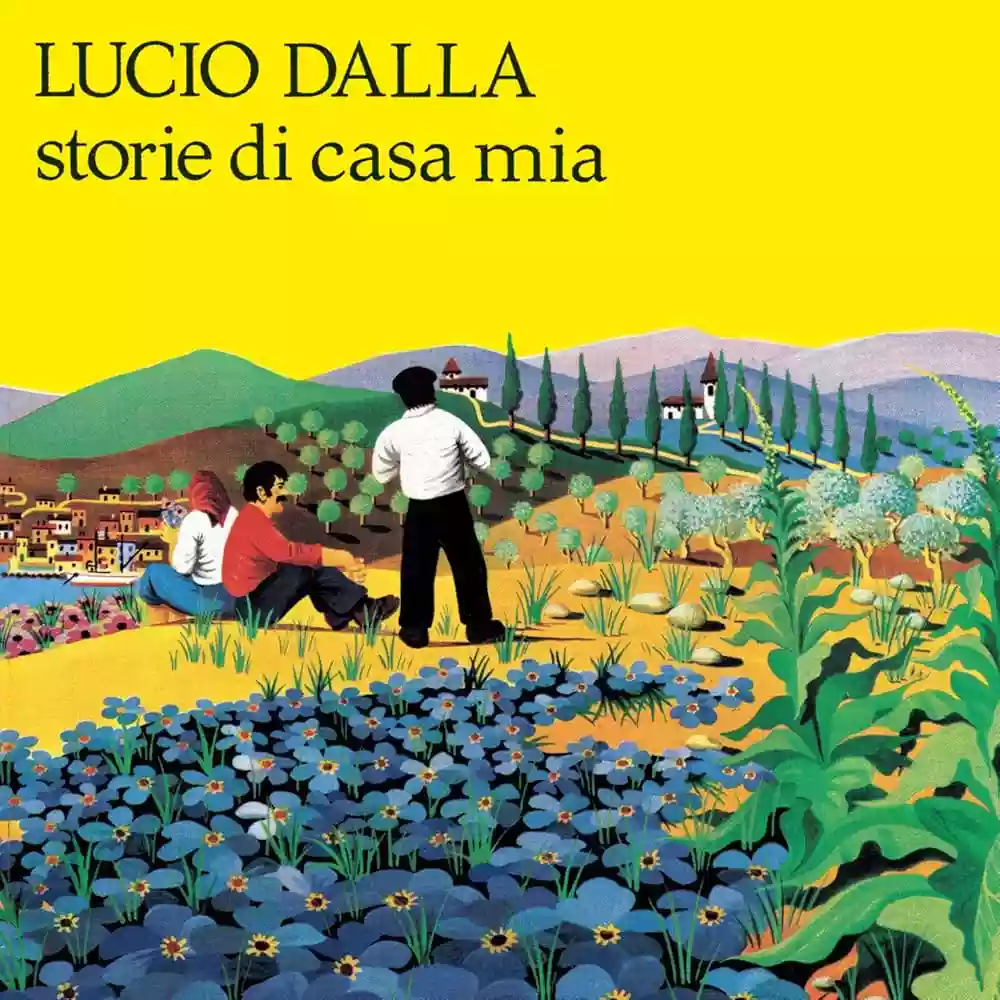
STORIE DI CASA MIA (1971) 6.5/10
When I was 15 or 16, back in 2000 (so basically in the Mesozoic era), CDs were still being sold, we paid with lire, and we were all much younger. In the stores some rather strange CDs started to appear, labeled “I Miti.” This series of discs, which was created to be sold at newsstands, went through forty years of Italian music: from Pino Daniele to Venditti, from Stadio to Fossati, all gathered in mini-anthologies of 10 tracks (usually the oldest ones) which, for someone like me who knew only the Italian music of my time, could be a sort of nice “bignamino.” I bought two: one by Battisti and one by Dalla, the two Lucios. The song that struck me most (probably because of my congenital melancholy) from the Bolognese singer-songwriter was “La casa in riva al mare,” which, at the time, I didn’t know. This track is present in this album, his third, the one that would suddenly make him famous, thanks to his participation at Sanremo with the scandalous “4/3/1943.”
Dalla, not yet writing his own lyrics but only (only, in a manner of speaking) composing the music, moves along the lines of an airy Italian pop (exactly, Sanremo style) with a few slightly crazy and not entirely successful sparks of his (here not quite hitting the mark) and some truly brave moves: “Il gigante e la bambina.” So, it’s clear that in an album featuring songs like those mentioned above, as well as “Un uomo come me” and “Itaca,” it’s hard to give a low rating but, if you evaluate the work as a whole, alongside the grand and celebrated tracks there are too many (rightly) forgotten songs. Two, or even three, steps forward compared to the previous “Terra di Gaibola,” but still far from the masterpieces at the end of the '70s and the beginning of the '80s (and some “gems” from the Roversi-Dalla duo are even greater, see the splendid “Automobili,” 1976, which I have already enthusiastically reviewed here).
Let’s get the pain over with. What doesn’t work? “Il bambino di fumo,” aside from its respectable ecological message, remains suspended with that Neapolitan coda at the end; the superficial satire of “Il colonnello” (with Dalla in great vocal form, but it’s the worst track on the album); “Per due innamorati,” very sad and ethereal; the little joke at the end with “Lucio dove vai.” I save, partially, “L'ultima vanità,” but only for the sax. See, if you took out these songs, the record would be a masterpiece. The lyrics are evenly split between Paola Pallottino, Gianfranco Baldazzi, and Sergio Bardotti, music by Dalla (as mentioned above), but not on every track.
The opener “Itaca” is already indicative of the later Dalla, the one who would joyfully wallow in the imagery of sea, sailors, crews, and maritime scenes in general; but this song is beautiful with its swaying rhythm (like the waves of the sea) and the chorus (which was “outsourced” to some RCA workers in Rome). Of course, there’s “4/3/1943,” and here Dalla played around with it a bit—maybe a bit too much: at the time, his record label (with the artist’s consent) spread via the press the story that the song was autobiographical (in fact, it is for the date, not for the story) and for a while everyone believed it (was Dalla’s mother really pregnant by a man “che veniva dal mare, parlava un'altra lingua però sapeva amare”?) until the truth had to come out (I’ll spare you the whole censorship story: the blasphemies, the original title “Gesùbambino”—I know you know all that already). Number one in the hit parade, scandal at Sanremo (where it placed third), quickly covered by Nuova Equipe 84 and the source of countless covers (yes, it could be one of those songs that, perhaps, after so many repeated listens, may have grown a bit tiresome, but just the violin by Renzo Fontanella is worth its weight in gold). “Il gigante e la bambina” caused the same scandal, even if the public, distractedly, didn’t notice. In the form of a fairy tale (though some images are not exactly “fairy tale-like”) it tells the story of a rape, a forbidden subject in Italy at the time (let alone in a song meant for the masses!). That same year Ron, already a friend (and collaborator) of Dalla, also sang it. This song has always been among my favorites and I believe it is among the most beautiful in the history of Italian music: Dalla’s version adds that extra something (in the voice, the arrangements, the pauses) that makes it even more tragic and memorable. “Un uomo come me” is, this time, autobiographical (at times, brutally honest) while “La casa in riva al mare” takes me back 26 years and still moves me.
Loading comments slowly
Summary by Bot
This review evaluates Lucio Dalla's album 'Storie di casa mia' with an average rating. It considers the album's musical qualities and significance within Dalla's discography. The reviewer provides a balanced perspective, highlighting both the strengths and shortcomings. It's a thoughtful look at one of Dalla's earlier works. Fans of classic Italian music may find new insights here.Tracklist Lyrics Videos
Lucio Dalla
Lucio Dalla (Bologna, 4 March 1943 – Montreux, 1 March 2012) was an Italian singer-songwriter, musician and actor. Clarinetist by training, he blended jazz roots with pop and canzone d’autore, rose with the Roversi trilogy (1973–76), and reached a peak with Com’è profondo il mare (1977), Lucio Dalla (1979) and Dalla (1980). He co-led the 1979 Banana Republic tour with Francesco De Gregori and wrote the classic Caruso (1986).49 Reviews
Other reviews
By CJBS
In historical periods of maximum hypocrisy, telling the truth is by itself a revolutionary act.
"Storie Di Casa Mia" is a historic album containing beautiful melodic songs characterized by strong lyricism and extensive use of metaphors.
By withor
His desire to acquire more recognition and popularity is evident in this work, perhaps due to being tired of being considered "niche."
In my opinion, ["La casa in riva al mare"] is one of the most beautiful songs ever in Italian music, nothing more to add.
