
 •
Versione 1
Rating:
•
Versione 1
Rating:
THE REVIEW
This was the best-selling album in Italy in 1980 (then one might say...) and it is one of the peaks of Dalla's work, included in that period between 1977 (the year he definitively detached from the words of the poet Roversi) and 1986 (the year of the culminating American tour), but, upon closer inspection, this album is included in the period 1977-1980 which is absolutely the best of Dalla.
He had already made a splash the previous year with the album "Lucio Dalla" and did even more with this one, in which he significantly strengthened his sound thanks to the fundamental contribution of Stadio, who were not yet a solo group. The rhythm is remarkable in many tracks, ranging from funky to pure pop, from soft-rock to the most classic singer-songwriter style.
By 1980, Dalla is already an absolute icon of Italian music, aided by the triumphant tour with De Gregori the previous year, and everyone is waiting for him at the turn. Expectations are high, but he meets them all, despite this album, which partly contains very melancholic moments but also moments of open brightness, being perceived by Dalla as his "suffering" album, as recalled by the album's producer Alessandro Colombini (here is the interview dated 2020: https://www.rollingstone.it/musica/interviste-musica/nellalbum-del-1980-dalla-ce-tutta-la-disperazione-di-lucio/539056/).
Perhaps the greatest despair can be heard in "Cara", which should have been called "Dialettica dell'immaginario" (certainly a bold title for a song), whose lyrics are the work of philosopher Stefano Bonaga, a fellow citizen of Dalla. And, at least in the intentions of the Bolognese singer-songwriter, more than like a song, it was conceived as a sort of screenplay draft, an element, that of the song (an already older man who gradually falls in love with a younger girl) certainly suitable for a movie. But then, so it is, it became a song and I mention it as I consider it the most beautiful of the album, perhaps the most moving, where Dalla's poetry becomes the promoter of an unexpected idea of a high poetic theme adapted to a hit parade song context.
Equally magnificent is "Meri Luis" (which Marco Mengoni revisited years later, not badly, it must be said), which is a masterpiece of hope and the desire to live. Taking back one's life by leaving aside all those constraints that prevent us, day after day, from living it to the fullest (eloquent and chilling is the passage: "Meri Luis finally understood that love is beautiful and let herself go"). In the blender, stories of dentists, directors waiting for a capricious diva, bartenders, and large breasts.
Obviously, the two most famous compositions must be mentioned: "Balla balla ballerino" and "Futura". The first opens the album and is a soft-rock masterpiece worthy of an A+, but certainly, the second is the one that most entered the collective imagination. It must be said that Berlin must work miracles, or at least it did at the end of the '70s. David Bowie wrote "Heroes" seeing a couple kissing near the Wall, Dalla wrote "Futura" while he was in a taxi at the end of one of his concerts. Written at night, thus a nocturnal song in birth but sunny and open, indeed, to the future in content, with that funky interlude that becomes "lento lento adesso batte più lento" at the end, before the definitive explosion (it basically mimics, musically, a sexual act).
In recent years, "La sera dei miracoli" has also been fortunately recovered, with that opening as disconcerting as it is wonderful in the chorus, a song that Dalla composed as a summer motif for one of the many Roman summer nights of the era (a series of evening events, musical or artistic in general, proposed by the Municipality of Rome at the time) and which is preceded by the mysterious "Il parco della luna", a story out of this world (or within, depending on the points of view) of an unusual couple and their love relationship. Mysterious because the context is lunar, apparently belonging to the real (Ferrara is mentioned), but so dreamlike that it could also be a daydream. A compelling track, not gone down in history, but very effective. And, let's say it, moving.
Of the eight tracks that make up the album, the only one perhaps a little less convincing is "Siamo Dei", a reflection on the human being as vulnerable as, indeed, human, and God up there, "Non sarà che a stare sempre nello spazio hai imparato a portar sfiga?", which is also amusing but the man-God dialogue in songs, honestly, has never driven me crazy (perhaps except for "La stazione di Zima" by Roberto Vecchioni), but so it is, the album is still a masterpiece, beyond a track that might be less successful.
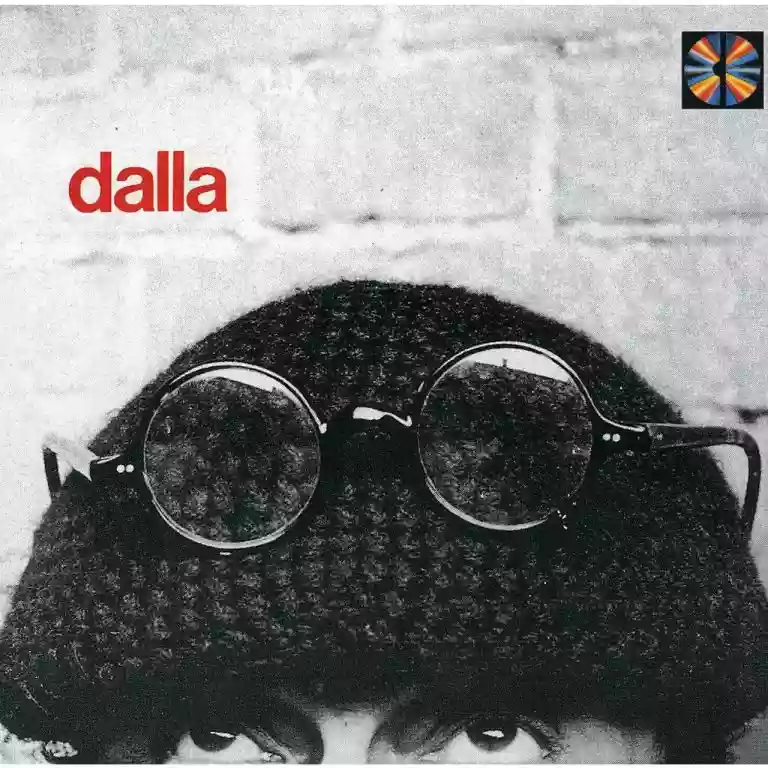
The cover by Renzo Chiesa has gone down in history, one of the most famous (or iconic, as the Gen Z would say) in music history.
Loading comments slowly
Summary by Bot
Lucio Dalla's 1980 album 'Dalla' represents the pinnacle of his creative period between 1977 and 1980. Known for blending melancholic themes with vibrant rhythms, the album features iconic tracks like 'Balla balla ballerino' and 'Futura.' Significant contributions from the band Stadio enriched its sound. Though one track falls short, the album remains a masterpiece of Italian music, celebrated for its poetic depth and musical diversity.Tracklist Lyrics Videos
Lucio Dalla
Lucio Dalla (Bologna, 4 March 1943 – Montreux, 1 March 2012) was an Italian singer-songwriter, musician and actor. Clarinetist by training, he blended jazz roots with pop and canzone d’autore, rose with the Roversi trilogy (1973–76), and reached a peak with Com’è profondo il mare (1977), Lucio Dalla (1979) and Dalla (1980). He co-led the 1979 Banana Republic tour with Francesco De Gregori and wrote the classic Caruso (1986).50 Reviews
Other reviews
By cece65
In this 1980 album, Lucio perhaps offers his best performance, in all the songs he is at the peak of his expressiveness.
"Cara" is perhaps one of Lucio Dalla’s peaks, a fantastic ballad where good Lucio, at the end of the piece, performs one of his typical vocalizations.
