
 •
Rating:
•
Rating:
THE REVIEW
IL MIO CANTO LIBERO (1972) 9/10
“[...] Lucio Battisti, for me, is the greatest of all. I have always admired, and I admire him more and more, for his way of making music. There is a dogma, a diktat that comes from the radio: never interrupt the rhythm. Lucio's songs are all about pauses, like classical music. He is ahead of now, ahead of what we consider today to be the best in music [...]” (Ivano Fossati, 2019).
If there is a Battisti album that is all about pauses and accelerations, it is Il mio canto libero, released in November 1972, in the same year that, in April, Umanamente uomo: il sogno came out—a record that, thinking about it now, seems almost inhuman. In the same year, Battisti “sent” to the hit parade “I giardini di marzo”, “E penso a te”, “Io vorrei... non vorrei... ma se vuoi”, “Confusione”, and “Il mio canto libero”. Il mio canto libero is a truly free album because Battisti himself is, in primis, free: free from any contractual constraints (produced by Numero Uno, meaning himself and Mogol), he can “roam” across various fronts and use stylistic registers of any kind. The album soared on the charts (it would be the best-selling of 1973); if he wasn’t on the hit parade, there was always a song that belonged to him (but he also “claimed” second place with Il nostro caro angelo). Unstoppable.
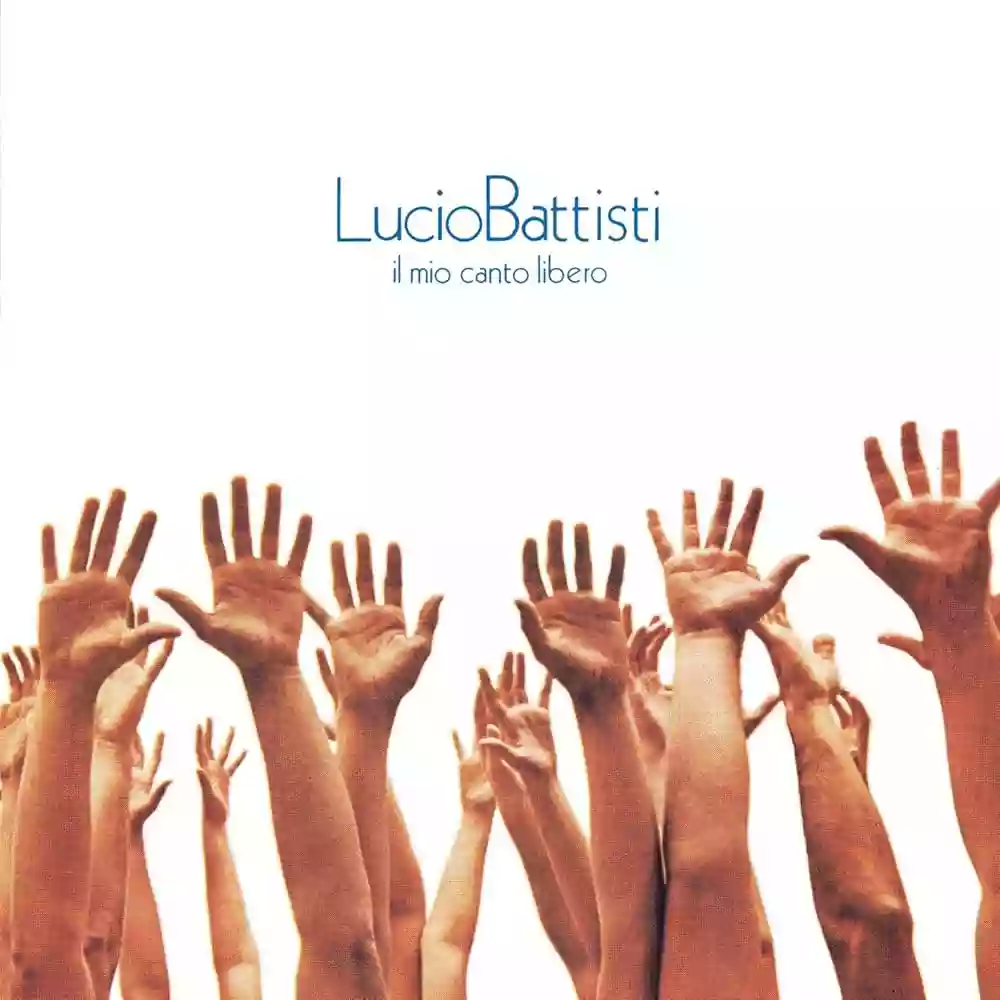
From the beautiful cover created by the always ineffable Cesare Montalbetti (although all of Battisti's album covers are beautiful, except maybe the first one), the “statement” is clear right from the start: the Mogol-Battisti duo feels free to explore, and if the predominant theme of the entire album is love, there are also references to ecology (a theme always dear to Mogol), to the status symbol that plague humanity, and moments of authentic humor. If Fossati talks about classical music, it's obvious that a song like “Vento nel vento” (gorgeous) draws from that sea: the air of the salon romance is a classy touch that no one in Italy would have dared place in a song destined for the masses, and the interplay between piano and organ works splendidly.
Eight songs, at least four of which are now legendary. Everyone already knows everything about the title-track (with those continual pauses Fossati referred to), but in my opinion, it’s worth highlighting the ecological theme that “pervades” the track, for which countless covers exist (including one, heaven help us, by Cristiano Malgioglio). If David Bowie’s admiration for Battisti is well known, “Io vorrei... non vorrei... ma se vuoi” is the prime example, as Bowie himself covered it in English (with a completely different lyric) calling it “Music is lethal”. The steep descents, the climbs (with that characteristically up-and-down musical pattern) were groundbreaking, just like the line about the rock that should—but can’t—hold back the sea (metaphorically, it’s the story of a man who, after a devastating romantic disappointment in which he “embraced death”, doesn’t know if he should start again with another woman or not). There’s even a curious German version, with the eternal title “ Ich wurd gern, ich weiss nocht nicht, doch wenn du willst”. The more “lighthearted” moments are entrusted to the joyful sarabande of “Luci-ah” and, especially, “Confusione” (which, by the way, seems to be the Battisti song preferred by the former Coma-Cose—and, rightly you’ll ask, who cares, and you’re right). Mogol was already talking about “open relationships” in 1972, while Renato Zero’s love triangle was still far away.
The wonderful “La luce dell'est” (incidentally, my favorite) deserves a separate discussion: beyond the political controversy it stirred up at the time, it’s a splendid song both in musical arrangement (the chorus opens up in the best possible way) and in the lyrics, which alternate moments of gentle humor (“Poi seduti accanto in un'osteria/bevendo un brodo che follia/io la sentivo ancora profondamente mia”) with those of pure tragedy (“un colpo di fucile” that abruptly ends the story). Battisti also reclaims a song he had “given” to Bruno Lauzi the previous year: “L'aquila”, stripping it, let’s say, of Claudio Fabi’s original orchestration. “[...] He creates a single block of verse […] without any breaks, repeats it three times […] with the addition of a long guitar riff” (Luciano Ceri). A thoroughly “Battisti-esque” album.
Loading comments slowly
Summary by Bot
The review praises Lucio Battisti's album Il mio canto libero, highlighting its lasting impact on Italian music. The author's strong rating reflects admiration for Battisti's artistry. Timeless themes and emotional depth define the album. Fans of classic pop and Italian rock will find the album especially appealing. Overall, the review underscores the album's enduring significance.Tracklist Lyrics Videos
Lucio Battisti
Lucio Battisti (1943–1998) was an Italian singer, composer and producer from Poggio Bustone. He rose to prominence in the late 1960s and 1970s with lyricist Mogol, crafting many of Italy’s most beloved songs, and later pursued a radical electronic and linguistic shift with Pasquale Panella (1986–1994). From 1980 onward he withdrew from concerts, TV and interviews, insisting the art should speak for the artist.103 Reviews
Other reviews
By Eneathedevil
"Il mio canto libero" is a milestone in Battisti's production and a turning point in modern Italian song.
It’s the definitive turning point of Italian pop music, redefining the role of singer and songwriter to talk about feelings, not gossip.
By stargazer
"The 8 songs on this album have entered the history of Italian pop music, thanks to their freshness."
"The last track is the very famous title track, in my opinion, the best song ever written by Battisti, and one of his most famous."
By death immortal
Through 'Il mio canto libero' Battisti presents us with the issue of love in almost all the songs.
Battisti is attracted to the desire for a death that doesn’t kill him, but rather allows him to live every moment of life with love and simplicity.
By Cristianpiga
Lucio Battisti at the peak of his career.
A must-have.
