
 •
Rating:
•
Rating:
THE REVIEW
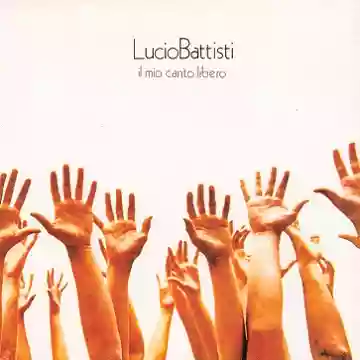
Here we are: whether we like it or not, whether we accept it or not, a semi-serious study of Italian pop music cannot ignore the knowledge of this album, a true turning point in the evolution of modern song; "Il mio canto libero," released in 1972, is a milestone in Battisti's production and beyond, a supreme example of orchestral richness that makes the instruments necessarily inseparable subjects, a first work of the contemporary panorama of Italy's screaming scene.
It is, like no other Battisti album – except for "Anima Latina" two years later – a musically complex work, a piece featuring a great variety of instruments played by as many as nineteen different musicians: Lucio manages well with the guitars alongside Radius and Lavezzi, Vince Tempera gives a good performance on the piano, Gianni dall'Aglio's drumming is decisive. Much has been said about the content of the album, and when not said, Mogol's words have spoken for themselves: masterpieces like "La Luce dell'Est," "Il mio Canto Libero" and "Io vorrei... non vorrei... ma se vuoi" need no redundant comments, but to avoid making every critique cloying, it will suffice to recall the splendid string arrangement directed by Gian Piero Reverberi in the melancholic first track of the album, the gospel soul and vaguely new-age – in the good sense of the term – of the heartfelt title track, the unforgettable climax of voice and strings in the sixth piece of the album: "Le discese ardite e le risalite" bring to mind a musical richness that only Battisti managed to bring to Italian pop music. There are moments of amusement like "Luci-Ah" and "Confusione" where Battisti indulges in his vocal distortion capabilities, there are moments of dignified protest like "Gente per Bene e Gente per Male" and "L'Aquila," there are small musical pearls like "Vento nel Vento," one of those pieces that someone savvy like De Gregori couldn't have ignored by reprising it as an instrumental tail of "La Leva Calcistica della Classe '68": all this is there in Canto Libero, Battisti's emotional experience filtered through music, Mogol's real experience shaped through words.
A masterpiece, a success. It remained at the top of the Italian charts for over two months, ousting from the Empyrean that sacred monster that was "The Dark Side of The Moon," without irreverence, with courage: it's the definitive turning point of Italian pop music, the redefinition of the role of singer as well as songwriter, the choice to talk about feelings and not gossip about them, the coup de grace to the graceless fashion of screams and hair with pomade.
How can a rock hold back the sea.
Loading comments slowly
Summary by Bot
Lucio Battisti's 1972 album 'Il mio canto libero' marks a pivotal moment in Italian pop music, combining orchestral richness with emotional depth. Featuring nineteen musicians and complex arrangements, it stands as a masterpiece showcasing Battisti's and Mogol's talents. The album's success redefined the role of the singer-songwriter in Italy, challenging contemporary trends and remaining a timeless classic.Tracklist Lyrics Videos
Lucio Battisti
Lucio Battisti (1943–1998) was an Italian singer, composer and producer from Poggio Bustone. He rose to prominence in the late 1960s and 1970s with lyricist Mogol, crafting many of Italy’s most beloved songs, and later pursued a radical electronic and linguistic shift with Pasquale Panella (1986–1994). From 1980 onward he withdrew from concerts, TV and interviews, insisting the art should speak for the artist.104 Reviews
Other reviews
By stargazer
"The 8 songs on this album have entered the history of Italian pop music, thanks to their freshness."
"The last track is the very famous title track, in my opinion, the best song ever written by Battisti, and one of his most famous."
By death immortal
Through 'Il mio canto libero' Battisti presents us with the issue of love in almost all the songs.
Battisti is attracted to the desire for a death that doesn’t kill him, but rather allows him to live every moment of life with love and simplicity.
By Cristianpiga
Lucio Battisti at the peak of his career.
A must-have.
By JpLoyRow
Lucio Battisti's Il mio canto libero reveals a timeless quality that still resonates.
Battisti forged a new path in Italian pop with this unforgettable release.
