
 •
Rating:
•
Rating:
THE REVIEW
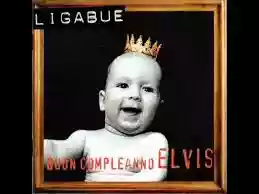
The emblem of the Ligabue conception of life and music, or art in general, is all concentrated in this album. Some time ago, Woody Allen, with his usual sly and reassuring air, said, "I've been making the same movie all my life, but as long as no one notices, I'll keep going." Indeed, he kept going. Just like Ligabue. Liga is liked by everyone, maintaining for 25 years now a transversally shared and plebiscitally confirmed consensus. He is liked by the young because he seems to resemble them. He is liked by the left because he's magnanimous. He is liked by women because "they know it" and by men because "he's one of us." If De André was chasing the rhetorical game of the figure and De Gregori that exacerbated hermeticism, Ligabue is in urgent search, albeit rhapsodic, of the low profile. A profile never too thoughtful, a life in the midfield, whispering conformity, and that loosened pessimism at the end of every song. Liga, in short, is pleasantly reassuring. He's a faithful friend, a bit like Battisti, who speaks to the cheated generation and finds refuge in the thaumaturgic condition of "no, because no". The good Luciano has never hidden the desire to be the new Battisti, that universal symbol of human solidarity and sincere, peaceful gathering, but things are a bit different. Battisti, from a purely musical point of view, was a revolutionary, able in the hedonistic '80s to mock appearances, retreating into that anonymous, and therefore enchanted, refuge that was the partnership with Pasquale Panella. Luciano musically is as reactionary as Picierno in politics, that is, nothing. The singer-songwriter from Correggio, always criticized far too simplistically by a public opinion increasingly conforming to what seem like unassailable musical traditions, possesses a rare and commendable peculiarity: recognizability. Ligabue is not the new Battisti. He is the new Mogol. A more feminist, more intellectual Mogol, less rough and rustic but like him full of clichés; if for Giulio Rapetti "the cherry trees and dragonflies in a field" matter, in Ligabue's work "the thighs and mosquitoes" prevail.
His aesthetic, quoting Edmondo Berselli in "Canzoni", "spans between the banal and the sublime, between the concrete and the abstract, between the conjunctural and the epochal, between the flight and the down-to-earth, always considering the sacred and the profane as interchangeable." Luciano Ligabue's talent is not pragmatic, institutional, or academic, but rather instinctual and visceral (see "Radiofreccia", masterpiece, or "La neve se ne frega"). The Emilian singer-songwriter is a serene embellisher of everyday life, a comforting elder brother who whips you then immediately comforts you with a caress, an acute observer of society capable of grasping its most exposed aspects and understanding its shifts. The "great" Liga, as good Guccini likes to call him, has played a saving and at the same time deleterious role for the generation of the '90s, namely, becoming a generational singer for a generation that needed an existential soundtrack to support it. Thus creating an increasingly uncritical dimension around his art and an adolescent idolatry around his figure. Some of his songs have dazzled and pierced entire generations, leading even those who claim to hate Ligabue to roll down the car window and sing at the top of their lungs "Certe notti" or "Leggero". Luciano Ligabue has captured fragments of U2 and Springsteen, snapshots of Guccini, and that grumpy and grouchy restlessness typical of a certain rock that hasn't fulfilled a targeted political protest, but rather a generic, albeit vivid, "it’s not our time".
Loading comments slowly
Summary by Bot
This review situates 'Buon compleanno Elvis' as a quintessential album embodying Ligabue’s instinctual and recognizable style. It highlights Ligabue's role as a generational voice, beloved for his reassuring, relatable music despite critiques of simplicity. The album is framed within a lineage of Italian songwriting emphasizing emotional connection over musical revolution. Ligabue’s music comforts and reflects the everyday life and restlessness of his audience, solidifying his place in Italian rock culture.Tracklist Lyrics Videos
02 Seduto in riva al fosso (04:30)
04 La forza della banda (04:22)
05 Hai un momento, Dio? (04:39)
06 Rane a Rubiera Blues (01:04)
09 I "ragazzi" sono in giro (04:24)
10 Quella che non sei (04:02)
11 Non dovete badare al cantante (03:36)
12 Un figlio di nome Elvis (04:03)
13 Il cielo è vuoto o il cielo è pieno (03:36)
Luciano Ligabue
Luciano Ligabue is an Italian singer-songwriter, film director, and writer from Correggio (Emilia-Romagna). Emerging with the 1990 debut “Ligabue,” he became a mainstay of Italian rock with stadium-sized anthems. He directed the films Radiofreccia (1998) and Da zero a dieci (2002) and authored the novel La neve se ne frega.56 Reviews
Other reviews
By cameli11
"Buon compleanno Elvis consecrated his comeback, his best album that also marks a turning point in his way of making music."
"'Certe notti' is a milestone in Italian music, a slow ballad that has become the soundtrack to so many young people's first encounters with life."
By Marko89
What convinced me most about Buon compleanno Elvis was Liga’s skill in producing a CD without highs and lows, with 14 tracks that engage you from beginning to end.
Liga may not be a genius, his songs may not have that deep meaning behind which some grand ideal hides, but the music is beautiful and myself and millions of other fans like it.
By DEMIAN
Go to any record store and look for 'Buon Compleanno Elvis' by Ligabue... close your eyes... and let the music take over.
'Certe notti' is the kind of melancholy that is actually happiness.
By JpLoyRow
Luciano Ligabue's 'Buon Compleanno Elvis' stands out as a defining record in his career.
A must-listen for anyone curious about the evolution of Italian rock.
