
 •
Rating:
•
Rating:
THE REVIEW
After the incredible success of the first, Ligabue gifts his fans with both the second and third albums: "Lambrusco Coltelli Rose & Pop Corn” and “Sopravvissuti e Sopravviventi”. These are two CDs that reaffirm the Emiliano singer's ability to compose melodies appreciated by everyone, even by people without a refined musical culture.
However, both remain a step below the previous one: I think the main problem is the lack of consistency in terms of quality. Liga goes from masterpieces like “Urlando contro il cielo” or “Ho messo via” to catchy yet not unforgettable pieces like “Regalami il tuo sogno” or “Pane al pane”.
Subsequently, in 1994, the fourth work was released: “A che ora è la fine del mondo”, with the titular track, a translation of the famous song by R.E.M., and other medium-level tracks.
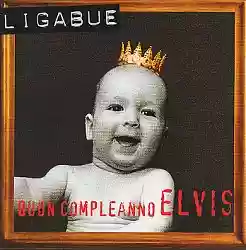
The following year marks the release of “Buon Compleanno Elvis”, which I would like to focus on. The CD and the subsequent tour exploded the “Ligabue phenomenon”: the determined and energetic rock of the album thrust the singer into the spotlight of the Italian scene. It's undeniably a work of good level, and certainly Liga's most famous.
From a musical arrangements standpoint, evolutions are noticeable, both due to the singer's greater experience and especially due to a band composed of very skilled musicians, such as drummer Robby Pellatti or guitarist Mel Previte.
Personally, however, I admire the first work more: “Ligabue”, as I believe it is more challenging to create something good without the support of an audience that considers you an unknown, rather than confirming your prestige with the fans (and money) that give you courage, as in the case of this CD; Ligabue therefore had the merit of starting his singing career by immediately convincing people of his capability.
What convinced me most about “Buon compleanno Elvis” was Liga's skill in producing a CD without highs and lows, with 14 tracks that engage you from beginning to end: you move from an energetic “Vivo morto o x” to a softer “Seduto in riva al fosso” but really well-arranged, with impressive guitar parts, then find yourself catapulted into the rhythm of “Buon compleanno, Elvis” and “La forza della banda”. The fifth track is “Hai un momento, Dio?”, one of the best where Liga directly addresses the one who (perhaps) created us to find answers to his questions; it leads to the playful musical intermission “Rane e Rubiera blues”, followed by the now well-known “Certe notti”: some consider it the most beautiful Italian song of the '90s. I don't feel inclined to give it such a great honor, but it is certainly a song easy to fall in love with.
Liga's rock doesn't stop and here are three tracks, each better than the last: the strong “Viva!”, the compelling “I ragazzi sono in giro”, and the stunning “Quella che non sei”. After “Non dovete badare al cantante”, and “Un figlio di nome Elvis”, nice but not extraordinary, and “Il cielo è vuoto o il cielo è pieno”, with a well-done guitar intro, here is the final explosion, the cherry on top: “Leggero”. Regarding Liga's most beautiful song (perhaps only matched by “Piccola stella senza cielo”), I won't say anything more, leaving the pleasure of discovery to those who don’t know it yet.
I know there will be the usual ones who, seeing the name “Ligabue,” will throw some of their insults towards him, the CD, or the review, perhaps without even reading it. They should stop pestering! Liga may not be a genius, his songs may not have that deep meaning behind which some grand ideal hides, but the music is beautiful and myself and millions of other fans like it. We're not talking about Paolo Meneguzzi!!! Ignorant? I don’t think so. Perhaps the real ignorant ones are those who don’t accept others’ tastes.
Loading comments slowly
Summary by Bot
The review praises Ligabue’s fifth album Buon Compleanno Elvis as a milestone in his career that showcases energetic and consistent rock music. It highlights the band’s skillful musicianship and memorable tracks like 'Certe notti' and 'Leggero.' While acknowledging it’s slightly less groundbreaking than his debut, the album’s quality and engagement from start to finish solidify Ligabue’s position on the Italian rock scene. The reviewer also addresses some common fan criticisms with a tolerant and appreciative perspective.Tracklist Lyrics Videos
02 Seduto in riva al fosso (04:30)
04 La forza della banda (04:22)
05 Hai un momento, Dio? (04:39)
06 Rane a Rubiera Blues (01:04)
09 I "ragazzi" sono in giro (04:24)
10 Quella che non sei (04:02)
11 Non dovete badare al cantante (03:36)
12 Un figlio di nome Elvis (04:03)
13 Il cielo è vuoto o il cielo è pieno (03:36)
Luciano Ligabue
Italian singer-songwriter, rock musician, author and film director (born 13 March 1960 in Correggio). Debut album released 1990; also directed the film Radiofreccia.54 Reviews
Other reviews
By cameli11
"Buon compleanno Elvis consecrated his comeback, his best album that also marks a turning point in his way of making music."
"'Certe notti' is a milestone in Italian music, a slow ballad that has become the soundtrack to so many young people's first encounters with life."
By DEMIAN
Go to any record store and look for 'Buon Compleanno Elvis' by Ligabue... close your eyes... and let the music take over.
'Certe notti' is the kind of melancholy that is actually happiness.
By pigro1997
Ligabue is pleasantly reassuring. He’s a faithful friend... who speaks to the cheated generation and finds refuge in the thaumaturgic condition of 'no, because no'.
Luciano Ligabue is not the new Battisti. He is the new Mogol, a more feminist, more intellectual Mogol, less rough and rustic but like him full of clichés.
