
 •
Rating:
•
Rating:
THE REVIEW
It's 1995, and in Italy, several events are taking place that will leave a mark in the years to come: for instance, G. Fini founded Alleanza Nazionale, the heavily favored Milan loses the Champions Cup to Ajax, and an Emilian songwriter rises from his ashes by recording his masterpiece.
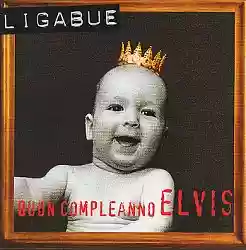
Yes, because Luciano Ligabue, after his grand debut with the self-titled album and the gold records, and critics' comparisons to Vasco, etc., went on to collect 2-3 consecutive flops, and "Buon compleanno Elvis" consecrated his comeback, his best album that also marks a turning point in his way of making music.
Listening to the 14 songs, one realizes that this is a different Ligabue from the one known before: the usual rock but more sophisticated, more refined both in sounds and in mixing; the usual lyrics, addressing themes close and dear to young people, but more "profound," more influenced by the years gone by; the usual Luciano, in short, but more mature and experienced.
Here, then, are the 14 stories, now about a teenager wanting to escape his world, now a musician who plays and doesn't care about anything else, now a lover, now the happiest boy on Earth… so much can be read between the lines!
As soon as the CD is inserted into the player, a burst of energy from "Vivo o morto o x" starts, ironically talking about all the obligations and impositions that stop you from living as you would like; it ends, and the atmosphere relaxes with "Seduto in riva al fosso," or the reflections of a person who finally has some solitude to think about themselves; then passing through escapes to freedom ("Buon compleanno Elvis!"), joys brought by music ("La forza della banda"), and confessions of troubles ("Hai un momento, Dio?"), a croak of frogs introduces the signature Ligabue song, his identity document, his career summarized in a little over 4 minutes: "Certe notti," a milestone in Italian music, a slow ballad that with its lyrics has become the soundtrack to so many, many young people in their first encounters with life.
From here on, the atmosphere calms down: apart from "I “ragazzi” sono in giro" and "Quella che non sei" (a consolation gift to a girl in existential crisis), the songs are all calmer and, with just the guitar introducing a very sweet "Leggero," this effort closes, which objectively brought him to the level of other great Italian artists.
Subsequently, all his works have been accepted, appreciated, I dare say revered, and other songs have marked the heart and mind of rockers, but what came after is a child of this album, without which Ligabue probably wouldn't have sung and played as we know. Fans and enthusiasts of the genre cannot do without it!
Loading comments slowly
Summary by Bot
Published in 1995, Ligabue's 'Buon compleanno Elvis' represents his celebrated comeback after a series of less successful albums. This album shows a more mature and refined rock style with profound lyrics addressing youth and life reflections. Highlighted by the iconic track 'Certe notti,' it is considered a milestone in Italian music. The album paved the way for Ligabue's future success and solidified his place among Italy's greats.Tracklist Lyrics Videos
02 Seduto in riva al fosso (04:30)
04 La forza della banda (04:22)
05 Hai un momento, Dio? (04:39)
06 Rane a Rubiera Blues (01:04)
09 I "ragazzi" sono in giro (04:24)
10 Quella che non sei (04:02)
11 Non dovete badare al cantante (03:36)
12 Un figlio di nome Elvis (04:03)
13 Il cielo è vuoto o il cielo è pieno (03:36)
Luciano Ligabue
Italian singer-songwriter, rock musician, author and film director (born 13 March 1960 in Correggio). Debut album released 1990; also directed the film Radiofreccia.54 Reviews
Other reviews
By Marko89
What convinced me most about Buon compleanno Elvis was Liga’s skill in producing a CD without highs and lows, with 14 tracks that engage you from beginning to end.
Liga may not be a genius, his songs may not have that deep meaning behind which some grand ideal hides, but the music is beautiful and myself and millions of other fans like it.
By DEMIAN
Go to any record store and look for 'Buon Compleanno Elvis' by Ligabue... close your eyes... and let the music take over.
'Certe notti' is the kind of melancholy that is actually happiness.
By pigro1997
Ligabue is pleasantly reassuring. He’s a faithful friend... who speaks to the cheated generation and finds refuge in the thaumaturgic condition of 'no, because no'.
Luciano Ligabue is not the new Battisti. He is the new Mogol, a more feminist, more intellectual Mogol, less rough and rustic but like him full of clichés.
