
 •
Versione 1
Rating:
•
Versione 1
Rating:
THE REVIEW
Ah, too many memories. I remember the summer of 1992; I was 8 years old and staying in Diano Marina (don’t know where that is? Unbelievers) and from the jukebox at the beach establishment where I was staying with mom and grandma (dad, poor guy, was in Milan working and came to visit us on the weekend, yes, back then there was still the jukebox, dismantled the following year) everyone, absolutely everyone, played "Mare mare," and went on to sing it under the midday sun. Well, the sun. It must have been what kept us from realizing a blessed nothing, but listening to it again in the shade and coolness, the song, let's say, wasn’t as cheerful, actually at the end he wondered, but me, at the sea, "what did I come here for if you’re not here? No, I don’t want to come back anymore." Instead, we danced, sang, and to the sea, we definitely wanted to go, then me, at 8 years old, even if she wasn’t there, well, amen.
Luca Carboni, one of the great mysteries of Italian music. The singer-songwriter of a generation of 1980's twenty-somethings who asked existential questions about love and the future (everyone thought that generation had no doubts, but Carboni threw them in our faces) soon became a carefree thirty-something with high-charting, yet quality, albums; finished and washed up by the mid-1990s right at the beginning of what was supposed to be his artistic maturity. Was it Jovanotti’s fault who, after this album, took him on tour with the famous "Diario Carboni"? No, because I’d like to point out that after this album, he didn't get another one right (Jova is dangerous, you know).
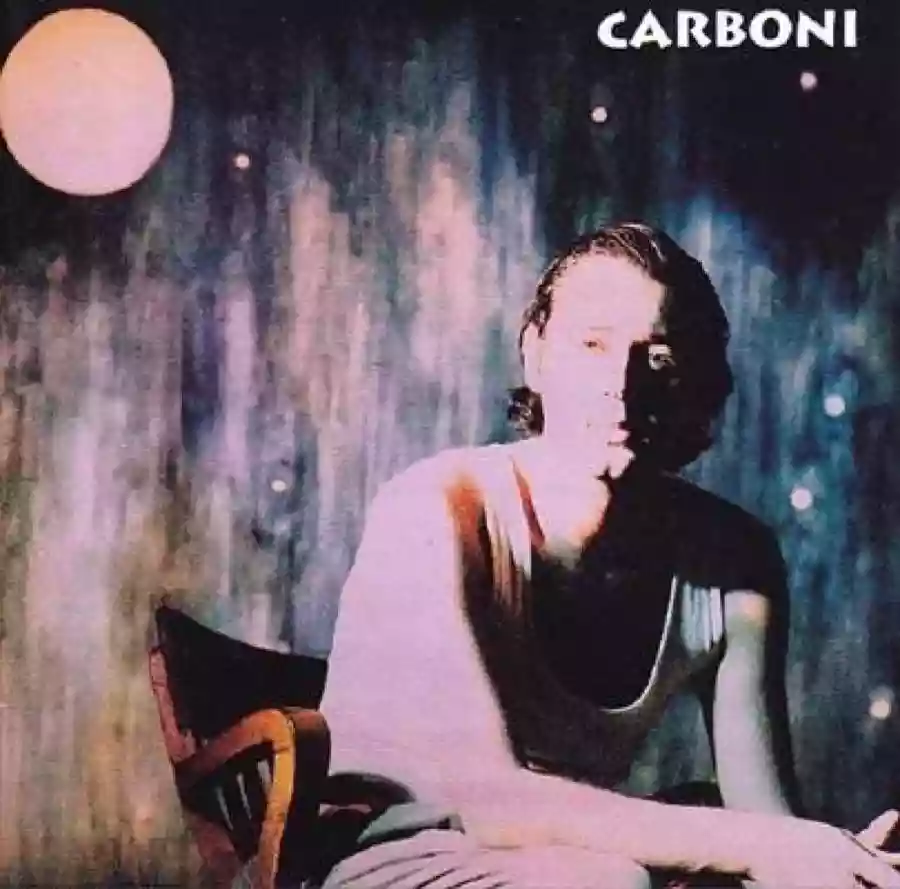
"Carboni", a largely summery album, was released in early January 1992. It sold so well that after eight months it was still on the charts, doubling, tripling sales. The driving piece was "Mare mare," followed by the famous "Ci vuole un fisico bestiale." It's a notable album, well-crafted in arrangements (non-trivial drums and bass lines), ironic and less carefree than it might seem. It is true that it is driven by these aforementioned hit parade tracks, but the Bolognese singer-songwriter lived within his times and tried to delve into its contradictions, putting current events to the forefront. We were in the years of Tangentopoli and mafia massacres, hence "Alzando gli occhi al cielo" ("How can mafia bosses not repent?") and the track that opens the second side, the fairly famous "La mia città" where he convincingly describes the difficulties of living in a city and the hysteria that affects its inhabitants ("You, who even when eating ice cream have an angry look") and anticipates a theme today at the forefront, the fear of thefts and crime (houses with a thousand bars on their windows, and that was thirty years ago, what has changed?).
The intimacy works. From the resignation of "Tempo che passi" to the anxiety-inducing "Le storie d’amore" (musically dark, despite a fairly easy-going text), however, the billiard shot is "L’amore che cos’è," airy, occasionally shouted, which closely recalls, the leit-motiv of "Farfallina," present in that self-titled 1987 album that redefined his singer-songwriter coordinates.
Not everything goes smoothly, at least two tracks are obvious fillers written only to bring the album's length around 40 minutes: "Siamo le stelle del cielo" is (quite) embarrassing, with those choirs aged very poorly and "Baila Sad Jack," having said of a catchy rhythm, is a watered-down portrait of a middle-aged loser (moreover, not very coherent with the rest of the work).
Last fire, folks. Then the water of mediocrity extinguished it, they say turning 40 changes a man, for Carboni 30 were enough.
Loading comments slowly
Summary by Bot
The review highlights Luca Carboni's 2025 album 'Carboni' as a significant artistic development marked by vibrant melodies and touching lyrics. The album receives praise for blending catchy pop elements with sincere musical expression. It shows Carboni’s evolving style while maintaining his signature Italian pop charm. Overall, the review appreciates the album's quality and emotional resonance.Tracklist Lyrics Videos
Luca Carboni
Luca Carboni (born 1962 in Bologna) is an Italian singer-songwriter known for blending pop hooks with reflective, city-rooted storytelling. Debuting in 1984, he scored major hits with Silvia lo sai, Mare mare, and Ci vuole un fisico bestiale, and later renewed his sound with Pop-up (2015) and Sputnik (2018).20 Reviews
Other reviews
By senior86
The city 'closes me in a room and makes me feel lonely' and forces us 'always inside something, a car that goes or inside a tram... Without ever seeing the sky and breathing smog.'
There’s room for reflections on existence in the very sweet 'Siamo le stelle del cielo.'
