 •
Rating:
•
Rating:
THE REVIEW
The '90s: the mafia, immigration, the post '80s shock, the desire to recover and reclaim lost time.
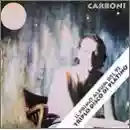
The now almost thirty-year-old Luca Carboni decided to fully put himself to the test, this time without necessarily facing the introspective and all-too-often pessimistic paths of his early records. Without abandoning that Verghian realism so dear to him, the Bolognese singer-songwriter achieved sensational success with this fifth album made between Milan and Bologna. Everywhere one hummed "Ci vuole un fisico bestiale", while "Mare mare" became the soundtrack of long vacations away from the cities.
And it seems to be precisely the city the central point of the work, a city that "closes me in a room and makes me feel lonely" and that forces us "always inside something, a car that goes or inside a tram... Without ever seeing the sky and breathing smog". The reference to Bologna is clear, but the discussion could be extended to any other place. It’s interesting to note that Carboni becomes a spokesperson for any ordinary citizen, angry and furious, tired of people's hypocrisy and human self-destruction ("There are those who have to cheat to work and those who have learned to study to deceive you"). But if "La mia città" seems to be the most impactful piece of the album, "Alzando gli occhi al cielo" is no less. Here Carboni is incredulous, helpless and at the same time seems almost to want to persuade "certain powerful people" and "certain mafia bosses" ("But if by any chance they look up to the sky, how do they not crap themselves, not feel cold."). Having seen Michele Placido's "Romanzo criminale" just yesterday, it feels terribly strange to talk about this piece, for the themes it deals with and the images that immediately come to mind. There's room for reflections on existence in the very sweet "Siamo le stelle del cielo".
We return to questioning, this time about love in the explicit "L'amore che cos'è". The electronic blues of "Sad Jack" narrates the story of a family man who has reached desperation after discovering his son is using drugs (déjà-vu) and that his life is falling apart, but who nonetheless still has the courage to smile. "Tempo che passi" is a bitter reflection on the passage of time. "Le storie d'amore" cause pain and Carboni does not forget the romanticism veiled with melancholy already sung in "Farfallina" or in "Ci stiamo sbagliando".
If in terms of content, the album is full of ideas, one cannot say the opposite in terms of music. The songs are definitely more accessible, but there are many nuances, especially in the arrangements and the rhythm section (even though the drums are computerized throughout the album) that make the album still fresh and current 14 years later. Also splendid is the omnipresent blues guitar of Jimmy Villotti, which enriches pieces like "La mia città" and "Siamo le stelle del cielo" with jewel solos.
Loading comments slowly
Summary by Bot
Luca Carboni’s fifth album 'Carboni' captures the social realities and emotional struggles of Italy’s late 20th century with poignant lyrics and memorable melodies. Mixing blues guitar solos with accessible rhythms, Carboni channels themes of urban isolation, love, and critique of hypocrisy and corruption. The album remains fresh and relevant over a decade after its release, highlighted by standout tracks like 'La mia città' and 'Ci vuole un fisico bestiale.'Tracklist Lyrics Videos
Luca Carboni
Luca Carboni (born 1962 in Bologna) is an Italian singer-songwriter known for blending pop hooks with reflective, city-rooted storytelling. Debuting in 1984, he scored major hits with Silvia lo sai, Mare mare, and Ci vuole un fisico bestiale, and later renewed his sound with Pop-up (2015) and Sputnik (2018).20 Reviews
Other reviews
By JpLoyRow3
A refreshing Italian pop experience full of heartfelt lyrics and melodic tunes.
Carboni showcases both artistic maturity and a catchy sensibility throughout this album.
