
 •
Versione 1
Rating:
•
Versione 1
Rating: THE REVIEW
Lou was the kind of guy who purposely made music critics (and the public) wrinkle their noses, no doubt about it.
That famous and noisy Metal Machine Music from a few years earlier — to alienate his own fans — had already shown his most reckless side (or liberal/artistic?). Let's be clear, Lou could afford this and more. The same guy who told Andy Warhol to screw off on the eve of recording the second Velvet Underground album a decade earlier.
Thus, Reed's seventies conclude with the recording of the dandy-like The Bells. The adventure companions — most respectable — include
Nils Lofgren (a few years later he would join Bruce's E Street Band as a guitarist) who wrote some tracks alongside Lou;
Don Cherry, one of the most prolific trumpeters of his kind and father of Neneh and Eagle-Eye. This gentleman's name should be etched on the album cover next to the protagonist's since it's Don who carries, outlines the entire delirious pack of tracks.
Delirious, indeed. Not for their structure but for Lou's neurotic, parodic interpretation.
The Bells is an album more made than its creator; it has the awareness (perhaps not too much though) of mocking that historical phase of prevailing Dance Music. In fact, Disco Mystic, the second track, is effectively a sort of repetitive instrumental. Stupid Man opens the "dance" with an Iggy Pop-like cadence that tells of a man missing his daughter and for various reasons can do nothing but let himself go to the melancholy of absence. Then With You and City Lights pop up, two of the most bizarre songs ever recorded and conceived. At a certain point, the former repeats Slow Down, Slow Down (something you think as you listen) and the latter sees Reed's tone drop dramatically for a text dedicated to Chaplin and his political misadventures. The title track The Bells is improvised in Berlin studios, or at least the text, and features a gloomy, rarefied, and sad introduction in tribute to Edgar Allan Poe.
Ah, broadway only knows The great white milky way It had something to say When he fell down on his knees After soaring through the air With nothing to hold him there It was really not so cute To play without a parachute
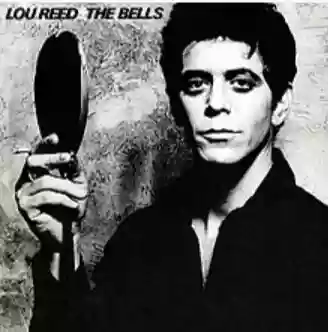
Essentially, the album is one of Lou Reed's most bizarre and eccentric experiments, and here and there the studio chatter has a higher volume than the tracks; but the vicious was also this, someone who didn’t take himself too seriously (it even seems to me that half-smirk on the cover is mocking you).
Loading comments slowly
Summary by Bot
Lou Reed's The Bells is a daring and eccentric experiment from the late 1970s, marked by neurotic, parodic vocals and avant-garde instrumentation. Featuring notable collaborators like Don Cherry and Nils Lofgren, the album mocks dance music trends while delving into melancholy and political themes. It’s a deliberately bizarre work that reflects Reed's disregard for convention and critics alike. Studio chatter and improvisation add to its unique, raw atmosphere.Tracklist Lyrics Videos
Lou Reed
Lou Reed (born Lewis Allan Reed, March 2, 1942 – October 27, 2013) was an American musician, singer-songwriter and founding member of the Velvet Underground. He had a long solo career noted for albums such as Transformer, Berlin and New York and for experimental works including Metal Machine Music.71 Reviews
