
 •
Rating:
•
Rating:
THE REVIEW
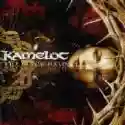
Kamelot
The Black Halo
SPV Records, 2005
Three or four years ago when I got this CD, I quickly labeled it as insipid and carefully placed it in a tight drawer thinking it would never come out of there again. Certainly too difficult for my ears accustomed to indulging in easy, easy melodies. Only a few months ago I reopened that drawer, and "The Black Halo" started spinning in my stereo again. I took the booklet and began to read the concept album.
FAUST/ ARIEL
Kamelot is an absolutely atypical, difficult, and original metal band and I am only partially surprised by their choice to draw inspiration from Goethe's greatest work, Faust, for the lyrics of their sixth album. The concept revolves around a wise alchemist (Ariel) who has an infinite thirst for knowledge and allows himself to be tempted by Mefistele (an angel cast out from paradise) betting with God that he can obtain the man's soul. His soul is precariously balanced between salvation and damnation, and it is plagued by countless unanswered questions that continuously haunt him.
In the personal reinterpretation of the work, Ariel (who in the previous album "Epica" witnessed the suicide of his great love Helena, who was also expecting a child) is, as already mentioned, tempted by Mephisto who promises him, in exchange for his soul, a moment of pure pleasure. A pleasure so intense and profound that even he, a desperate person, would eventually wish with all his being that it would never end. He accepts, and a beautiful woman arrives who reminds him of Helena in every way, with whom he makes passionate love. Regretful for what he has done (still in love with Helena and fully aware that this condition can never change), he escapes and wanders with the weight of a tormented conscience. He understands that humanity is too weak and can never live in a perfect world. He is aware that he will never find the truth and with what he has done, he will never be able to reach God and his beloved. He finds himself alone in an abandoned world full of anguish for all the pain he caused Helena and feels responsible for her death. The only thing he feels compelled to do is confront Mephisto and renounce his diabolic pact. Not to seek personal salvation, but for a sense of justice. By confronting him and repenting of his pact, he realizes that every person has their beliefs, but the only universal truth is love. At the moment of his death, strong in his discovery, his soul leaves the body and is saved as, in the eyes of God, he had the courage to renounce Mephisto. He can embrace Helena, while Mephisto, having lost the bet, sinks into hell forever.
THE TRANSPOSITION INTO MUSIC
Transposing such a concept album into music is certainly not a simple task, but Kamelot has the characteristics to express the desperation and torment of the protagonist. The first card is represented by the Norwegian singer Roy Khan. A singer capable of excelling at lower tones, carefully distributing the high notes, and in general, well embodying the philosophical and sad character of Ariel. Simone Simmons as the "temptation," Shagrath as Mephisto, and Mari Youngblood as Melena complete the set of perfectly matched singers. The music of the entire album moves along decidedly metallic and heavy tracks. Massive riffs often intertwine with epic and hypnotic mid-tempos. This is the case with the opener "March of Mephisto," where orchestral pauses alternate with a growl. Among the most immediate songs, the fast (double pedal) "When The Lights Are Down" with a neoclassical and variable break, and the super hit "Soul Society" which brings to mind the Karma era, must be mentioned.
But the most exhilarating moments are represented by the duet between Simone Simmons and Khan in the symphonic crescendo "The Haunting." In "Abandoned," Roy enters our ears with a deep and warm voice that follows the melodic lines of the piano and orchestra for 5 minutes of musical despair. The sonic anger is fully expressed in "Moonlight" with melodic lines that unsuccessfully try to make their way through the obsessive riffing. The dark and not at all reassuring tones also unfold in the mid-tempo "This Pain," although it shows some greater openness in the chorus phase. In the final part of the album, when Ariel rebels against Mephisto, we are faced with an overflowing and pompous symphonic power metal. "Nothing Ever Dies" carries more airy melodic lines joined by pauses for reflection, while the concluding "Memento Mori" gives space to changeability. How to transpose the division between soul and body into music? Kamelot tries with 9 minutes of atmospheres of expectation, often sung in a whisper in a crescendo that leaves ample room for instrumental phases and choir.
CONCLUSIONS
An album not for everyone. You need to be patient and have a trained ear to digest such a tracklist that cares little for immediacy. Numerous are the breaks, rhythm changes, intros, and above all, great attention is paid to matching music and lyrics with vocal interpretations and the use of classical music in a metal key. The songs are often altered in progress and departing from the usual verse-bridge-chorus-solo-verse-chorus structure is not the exception but the rule. A deliberately demanding CD that can offer great satisfaction or terribly bore.
Loading comments slowly
Summary by Bot
Initially dismissed as difficult, the review praises Kamelot's The Black Halo for its ambitious concept based on Goethe's Faust and rich musical execution. Roy Khan's vocals and the combination of metal with classical music elements create a unique listening experience. The album is complex, requiring patience and a trained ear but rewards those willing to engage deeply. It's noted as demanding but ultimately satisfying for fans of intricate metal.Tracklist Lyrics Videos
Kamelot
Kamelot is an American symphonic/power metal band formed in 1991 in Tampa, Florida by guitarist Thomas Youngblood. The group gained wide acclaim with the concept pair Epica and The Black Halo, featuring Norwegian vocalist Roy Khan (1997–2011). Since 2012, Swedish singer Tommy Karevik has fronted the band. Their catalog spans melodic power metal to darker, gothic-tinged works, including Karma, Ghost Opera, Poetry for the Poisoned, Silverthorn, Haven, The Shadow Theory, and The Awakening.10 Reviews
Other reviews
By Darkmind
Once the CD is inserted and eyes are closed, the adventure begins, a suggestive adventure that leads to the exploration of melodies, places, colors, people.
'Memento Mori' is undoubtedly the best track... emotions have now reached the highest point, beyond is impossible to go.
