 •
Rating:
•
Rating:
THE REVIEW
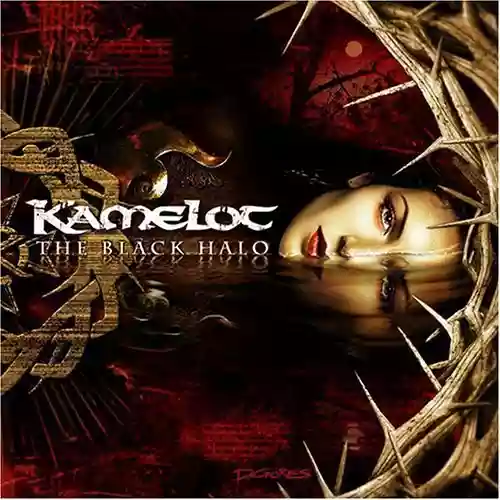
Many sensations are felt after listening to "The Black Halo", the eighth studio work by Kamelot is indeed a very complex work and not easy to digest for the listener.
The album begins exactly where "Epica" (2003) ended, we are now at the second and final act of the retelling of Goethe's "Faust". Ariel (the hero), to receive forgiveness from God, must complete the journey through the knowledge of human limits and overcome them with his own strength.
The basic idea on which the album is based is therefore extremely fascinating but also very complex. The album itself is positively influenced by this complexity, the songs are more "dark" than in the past and show a greater "depth" both in terms of lyrics and themes. Even the sound shows changes, the album doesn't deviate from the power metal to which the band has accustomed us over the years, but features darker riffs, more present orchestral parts, and overall less relaxed melodies than in the past.
Technically, the performance of the three American musicians is overall good, as they have been able to craft beautiful melodies without falling into unnecessary virtuosity, accompanying Khan's voice in a consistently fitting and refined manner.
Once the CD is inserted and eyes are closed, the adventure begins, a suggestive adventure that leads to the exploration of melodies, places, colors, people.
The opening track "March Of Mephisto" with its slow and measured pace, aggressive guitar, and very warm voice immediately conveys a strong sense of uneasiness. The dialogue between Ariel (Khan) and Mephisto (Shagrath) is splendid. "When The Lights Are Down" speeds things up, Casey Grillo's double bass drum sets the pace quickly, Thomas Youngblood's guitar becomes almost violent and the unease turns into agitation. After the outburst, the pace slightly slows with the beautiful "The Haunting", Khan's voice continues to shine and launches into a sublimely sung dialogue with Simone Simons. The following track, "Soul Society", is perhaps the song that best represents Kamelot, with a driven verse and a chorus rich in orchestral inserts, the result is excellent, there's almost no time to think, everything is really too beautiful to be distracted.
By the first interlude "Dei Gratia" (sung in Latin) the atmosphere becomes more relaxed, Khan’s voice continues to guide us through dark and cramped places.
The sixth track "Abandoned" is the only true ballad, a very beautiful song especially thanks to the Khan-Mari (Epica) duet that truly leaves one breathless, the sensation of attending a theatrical play is very strong. "This Pain" continues the line drawn by the previous songs, the hard verse is accompanied by a slower chorus, the instrumental performance is excellent as usual, even though among the tracks present, it's certainly the one that strikes the least. "Moonlight" is, in my opinion, one of the best episodes the album offers, the guitar enters forcibly with a violent and almost "torn" riff, the entire verse is dominated by the bass up to the very melodic and pleasant chorus, overwhelming in its whole.
The second interlude "Un Assassino Molto Silenzioso" features Cinza Rizzo singing in Italian in a tavern complete with noises and accordion, truly evocative! The title track "The Black Halo" presents itself decently thanks to heavy riffs and a well-crafted rhythmic section, even if it's not an extraordinary track.
We are at the peak, "Memento Mori" is undoubtedly the best track, a slow and relaxed start with great support from the strings, followed by hard and aggressive riffs, a long solo, an Ariel-Mephisto dialogue, and a splendid ending that involves like never before, emotions have now reached the highest point, beyond is impossible to go.
The task of closing worthily is up to "Serenade", a hopeful song, the atmosphere is now more relaxed and eyes can be reopened, the adventure ends but the memories of this splendid album remain.
Loading comments slowly
Summary by Bot
The Black Halo, Kamelot's eighth studio album, continues the Faustian story started in Epica with darker, more complex themes and orchestral depth. Featuring strong vocals, balanced instrumentation, and evocative dialogues, it delivers an intense power metal experience. Tracks like 'Memento Mori' and 'March of Mephisto' highlight the album's emotional range. Overall, it’s a richly crafted, immersive musical journey.Tracklist Lyrics Videos
Kamelot
Kamelot is an American symphonic/power metal band formed in 1991 in Tampa, Florida by guitarist Thomas Youngblood. The group gained wide acclaim with the concept pair Epica and The Black Halo, featuring Norwegian vocalist Roy Khan (1997–2011). Since 2012, Swedish singer Tommy Karevik has fronted the band. Their catalog spans melodic power metal to darker, gothic-tinged works, including Karma, Ghost Opera, Poetry for the Poisoned, Silverthorn, Haven, The Shadow Theory, and The Awakening.10 Reviews
Other reviews
By ilfreddo
Kamelot is an absolutely atypical, difficult, and original metal band.
A deliberately demanding CD that can offer great satisfaction or terribly bore.
