
 •
Rating:
•
Rating:
THE REVIEW
The '80s didn't end in the best way for the Birmingham band.
After two rather questionable works, such as "Turbo" and "Ram It Down" (as I see it, a bland appetizer to the subsequent masterpiece), it was time for Judas Priest to produce another great album comparable to those which, between the late '70s and the early '80s, had earned them a place among the big names in the world of heavy metal.
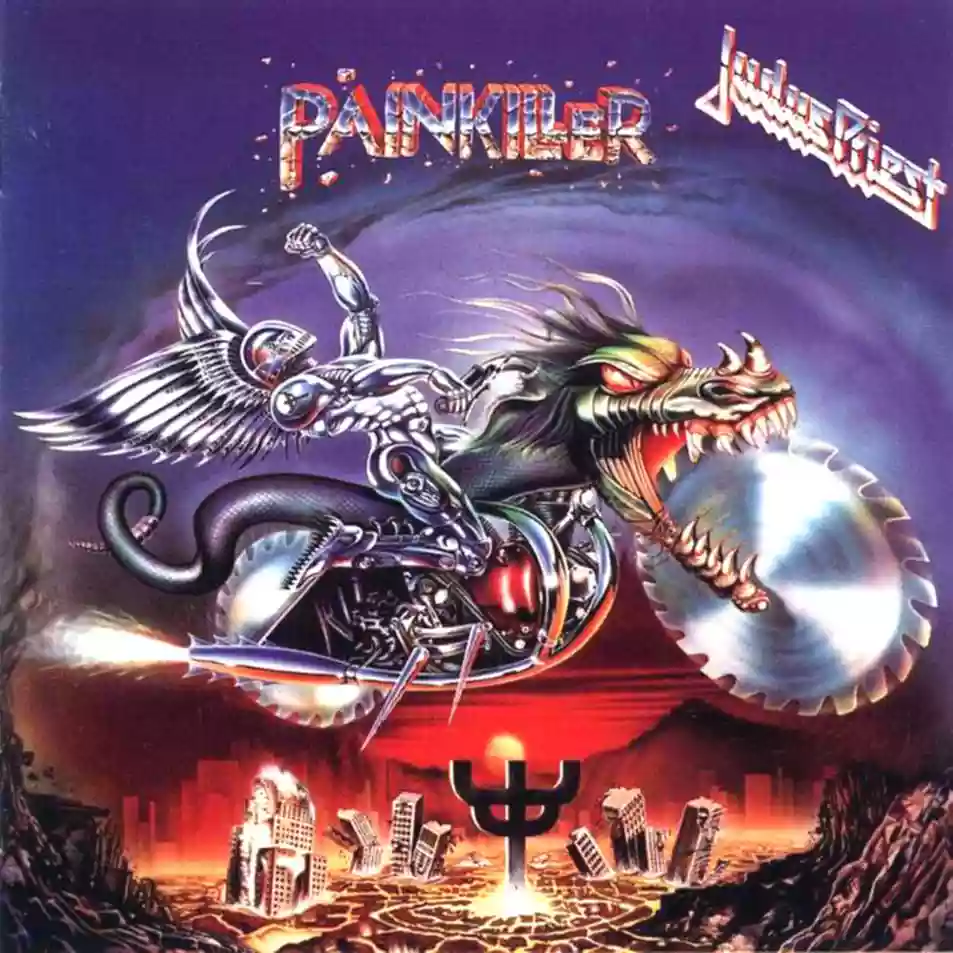
After replacing drummer Dave Holland with Scott Travis, whose style is more powerful and suited to the path the band was about to embark on, the group secluded themselves in the studio with producer Chris Tsangarides, emerging with an album that would not only become one of the finest works of the English band but also one of the cornerstones in the entire history of metal.
In addition to the beauty of the individual songs, the album featured a noticeable strengthening of the sound and solutions which, while remaining within the typical domains of classic heavy metal, were decidedly more extreme. Just listen to the opening title track to realize the changes the band had made to its style. The song, which opens with an explosive drum-only intro, strikes and leaves the listener in awe of the power it emits, the precision with which the numerous tempo changes are managed, and Halford's skill in modulating his voice, able to effortlessly swing from piercing highs to lower tones.
From this point forward, it's a continuous succession of stunning songs of such power, incisiveness, and ferocity and, moving through the likes of "Hell Patrol," "Leather Rebel," "Nightcrawler," "A Touch Of Evil" (to name just a few), one gets the impression of listening to the metaphorical advance of a tank destroying everything in its path. Credit goes to the rhythm section, capable of building a solid and earth-shattering base on which the two guitarists exchange parts in solos of rare metallic efficacy. All this, on which Halford makes his crystalline voice vibrate (in my opinion his best performance ever), is made even more impactful by the powerful and clear work of Tsangarides, a seasoned producer who, over his career, has worked with names as varied as Depeche Mode, Tom Jones, and Bruce Dickinson.
In the 2001 remastered version, there are also two bonus tracks, the ballad "Living Bad Dreams" and the live version of "Leather Rebel." While the latter never blew me away, I always wondered how the English band hadn't decided to include the former in the original version of the album. It is, in fact, an excellent piece, full of pathos and marked by a really well-crafted refrain, easily able to hold its own against the other songs on the record.
Ultimately, for anyone who loves heavy metal in its purest form, this is a must-have album, one of those four or five masterpieces that cannot be missing from any good metalhead's collection.
Loading comments slowly
Summary by Bot
Judas Priest's Painkiller marked a triumphant return to form after a period of less memorable releases. With the addition of drummer Scott Travis and producer Chris Tsangarides, the band delivered a powerful and refined heavy metal album. The title track sets the tone with explosive energy and vocal mastery by Rob Halford. The album features relentless metal songs that showcase skillful guitar work and a solid rhythm section. The 2001 remaster adds strong bonus content, making it essential for metal fans.Tracklist Lyrics Videos
Judas Priest
Formed in Birmingham in 1969, Judas Priest are among the pioneers of heavy metal, known for twin-guitar attack and Rob Halford's high vocals. Their career spans classic studio albums and acclaimed live records.49 Reviews
Other reviews
By jigoro
We are faced with one of the best songs ever written, fittingly covered by the great Chuck (R.I.P.) of Death in his last work.
Daily bread for anyone who calls themselves a metalhead!
By AR (Anonima Recensori)
"Rob Halford’s extraordinary voice immediately stands out."
"'Hell’s Patrol' is my favorite and, in my opinion, is a masterpiece."
By sofficino
Painkiller represents the pinnacle reached by heavy metal as a pure genre.
The absolute masterpiece is the splendid title track, 'Painkiller': insane speed, riffs as sharp as chainsaws and extremely fast and super technical solo sections.
By sofficino
PAINKILLER REPRESENTS THE PEAK REACHED BY HEAVY METAL AS A PURE GENRE.
THE BEST "PURE" HEAVY ALBUM EVER CONCEIVED.
By Greyskull
It’s my first time :) I’m about to review a masterpiece, a milestone of heavy metal, in my opinion, the best work by Judas Priest.
Just this piece would be worth the purchase of the album, but Judas did not hold back and gave us one masterpiece after another.
