
 •
Rating:
•
Rating:
THE REVIEW
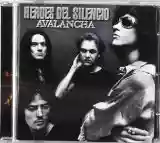
"Avalancha" is unfortunately the last studio album by Héroes del Silencio (specifically their fourth), released on September 18, 1995 and presented at the Centro Cultural Delicias in Zaragoza. It undoubtedly represents the highest point of their musical career.
We are faced with a pure rock & roll album clearly influenced by American bands like Pearl Jam and Soundgarden, gritty, energetic, and with an excellent rhythmic base, decidedly more direct and crystalline than the previous work (El Espiritu del Vino). For the production of "Avalancha," the Héroes relied on the experience and professionalism of Bob Ezrin, who had previously worked with artists of the caliber of Lou Reed, Alice Cooper, Kiss, Peter Gabriel, and Pink Floyd. Another novelty is the presence of second guitarist Alan Boguslavsky, who participated in the composition of all the tracks but was unfortunately sidelined by the record label EMI, which considered him only a session musician, unlike the band which treated him as one of their own. Alan joined the band in 1993 on the occasion of the "El camino del Exceso" tour and remained until the breakup in October 1996. Furthermore, just before leaving the scene, the Héroes released the double live album "Parasiempre" to document their last long successful tour that lasted fourteen months and took them to perform in over twenty countries.
Now let's move on to the album. After the brief intro "Derivas," we dive into the overwhelming "Rueda, Fortuna!" which, as usual, highlights Juan Valdivia's guitar and Enrique Bunbury's powerful vocals. "Deshacer el Mundo" and "Avalancha" are among the band's best tracks ever, and the title track is particularly spectacular and engaging live, powerful and flawless. On this note, I invite everyone to watch the performance the group gave at the Monsters of Rock in Brazil (in 1996), where you can admire a great and inspired Bunbury. Among these two tracks, we must not forget to mention another gem from the Aragonese quartet, "Iberia Sumergida," which was also promoted with an original and provocative music video (those who know and follow the band understand perfectly), enriched by a splendid "Spanish-style" guitar and an excellent performance by Pedro Andreu on drums that gives it an "Iberian" flavor as is easily understood when listening. Then we find two splendid ballads "En Brazos de la Fiebre" and "La Chispa Adecuada," with the former unfortunately overlooked in live performances, ending with a wonderful solo by maestro Valdivia.
"Días de Borrasca (Vispera de Resplandores)" is characterized by hard, angry rock, with lyrics that serve as a violent critique of the inquisition and the innocent deaths it caused. "Morir Todavia" is dedicated to Rafael (Bunbury's brother), who was killed in a bar stabbing, and to road manager Martin, both of whom died in early 1994. This track was never performed live. We have now reached the end of this splendid album, which could not have been celebrated better. "Opio" is an anthem to the flower of "laziness" and reflects Bunbury's particular passion for India and Eastern philosophies (in the previous album, there was a track "Flor de Loto," dedicated to an Indian girl to whom Enrique became godfather during his journey in this splendid country). "La Espuma de Venus" is, in my humble opinion, the masterpiece of "Avalancha" and the best lyrics written by the band. As can be deduced, it is a song inspired by the amorous sphere of "Venus," with a clear reference to the intimate relationship between man and woman, allowing us to daydream with our minds for its six minutes and thirteen seconds of duration. The rest is up to you!
For those who are unfamiliar with the work just reviewed, all that's left is to search for it immediately; you won't be disappointed. It might be the right spark to rediscover a band underrated by many and one that deserves more consideration.
Loading comments slowly
Summary by Bot
Avalancha is Héroes del Silencio’s fourth and final studio album, representing the pinnacle of their career with gritty, energetic rock influenced by American bands. Produced by Bob Ezrin, the album features powerful performances and notable tracks like 'Rueda, Fortuna!' and 'Avalancha.' Rich in emotional and lyrical depth, it captures the band’s unique fusion of hard rock and Iberian flavor. The review invites listeners to explore this underrated masterpiece.Tracklist Lyrics
Héroes del Silencio
Héroes del Silencio formed in Zaragoza in 1984 and rose from early EMI releases to international acclaim. Their debut El mar no cesa (1988) carried new wave/pop hues, but Senderos de Traición (1990) became a turning point, with strong European sales and the hit “Entre dos tierras.” El espíritu del vino (1993), produced by Phil Manzanera, expanded their sound and chart reach, and Avalancha (1995), produced by Bob Ezrin, marked a peak before the 1996 split. The band reunited for a short tour in 2007.05 Reviews
