 •
Rating:
•
Rating: THE REVIEW
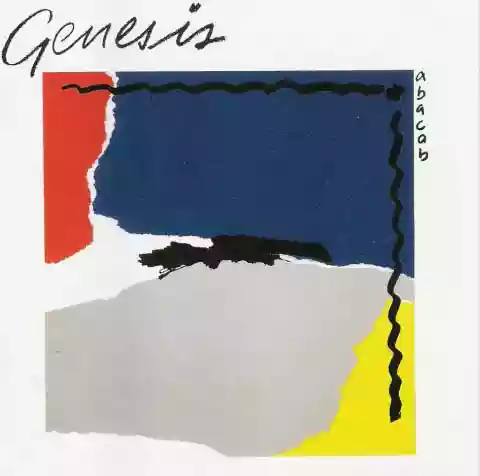
In 1981, the 3 surviving members of the epic band Genesis recorded one of their most criticized albums, and at the same time one of the most experimental and "electronic".
I decided to write this review to defend the album from detractors' criticisms, which I find absolutely unjustified, and especially inappropriate when referring to Phil Collins, the rhythmic soul and the only reason Genesis worked so beautifully in the '70s. His contribution wasn't only musical (although his jazz-influenced drumming made the records from the magical years vibrant and pulsating) but especially as a "glue" for all the other members. Within the group, there were strong tensions between Tony Banks and Peter Gabriel, powerful personalities that literally overshadowed those of Mike Rutherford and Steve Hackett. Phil was a playful drummer, relaxed, always willing to make peace, never inclined to take a stand! When Gabriel and Hackett inevitably left, the band found itself facing an extremely delicate situation: move towards Rutherford's nostalgic magnificence (Smallcreep's Day, which turned out to be a shooting star) or follow the path of Collins' newfound pop success? They took a middle path, with Banks present, who was nonetheless looking for success (just look at his first album, A Curious Feeling, anything but prog and musically untouched) that quietly transformed the band's sound, introducing more modern synths and pressing the accelerator on the pop qualities of the drummer's voice. Let's remember he was the primary composer amongst them!
After this preamble, let's start with the album, and specifically with the title track: "Abacab", a catchy and rocking song, with a fun and incomprehensible text, enriched by an exceptional "old school revisited" instrumental coda, with synths in the foreground and drums much less freeform compared to the past, a side effect of the vaguely dance and pop imprint of the song and the entire album.
Next is "No Reply At All", a very enjoyable song, rich in very "funky" drum breaks. Could it be considered experimental? In this case, I lean towards no, the track is clearly an attempt to capture some good spots on the charts, but the quality can't be considered low, and the piece remains very enjoyable and fluid, like a good pop song should be, but enriched by the undeniable qualities of Genesis. "Me And Sarah Jane" is the classic Banks composition with delicate and refined tones, rich in keyboards and poor in the rest, the piece that should have confused the pianist's most passionate fans but upon a second analysis reveals a sycophantic attempt.
"Keep It Dark", on the other hand, presses the pedal on the search for new sounds and new rhythmic patterns, the drums are in syncopated time and the riff in even time, but at first glance, they seem inverted. Furthermore, this riff repeats continuously throughout the song, and dozens of different chords are played over it, which always fit well and in their place, with a vague effect of dissonance. Even if vaguely irritating due to the insistence on the theme, the track reveals a great text and shows 100% what Genesis could do, evolved into a new '80s form with unaltered genius.
Following is the best track on the album, a "Hard Rock-Funk" with the absurd name of "a) Dodo b) Lurker". The song is extremely energetic, rich in time changes and continuous surprises for the listener, with a text that is partly understandable and partly includes the "Submarine" riddle, in the part named "Lurker" where the text refers to an object that wanders the ocean floors, and finds its completion in the song "Submarine", not part of the album but absolutely worthy of being in it, another pearl unfortunately relegated as a B-side. Perfect in every respect, the track ventures into hard rock territories, long ignored by G.
"Who Dunnit?" is very clearly a provocation, should it be considered as such or as a song? Think about it: a terrible song called "Who Did It?" and continuously repeating in the text "I didn't, I didn't do it". Is it genius or a kind of cry for help: it’s not us (Genesis) wanting to do this, it’s not us wanting it. Does it perhaps refer to the pop turn? "Man On The Corner", another very delicate song by the Banks\Collins duo, very pop and decidedly empty as it is deprived of Phil's acoustic drumming, here assigned to an overused '80s Drum Machine. Following is "Like It Or Not", another slight drop in style. And the album concludes with the self-ironic "Another Record", which tells of an old rocker looking for records to record, another hidden cry for help?
Not at all a bad album, it fully reflects the advent of the '80s with its positive and negative sides, it's up to you to decide which of the two are predominant.
Loading comments slowly
Summary by Bot
This review defends Genesis' 1981 album Abacab from its critics, emphasizing the band's shift toward electronic and pop sounds. It highlights Phil Collins' crucial role and details each track's unique qualities. The album is acknowledged as a reflection of its era, blending experimental elements with accessible pop. Despite mixed reactions, the review values Abacab as an important and enjoyable phase in Genesis' evolution.Tracklist Lyrics Videos
Genesis
English rock band formed in 1967, celebrated for landmark early-1970s progressive albums (Foxtrot, Selling England by the Pound, The Lamb) and a later, more pop-oriented phase led commercially by Phil Collins.116 Reviews
Other reviews
By London
You begin to tolerate it after many listens, but nothing more.
The first result of this experiment is the much maligned and criticized Abacab.
By SysMike
Phil Collins, after the success of 'In the Air Tonight', had killed Genesis by engulfing them in his raucous and pounding sound.
'Abacab' was simply the collapse of a legend. The GENESIS no longer existed.
By paolo1968
"It is with this work that Banks & co. decide to definitively break with the past."
"The lyrics also surprise, deliberately detached and abstract, free of the romanticisms of the past."
By paolofreddie
Weak, feeble, pointless, soulless! Abacab!
Abacab is an album that would have done better to remain in the drawer, a mostly mediocre work, a stab in the music, an album unworthy of the name 'Genesis.'
