 •
Rating:
•
Rating:
THE REVIEW
RIMMEL 8.5/10
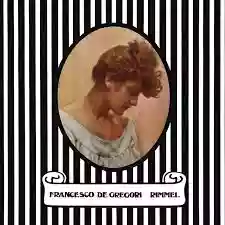
This is how it happened back in the day. Italian record labels would “spot” potential successful artists, have them sign a contract where they committed to producing 4 albums, and if all 4 didn't do well, no hard feelings. Unlike today, where artists are forced to “hit it big” immediately, in the '70s songwriters (especially) were given time to refine their own style, to “enchant” an audience coming out of the decade (the '60s) where 45s reigned, not LPs. Guccini won over the public with his third album (“Radici”, 1972); Venditti on his fourth (“Lilly”, 1975); Bennato, a bit faster, with his second (“I buoni e i cattivi”, 1974). De Gregori triumphed with his third, namely “Rimmel”, 1975 (considering “Theorius Campus”, 1972, an album attributable to both Venditti and De Gregori, although sui generis, and certainly not negligible). But with “Rimmel,” De Gregori brought home the whole theatre, since, released in January, the album turned out to be Italy’s best-selling of the year: which, looking back, is incredible. And it’s an extremely short album (just under 30’).
It’s a songwriter’s album—actually, perhaps the Italian singer-songwriter album par excellence—the most accessible even for less attentive listeners (unlike, for example, Guccini, who is more demanding), and it is, ça va sans dire, an excellent album even if, in my opinion, other works by the Roman singer-songwriter (“Titanic”, 1982, above all) are even better. In some way, I am more “attached” to De Gregori’s previous album, the minimalist “Francesco De Gregori” (1974): that one, yes, is tough to interpret (and yet so fascinating). Here, the stage is dominated by songs that immediately became a must for the “Principe.” Starting from the title track, which has a long story that I'll try to sum up, omitting some details. Of course, it’s a song about the end of a love, dedicated to the same girl (a certain Patrizia) to whom he had already dedicated, in the previous album, the beautiful “Bene.” The famous verse about the “fur collar” tells of an actual theft, while the gypsy’s cards were explained by De Gregori himself: “...Yes, one day they read my cards and told me wonderful things, they said I’d be very happy, they said ‘You will be a winner.’ But overall, it’s not nice for someone to tell you what you’ll become; believing in the gypsy might betray a lack of imagination, a lack of youth, of the courage to say ‘vaffanculo, now I’ll go out and who knows what will happen’.” The song was at the heart of what would happen to the author the next year, namely the famous protest at Milan's Palalido, where he was “put on trial” for allegedly betraying the political cause (read: committed songs), conforming to the masses and compromising his ideals for money (Guccini said, “...compagni/eletta schiera che si vende alla sera per un po' di milioni”, the famous lines from “Avvelenata”, 1976).
In my opinion, in an album featuring songs like “Pablo” (on the theme of immigration—this time a Spaniard going to Switzerland, with a chorus “fine-tuned” by Lucio Dalla: I find the original arrangement somewhat out of context for the album, but that’s just my point of view), or “Piano Bar” (said to be “dedicated,” venomously, to his former Folk Studio friend Antonello Venditti), but also “Piccola mela”, which was inspired by a Sardinian poem by Peppino Marotto, the two most interesting songs are: “Pezzi di vetro” and above all, “Quattro cani”. The former comes from an encounter De Gregori and his then-girlfriend had at a town fair, where they spotted some acrobats who fascinated the girl (De Gregori, it seems, was very jealous), and he tried to “exorcise” this irrational fear by inventing a character walking on glass (“...you gave him, in a minute, all you had/but you’re fine where you are”). The latter is a track so cryptic that, at the time, I believe nobody understood it, and yet today, many things are much clearer: the four dogs mentioned (a war dog; a mutt who knows hunger and tranquility; a bitch, almost always she denies, sometimes she gives; and a fourth who has a master but doesn’t know where to go) would be (or rather, are, since confirmation over the years has not been lacking): De Gregori himself, the first; Lilli Greco, the second; Patty Pravo, the third; Antonello Venditti, the fourth. The song ends with the line “...if only there were a moon one could sing,” later used in a famous Carpené Malvolti sparkling wine advertisement. About “Buonanotte Fiorellino”, I believe there’s nothing left to say that hasn't already been said.
Loading comments slowly
Summary by Bot
The review highlights 'Rimmel' as a significant Italian album from Francesco De Gregori, lauded for its poetic songwriting and emotional resonance. The reviewer gives it a solid rating of 4 out of 5, emphasizing the album’s lasting appeal. Key strengths noted are its lyrical depth and musical quality. The review suggests 'Rimmel' stands as a milestone in Italian music. De Gregori’s artistry is highly praised throughout.Tracklist Lyrics Videos
Francesco De Gregori
Francesco De Gregori (born 1951, Rome) is an Italian singer-songwriter known for poetic, often hermetic lyrics and a pivotal role in modern Italian canzone. His catalogue spans intimate ballads, historical narratives and politically charged pieces.68 Reviews
Other reviews
By egebamyasi
To understand De Gregori, you must not just listen to him; you have to feel him.
"Rimmel" seduces you with its piano, speaking of a love that has ended... just like that.
By VIOLATOR 88
And while you sweet Venus of Rimmel, were walking your four dogs and Pablo was being killed
Something remains…
By Saltuario
Songs like "Pablo," "Buonanotte Fiorellino," and "Rimmel" are by now historic mainstays of De Gregori’s repertoire.
What really captivates about this album is the very high poetic quality of the lyrics, always hermetic but a bit more intelligible than in previous albums.
By Dany94
It's possible to summarize this entire review with the word "amazing."
De Gregori is a great poet, not to detract from his great talents as a composer and singer.
By SydBarrett96
"Rimmel is like a blooming flower in a meadow of kindness, a delicate breeze of wind on the sea, a hermetic poem seasoned in sweet-and-sour sauce."
"A finished love is not tragic here, but a mix of sweetness and disillusionment, among few gestures and shy smiles."
