
 •
Rating:
•
Rating:
THE REVIEW
You can't do anything about it. There are moments so strong and intense, for better or worse, that they hit you hard: joy, anger, pleasure, pain, punches in the stomach or caresses on the heart, images, smells, and sounds that clump together in such tight indissoluble knots that they take away your breath and sleep. Once the blow has passed, those knots do not unravel, they only loosen a little bit over time, but they always remain there, little carp that move slow and lazy at the dark bottom of the soul, hidden in the daily peristalsis, revealed only by a new crease of a smile or a new wrinkle on the forehead. Every now and then they come up for a breath on the surface, and then visibly the lips relax or the forehead wrinkles, but soon they plunge back to the bottom. It may happen that the wind brings you that smell, or a car radio in a queue that music; or it may happen that you want to play that record: who knows if it still evokes those smells and images, if the thought still makes you smile or, if still and how much, by adding a grain of salt, that little wrinkle can hurt you. And so, the music no longer slides smoothly, but stumbles into those smiles and those wrinkles, it gets tangled, and there it turns and turns, twists, and you twist with it, a corkscrew that uncorks the aromatic wine bottle of memories.
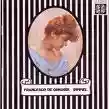
The Prince, who has accompanied me for so long, is my corkscrew par excellence, and this album in particular has this effect on me: "Rimmel" is my 18-20 years. A true sparkling jewel, published by De Gregori in 1975, at the age of only 24; with "Bufalo Bill", the equally splendid subsequent album, in some episodes even better, De Gregori is consecrated into the pantheon of Italian singer-songwriters. "Rimmel" is many things. It is the memory of love that ends and the necessity to move on, told with very personal but at the same time shared, common, strongly evocative images; it is the surrender to the love that is born, suddenly and irrationally, just as things often begin; it is politics, Mussolini and the new fascism with a clean face; it is the exploitation and drama of the emigrant with the cardboard suitcase, whether called Pablo then or Amar or Mohammed today. For me, it is a multitude of little carp that rise to touch the surface of the water. I don't even reach the gypsy fortuneteller, and here I am in the high school smoking a cigarette in the girls' bathroom during the change of hour; I look at the palm of my hand and the line that turns is a sun drawn; I carry in my pocket the little apple of a night promise at the bus stop; the seagulls tied to a thread and the somersaults on the blue bedspread, the first time I saw Alice naked; Gabriele, who from atop the Sacchian Milan mocked me for my poor Inter, and all of us close and small for his sudden absence; the dialectic trials in naive discussions about communism and fascism, right and left; and so many other images, small and large.
Songs like "Pablo", "Buonanotte Fiorellino", the same "Rimmel" are by now historic mainstays of De Gregori’s repertoire, and coexist with less popular but intense and delicate tracks, like "Quattro Cani", with choruses also performed by Lucio Dalla, "Le Storie di Ieri", an explicitly political song, and a notch above all, the magnetic "Pezzi di Vetro", a sweet love poem that unrolls on the red carpet of a simple and delicate guitar arpeggio. The album closes with two minor songs, "Piccola Mela", almost a popular nursery rhyme, and "Pianobar", a portrait of a certain type of fake musician, accommodating and opportunistic. What really captivates about this album is the very high poetic quality of the lyrics (it reminds me of Hikmet in some aspects), always hermetic but a bit more intelligible than in previous albums; images full of grace, which amaze for their ability to represent a whole world in two verses (how many meanings, sensations, nuances enclosed in a "Holy desire to live and sweet Venus of mascara"!). Thus, it's not surprising the great commercial success of the album, capable of winning the favor of the wide audience thanks to the combination of precious lyrics never banal, even if not always simple and immediate, music no longer bleak like the previous album (the "Sheep album") but decidedly lighter, and the beautiful voice, throughout the album on quite high registers, of the Prince poet. To top it all off, there are even some urban legends about some of these tracks: "Mister Hood" would be dedicated to Pannella; "Pianobar" would be maliciously inspired by Venditti; the "Four Dogs" would be, in order of appearance, De Gregori himself, then Venditti, Patty Pravo, and the producer Lilli Greco.
In short: 5 stars magna cum laude.
Loading comments slowly
Summary by Bot
This review praises Francesco De Gregori's 1975 album Rimmel as a timeless masterpiece blending intense emotions, poetic lyrics, and evocative political themes. It highlights iconic songs and the album's deep personal and cultural resonance. The music's ability to unlock vivid memories and feelings makes it a cherished classic for fans and newcomers alike.Tracklist Lyrics Videos
Francesco De Gregori
Francesco De Gregori (born 1951, Rome) is an Italian singer-songwriter known for poetic, often hermetic lyrics and a pivotal role in modern Italian canzone. His catalogue spans intimate ballads, historical narratives and politically charged pieces.68 Reviews
Other reviews
By egebamyasi
To understand De Gregori, you must not just listen to him; you have to feel him.
"Rimmel" seduces you with its piano, speaking of a love that has ended... just like that.
By VIOLATOR 88
And while you sweet Venus of Rimmel, were walking your four dogs and Pablo was being killed
Something remains…
By Dany94
It's possible to summarize this entire review with the word "amazing."
De Gregori is a great poet, not to detract from his great talents as a composer and singer.
By SydBarrett96
"Rimmel is like a blooming flower in a meadow of kindness, a delicate breeze of wind on the sea, a hermetic poem seasoned in sweet-and-sour sauce."
"A finished love is not tragic here, but a mix of sweetness and disillusionment, among few gestures and shy smiles."
By JpLoyRow2
Rimmel stands as a milestone in Italian music history.
De Gregori’s poetic songwriting makes every track memorable.
