
 •
Rating:
•
Rating:
THE REVIEW
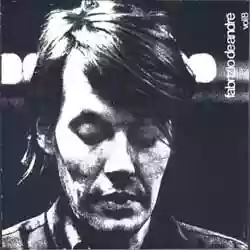
After the big and challenging themed albums of previous years, this is somewhat of a return to origins: a series of songs related to the sphere of private sentiments. The spirit of rebellion that animated "Storia di un impiegato" has faded; the only possible revolt is the individual one, the escape from reality is "evaporating into a red cloud, into one of the many slits of the night" ("Amico fragile").
This album with its delicate tones is the result of a collaboration, a one-off, with the then-emerging Francesco De Gregori, at the peak of his creative vein (it's the year of "Rimmel"). You can hear it a lot in "Oceano" and "Dolce luna," where the typical "degregorian" expressions, somewhat cryptic, render environments and characters blurred, unreal.
Entirely by De Gregori is "Le storie di ieri," but with an unusual realism, in addition to undeniable prophetic qualities in seeing the danger of a nascent new fascism, whose leaders have "serene faces and ties coordinated with the shirts," but for this, they're not any less dangerous. "La cattiva strada" (by both) seems more typical of De André. The protagonist of this song sows chaos and disturbance in places of power (at the military parade, in a courthouse) but also among the excluded, like an alcoholic or a prostitute. Like a sort of reverse pied piper, he leads everyone down the "bad road," that of transgression. "Giugno '73" is the farewell to the "good road," that is, to a peaceful bourgeois marriage, a farewell that's critical but also affectionate: "I tell myself it was better to part than to have never met at all." "Canzone per l'estate" is another snapshot of tranquil life, perfectly orderly yet useless. "Nancy" is translated from Leonard Cohen, a master of deeply profound female portraits, who here manages to depict a character perhaps even more moving and tragic than the famous "Suzanne," also translated by De André. Nancy is a symbol of solitude masked by an apparent freedom of customs ("we said she was free, but no one was sincere") who will find her rebellion, and peace, only in suicide. Sure tears: you just have to be a bit more sensitive than a roadside bollard.
It's also difficult to remain indifferent to "Amico fragile," perhaps the most intimate and personal confession that De André has put into a song. The fragile friend, who isolates himself from society's petty games to cultivate his illusions and ideals in solitude, is the author himself, branded as fragile by the so-called "normal people," when instead compared to "them" he is, or at least feels, "much more curious, much less tired, much more drunk..." even if he doesn't make it well known. Even more touching in the live performance with P.F.M., it worthily closes a great record.
Loading comments slowly
Summary by Bot
Fabrizio De André's Vol. 8 marks a return to intimate, emotionally charged songs after his more thematic albums. The collaboration with Francesco De Gregori blends poetic, cryptic lyrics with subtle social critique. Highlights include personal confessions like "Amico fragile" and a poignant cover of Leonard Cohen's "Nancy." The album balances tender melodies with reflections on rebellion and societal roles.Tracklist Lyrics Videos
Fabrizio De André
Italian singer-songwriter (cantautore) Fabrizio De André (18 Feb 1940 – 11 Jan 1999) is known for poetic lyrics, narrative songs about marginalized people, and landmark albums including Creuza de mä and La buona novella.92 Reviews
