
 •
Rating:
•
Rating:
THE REVIEW
You know, in singer-songwriter music, what differentiates a true poet from a clever wordsmith? Those with little understanding would say it is precisely the word, the graphic body of his art that guides its destiny. In reality, it's not like that: the poetry lies in the voice, or to be precise, in the sound that your voice can offer the word. It's only when spoken or sung that a word can take flight, rise into the air and resonate with all its poetic layers.
This is what differentiates a poet like De Gregori from a mediocre one like De André: personality, and thus the strength in the voice. De André doesn't sing but humbly and self-effacingly serves the word. He doesn't dominate the words but is a slave to their sound. And he's a slave to the meter, rhythm, and melody. De André is neither a musician nor a poet, but a foolish juggler of words, a jester who doesn't quite get it and then tries to save himself with some third-rate metric tricks. In the end, De André makes art what the graying neighbor from under the umbrella, who inevitably hails from Cremona and is an accountant, makes of his life: he amuses himself with puzzle games from Settimana Enigmistica, thinking that all the meaning of his art/life resides in these things. And well, you tell him he's good and make him happy.
Now, one might think that I'm biased against Faber ̶C̶o̶r̶o̶n̶a̶ De André and his ̶b̶l̶a̶c̶k̶m̶a̶i̶l̶ ̶p̶h̶o̶t̶o̶s̶ ̶w̶i̶t̶h̶ ̶R̶o̶c̶c̶o̶ ̶C̶a̶s̶a̶l̶i̶n̶o̶ pseudo-songs, which I frankly find mere exercises in style inflated with a retorically sugary that scrapes the nerves. But the point is that I think he is really very lacking. I took this album as a symbol, it's not worse than others but also not better than any dental abscess. Not even better than any album by Venditti, for example, whom De André loved to mock. At least Antonello knew how to sing, not just because of vocal training, but because he knew how to breathe life, meaning, and sense into his words. Fabrizzzioneeeee, on the other hand, sings with his gum raised to the left because who knows, maybe it's chic, but who cares really. Can I say that to me he's acting, and can I say he's doing it poorly? If you like De André, in my eyes you're a bit like Fabio Fazio, your choice.
Loading comments slowly
Summary by Bot
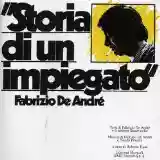
The review criticizes Fabrizio De André's 'Storia di un impiegato' for lack of vocal strength and poetic personality. It contrasts De André with other singers like De Gregori and Antonello Venditti, highlighting a perceived deficiency in delivery and artistic impact. The album is seen as mediocre and overly stylized without genuine emotional depth. The reviewer views De André's style as more of an exercise in form than true art.Tracklist Lyrics Videos
Fabrizio De André
Italian singer-songwriter (cantautore) Fabrizio De André (18 Feb 1940 – 11 Jan 1999) is known for poetic lyrics, narrative songs about marginalized people, and landmark albums including Creuza de mä and La buona novella.92 Reviews
Other reviews
By francescogenovese
Story of an Employee is perhaps the most beautiful album by De André... a De André who speaks anarchistically, talks politically.
The employee would like to change, to be like them... the kids from the student protests, but he can't because his life is now 'marked.'
By mangoni
The music ranges from folk ballads to the almost progressive 'Ora di libertà,' a supreme celebration of De Andrè’s anarchism.
An indispensable album: times have changed, but some reflections, properly updated and contextualized, cannot leave one indifferent.
By enbar77
De André attacks with quick thrusts and with skilled mono-tone basses that which the law would like to conceal or highlight the exceptional difference between judge and condemned.
An album to be listened to with extreme attention, in even religious silence, if possible, both to musically gather the testimony of those years, and to understand the power of the lyrics.
By majortom79
"He has a story and truly bites," and in this case, the story bites fiercely and sparks intense debates.
It is not an exhortation to violence, nor a blessing of terrorism, but the exact opposite—a cold and very harsh analysis of the social and psychological implications behind such actions.
By Knopfler76
Yesterday's newspaper reports him dead, rusted. The gravediggers often collect them, among the people who let themselves be rained on.
It’s a mirror of a country that believed it was something it never became, of music that was culture even before it was made.
