
 •
Versione 1
Rating:
•
Versione 1
Rating:
THE REVIEW
What is the exact moment in which a person truly becomes “themselves”? When is the precise instant when all that you’ve experienced makes you the person that everyone will remember forever?
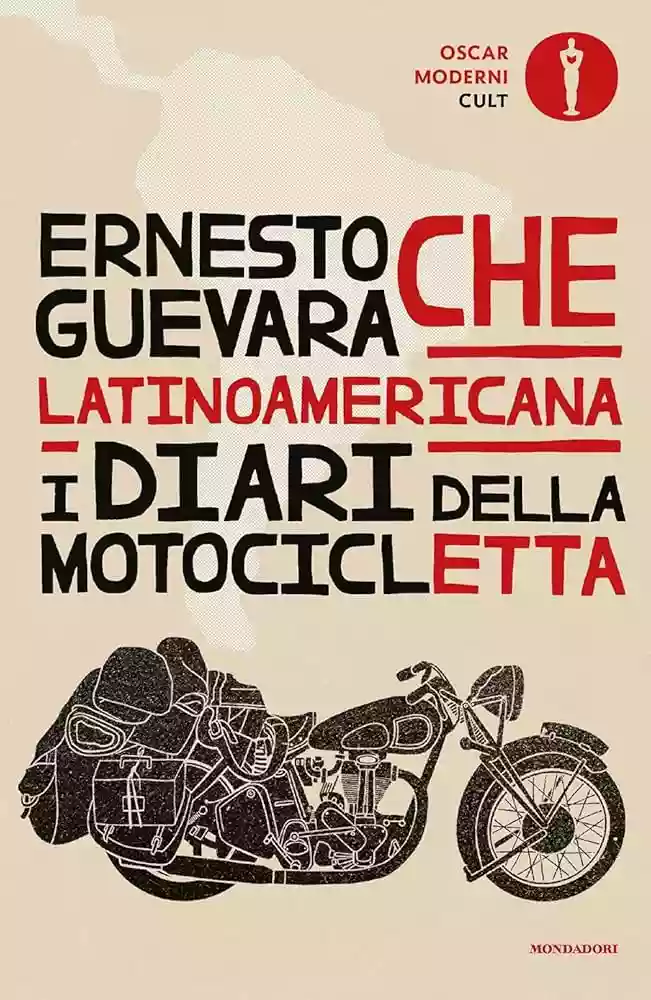
Ernesto “Che” Guevara needs no introduction, just as the historical context from which he comes does not; what this Latinoamericana does require, however, is some framing and analysis. This diary was written by Guevara in his youth as he journeyed across Latin America. At the time of this trip, Ernesto was 23 years old and a medical student; accompanied by a friend named Alberto Granada, he decided to travel, backpack on his shoulders and astride a motorbike, from the north to the south of the main countries in Latin America, from Buenos Aires, passing through Santiago, up to Bogotá and Caracas. This book, originally intended as a travel log and later structured after a few years, contains various stories from an era now distant from our own days, but, at the same time, very close in regard to dictatorial regimes, the decay and poverty of certain countries. As we read these pages, it doesn’t take long before we immerse ourselves in someone else’s life, that is, in the world seen through the eyes of two young men who—unaware of what their near future holds—find themselves facing hunger, exhaustion, and illness. Ernesto and Alberto's carefree attitude, in fact, ends shortly after their departure due to their economic hardship and the mechanical issues of the “Poderosa II”, the motorcycle that accompanied them on this adventure. Surely, they themselves must have considered these difficulties before setting off, and surely they didn’t embark on this journey with the intention of “having a cheerful vacation,” yet here we are shown how sometimes, even obsessive planning can hold surprises of every kind.
If we set aside, for a moment, the figure in question, we can see how certain situations can change our lives, making us aware of the bitterness of society and giving value to certain elements we often overlook, such as friendship, resourcefulness, and using our resources without waste. On more than one occasion, the two protagonists found themselves dealing with the elements, searching for alternative transport such as trucks and/or ships, going hungry for days, and Ernesto Che Guevara’s asthma attacks on the way to Caracas. In the Mondadori edition of this book, there are also photographic documents from the journey, along with group photos with the various friends and acquaintances who helped and supported them, mainly with “mate e cibo a scrocco”, as the author himself often states in these pages. The initial introduction by Ernesto’s daughter is also a brief, effective introduction to the historical context and the effects this journey had on him and his nation in the years to come.
If Che Guevara became the man we all know today, I believe it is in great part thanks to this adventure; if this twenty-three-year-old medical student came to refine his ideals towards a fairer world and despising the power of money, it was probably because he truly saw with his own eyes what sacrifice means.
Who is this book recommended for? For all those who want to open their eyes to the harshness of life and educate themselves about poorer countries; for Che Guevara enthusiasts; for young people who want to embark on backpacking journeys.
Loading comments slowly
Summary by Bot
This review examines 'Latinoamericana. I diari della motocicletta,' chronicling Ernesto Che Guevara's transformative journey across South America. The book captures his youthful spirit, budding political awareness, and connection to the continent's people. The reviewer praises the narrative's authenticity and insight, highlighting its influence on Guevara's revolutionary path. Highly recommended for those interested in history and adventure.
Ernesto Che Guevara
Ernesto “Che” Guevara (1928–1967) was an Argentine physician, author, and Marxist revolutionary, a leading figure of the Cuban Revolution and an enduring global icon. He wrote travel diaries and political texts and delivered widely cited speeches before being executed in Bolivia in 1967.03 Reviews
